Defining Recruitment and Hiring
Talent acquisition extends beyond simply filling open positions—it's fundamentally about creating an environment where people excel and drive organizational success. Let's clarify what each process encompasses:
Understanding Hiring
Hiring represents the comprehensive process of selecting candidates for particular organizational roles. This encompasses defining position requirements, conducting candidate interviews, and making final employment offers. Strategic hiring strategies focus on building sustainable approaches to workforce development. Essential elements include:
- Workforce Planning: Forecasting talent requirements aligned with business trajectory and growth objectives.
- Pipeline Building: Establishing connections with prospective candidates before immediate openings emerge.
- Technology Integration: Implementing AI-driven recruitment tools that enhance candidate experience while optimizing selection efficiency.
Understanding Recruitment
Recruitment functions as a structured methodology centered on attracting and assessing candidates for designated positions. The process typically follows these phases:
- Role Analysis: Determining the competencies, credentials, and experience essential for successful performance.
- Position Marketing: Broadcasting opportunities across multiple channels to reach qualified candidates.
- Application Screening: Deploying Applicant Tracking Systems (ATS) to efficiently filter candidates against established criteria.
- Comprehensive Assessment: Evaluating prospects through structured interviews, skill assessments, and thorough reference verification.
- Candidate Selection: Identifying optimal candidates and presenting competitive offers.
How Recruitment and Hiring Differ
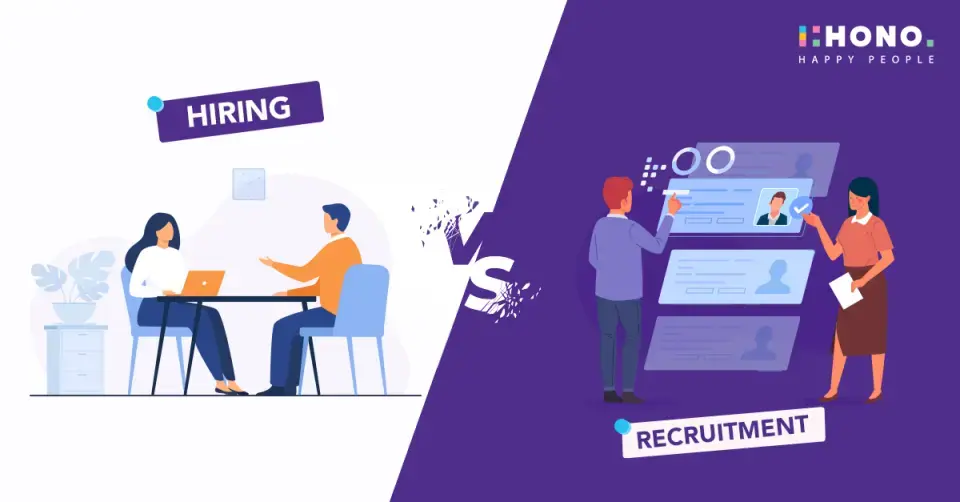
While recruitment and hiring both pursue the objective of bringing qualified talent into organizations, their methodologies and emphasis points diverge considerably:
- Primary Emphasis: Recruitment concentrates on sourcing methodologies and candidate evaluation frameworks, whereas hiring centers on strategic decision-making around candidate selection.
- Process Breadth: Recruitment operates as one element within comprehensive hiring strategy. Essentially, recruitment addresses tactical execution ("how"), while hiring encompasses strategic direction ("why" and "when").
Recognizing these fundamental differences empowers HR leaders to develop cohesive recruitment hiring strategies that support broader organizational objectives.
Strategic Recruitment Approaches
Building effective recruitment frameworks requires intentional strategy and continuous refinement. Consider these proven approaches:
1. Social Media Engagement
Platforms including LinkedIn, Facebook, and Twitter provide unprecedented access to passive and active candidates. Share authentic content showcasing organizational culture, employee experiences, and career opportunities to generate genuine interest and build employer brand strength.
2. Employee Referral Programs
Transform your existing workforce into brand ambassadors by incentivizing quality referrals. Employee-referred candidates typically demonstrate stronger cultural alignment, faster onboarding, and improved retention rates compared to traditional sourcing channels.
3. Position Description Optimization
Develop compelling, transparent job descriptions that communicate both role expectations and organizational values. Utilize inclusive language and clear formatting to attract diverse candidate pools while setting accurate expectations.
4. Data-Driven Insights
Implement analytics frameworks to monitor recruitment performance indicators including time-to-fill, source effectiveness, candidate quality scores, and conversion rates. These metrics enable continuous strategy optimization based on empirical evidence rather than assumptions.
Modern Hiring Strategies
After establishing a qualified candidate pipeline, strategic hiring strategies become critical for identifying ideal talent matches. Explore these contemporary approaches:
1. Structured Interview Frameworks
Deploy standardized interview protocols where candidates respond to consistent question sets. This approach minimizes unconscious bias while ensuring equitable evaluation across all candidates, leading to more objective hiring decisions.
2. Skills-Based Assessments
Integrate practical competency evaluations that mirror actual job responsibilities and challenges. These assessments provide concrete evidence of candidate capabilities beyond resume claims, enabling more informed selection decisions.
3. Cultural Alignment Evaluation
Assess candidate compatibility with organizational values, work styles, and team dynamics through targeted behavioral questions. This evaluation helps predict long-term engagement and reduces early-stage attrition.
4. Candidate Communication Excellence
Establish transparent communication protocols throughout the hiring journey. Regular updates and feedback mechanisms significantly enhance candidate experience, strengthening employer brand regardless of final outcomes.
Creating a Unified Talent Acquisition Framework
Maximizing talent acquisition effectiveness requires strategic integration of recruitment and hiring functions. Implement these integration practices:
- Strategic Alignment: Ensure recruitment activities directly support hiring objectives by establishing clear candidate profiles before initiating sourcing efforts. This alignment prevents wasted effort and improves outcome quality.
- Cross-Functional Collaboration: Foster partnership between HR professionals, hiring managers, and department leaders throughout both recruitment and hiring phases. Collaborative approaches yield better candidate experiences and selection outcomes.
- Continuous Improvement: Regularly evaluate your recruitment hiring strategies effectiveness through quantitative metrics and qualitative feedback. Adapt approaches based on performance data and evolving organizational requirements.
Final Thoughts: Your Path to Strategic Talent Acquisition
Organizations that recognize the distinct yet complementary nature of recruitment and hiring gain significant competitive advantage in talent markets. By implementing strategic hiring strategies alongside robust recruitment hiring strategies, you establish sustainable frameworks for attracting, evaluating, and selecting exceptional talent.
Success requires commitment to continuous refinement, embrace of innovative HR technology solutions, and cultivation of collaborative environments. This comprehensive approach not only improves your ability to secure top-tier talent but builds stronger, more engaged workforces aligned with long-term organizational vision.
The distinction between recruitment and hiring matters—understanding where one ends and the other begins enables more intentional strategy, clearer accountability, and ultimately, better talent outcomes that drive business success.
Ready to transform your talent acquisition strategy? Connect with HONO to explore how AI-powered recruitment solutions can streamline your hiring process while improving candidate quality and experience.
See it live
Ready to see HONO in action?
Book a 20-minute demo tailored to your team's HR stack.
Request a demoAbout the author
Akanksha Shekhar
With over 9 years immersed in the world of content marketing for SaaS, Cloud, HRMS and multiple other industries, Akanksha Shekhar currently leads the content initiatives as Manager of Content Marketing. Her expertise lies in the art of bringing words to life, creating engaging narratives and technically sound pieces that are both catchy and deeply informative.