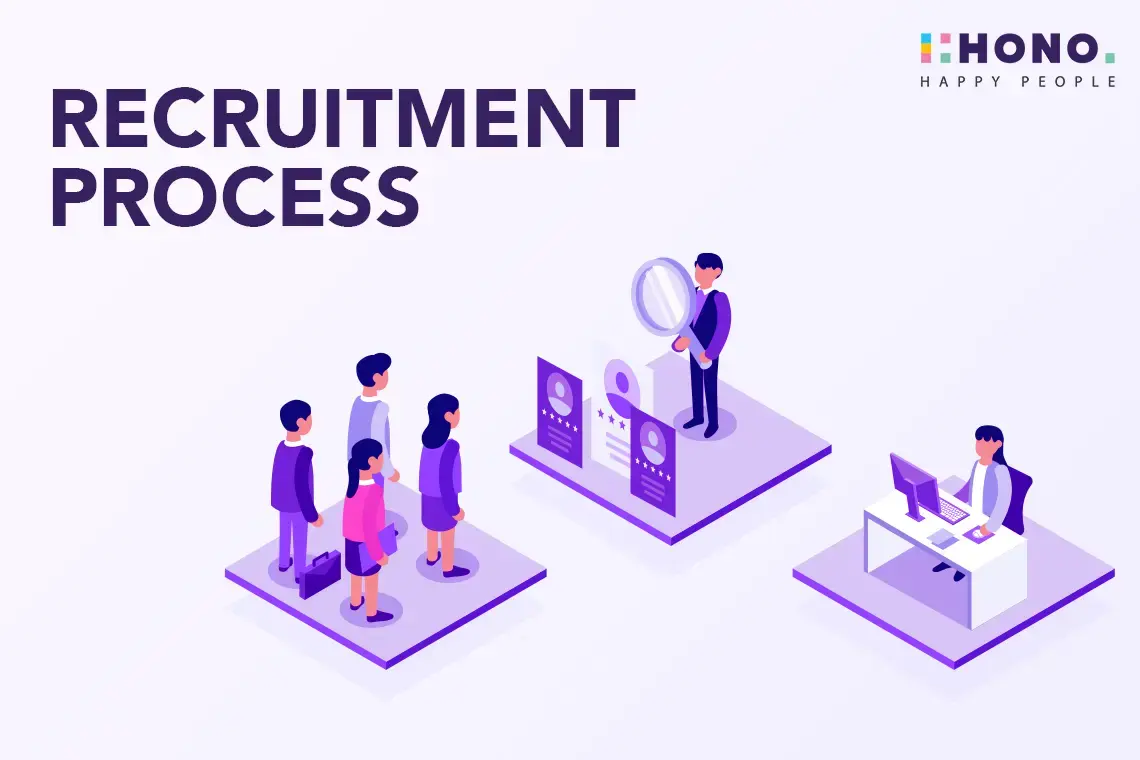
What is the recruitment process?
The recruitment process can be classified as a structured journey followed by an organization to identify, attract, evaluate and hire the specific talent for designated roles and responsibilities. However, a recruitment process doesn’t limit to just filling up vacancies, but it is about building a workforce that aligns with your organization’s goals, culture and long-term vision.
Additionally, not every company follows the similar process, it can be dynamic as per the organization.
What are the steps involved in the recruitment process?
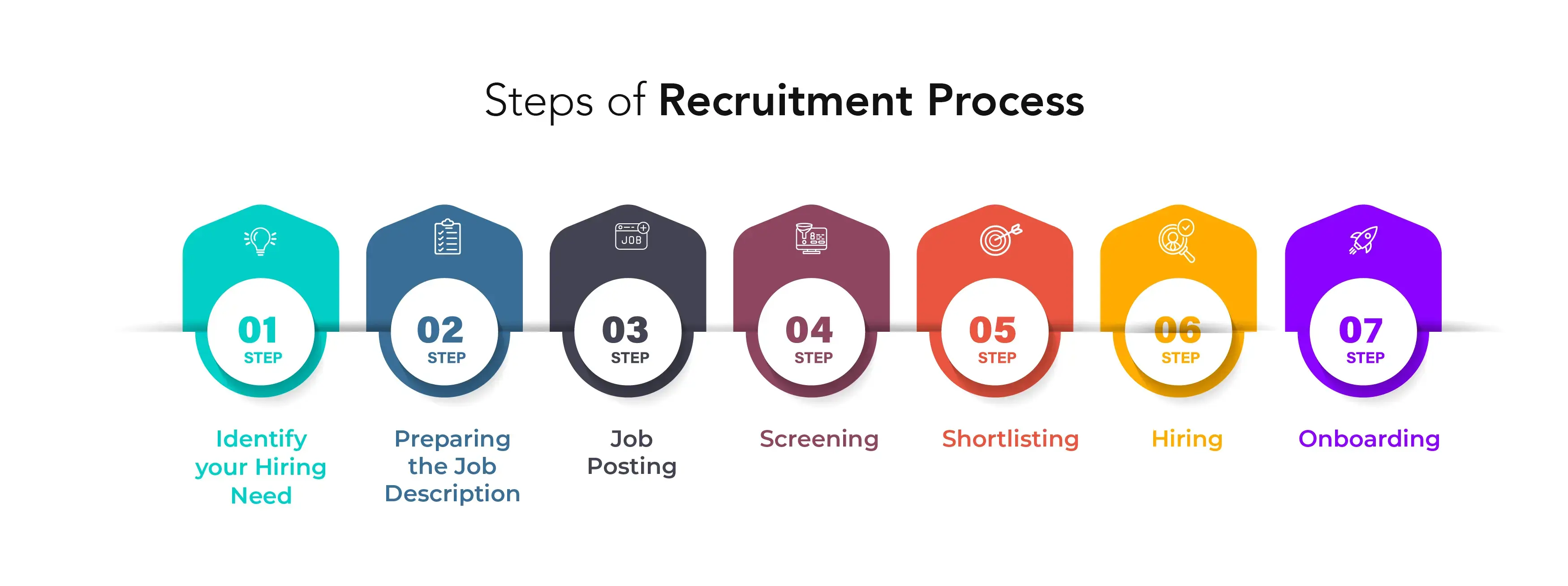
Recruitment process is a structured journey that helps the organizations in hiring the right resources/talent for their organization’s specific roles. Here are the steps involved in the process
1. Identify the Hiring Needs
This is the first step in the process where the HR team or business leads recognize the gaps and the reason behind the same. It defines the-why the role is required, where it fits in the process and what will it accomplish in the longer run.
2. Preparing
After having a clear view of requirement, it’s the time to prepare the right job descriptions, long-term expectations, remuneration and the kind of skill set required. The HR team then collaborates with multiple departments leads to jot down the right candidate profile and align the same with the organizational goals.
3. Sourcing
This step is the inception of the hunt for the right candidate. It further involved publishing the jobs across all job sites like LinkedIn, job boards and even on the company’s website.
4. Screening
Once there are multiple applications coming in, the HR get started to filter and prioritize on the basis of candidate’s profile. The step of screening majorly involves reviewing the resumes, conducting HR rounds either virtually for through a quick phone call, conducting a qualification and experience check etc.
5. Selection
The shortlisted candidates will then undergo a deeper evaluation which includes technical interviews, behavioural assessments, panel discussions etc. The step is all about knowing how the candidates perform. Communicate and further align with the kind of role and company values.
6. Hiring
On choosing the right candidate, the HR team gets started with the negotiation and rollout the offer letter and final document check. Smart hiring experience brings in more motivation to the candidates and builds a positive environment with employee-employer trust.
7. Onboarding
This is the final step in recruitment where the selected candidate joins the organization. It is not just about a mere induction, here the HR facilitates the new employee with the right kind of training, company introduction, system access and quick understanding of the company culture & policies.
Benefits of a Good Recruiting Process for the Organization
A smartly designed recruitment process is much more than just a hiring mechanism; it can be classified as a strategic aspect that can constructively help in sharing the organization’s future. Here are some major benefits to consider-
- Attracts the Right Candidate – A streamlined recruitment process helps in attracting the right candidate for the organization who aligns completely with the organizational goals and the skillset needed for the job.
- Reduces Time-to-Hire – An efficient process significantly reduces the time to hire as the process involves having clear and precise job descriptions, smart screening and quick hiring.
- Strengthen Employee-Employer Relationship- Onboarding a candidate with a positive experience helps in developing the right kind of relationship between the employer and the employee.
- Foster Strategic Workforce Planning- More than anything, a recruitment process with a data-driven approach like enabling predictive analysis, AI-enabled data driven decisions help in fostering smarter workforce utilization and future planning.
- Support Long-Term Growth – Hiring the right candidate increases the chances of an organization thriving in a business. It lays the cornerstone to sustainable success.
Read More: AI in Recruitment: A Guide to Benefits and Considerations
How can HR improve the hiring process in an organization?
An HR can certainly help in improving and refining the hiring process by clearly defining the job roles, making use of smart screening techniques, utilizing AI for optimizing candidate profile and communication, creating a seamless hiring and onboarding experience for the employees so that it can later benefit the employee-employer relationship. HR is always the medium and most essential bridge between the organization and the employees.
Conclusion - Building the Future, Hiring and Nurturing
The first step to develop a future ready organization is always an effective and smart recruitment process. Why have doubts when you can have a fully equipped process which candidates would love, and the recruiters would own. By hiring and nurturing the right talent, the HR builds a company’s future aligned with their long-term vision and mission.
Willing to automate your recruitment process or find a way to streamline the same? HONO HCM Platform can be the end of your search, bringing AI capabilities to the table with the exclusive features like multi-country payroll, agentic-AI, succession planning etc.
Ready to get started?
See it live
Ready to see HONO in action?
Book a 20-minute demo tailored to your team's HR stack.
Request a demo