Key Takeaways
-
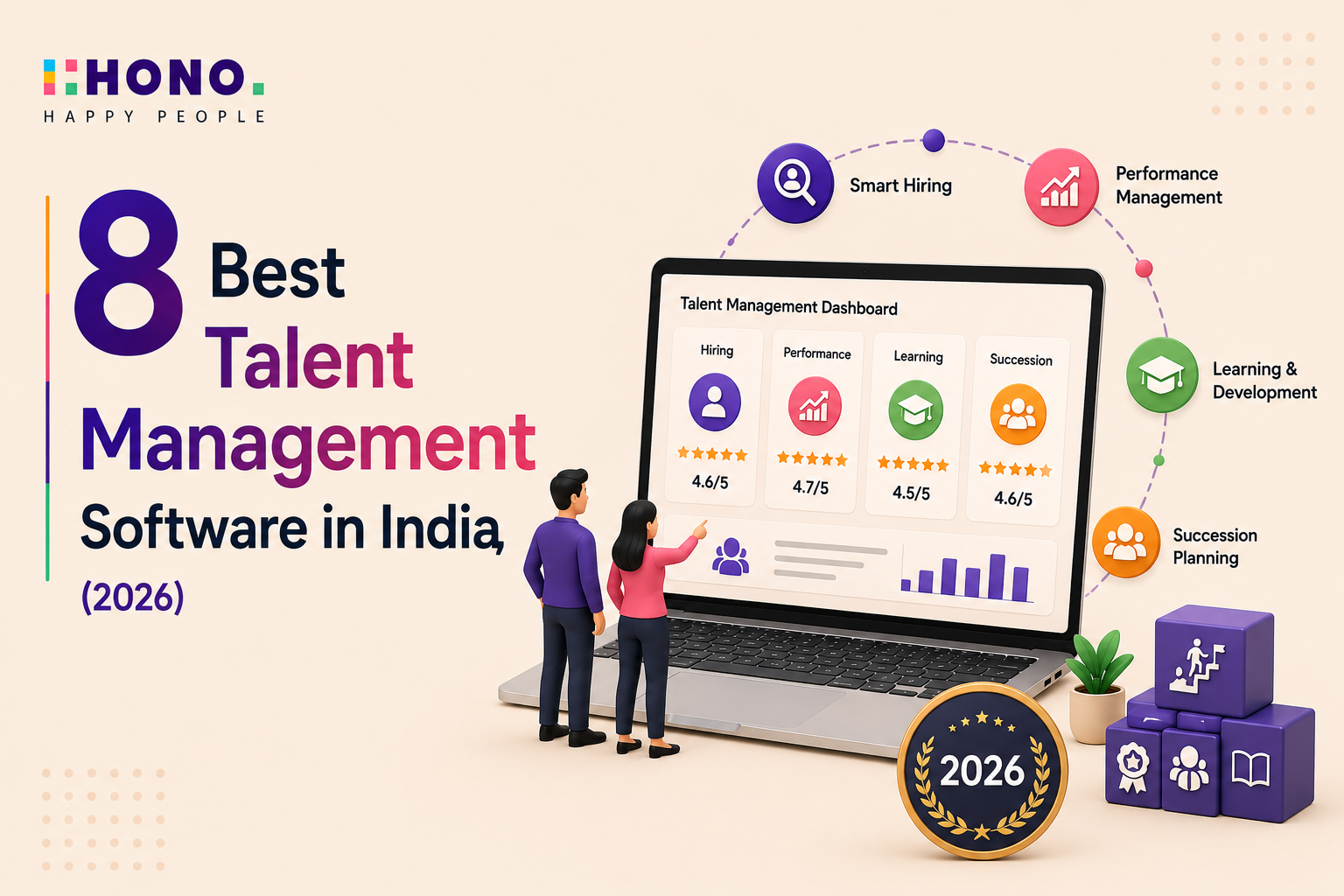
Talent management software only earns the name if it covers all four pillars: hiring, performance, learning, and succession. A performance-only tool is not full talent management, whatever the marketing says.
-
India-specific compliance (PF, ESI, professional tax, TDS) needs to sit inside the same system as performance and learning data, not in a bolted-on payroll add-on.
-
Pricing in India ranges from free tiers for under 5 employees (Zoho People) to multi-lakh enterprise contracts (SAP SuccessFactors, Workday), so the right pick depends heavily on company size.
-
AI features like resume screening and flight-risk flags are now standard across most vendors, but every credible vendor still keeps a human in the approval loop.
-
The India HRMS market was valued at close to USD 0.87 billion in 2025 and is projected to reach roughly USD 2.27 billion by 2031, which means most of these platforms are actively adding India-specific depth right now, not treating it as an afterthought.
Quick pick: Which HRMS suits you best?
| Software | Pick it for this one reason |
|---|---|
| HONO | Zero UI: conversational, multi-country agent-driven HRMS with no menus or forms to navigate |
| Darwinbox | Large India and GCC enterprises needing deep configurability |
| Zoho People | Lowest-cost entry for SMBs already in the Zoho stack |
| Keka | Mid-market teams that want strong UX over feature bloat |
| SAP SuccessFactors | Multinationals needing global compliance and analytics depth |
| Workday HCM | Enterprises wanting HR and finance on one data model |
| BambooHR | Small teams wanting hiring and onboarding without complexity |
| Lattice | Performance-led orgs fixing reviews and goals first |
What is talent management software?
Talent management software is a system that manages an employee across their full working life at a company, not just one stage of it. It combines hiring, onboarding, performance reviews, learning and development, and succession planning into one connected data set. The difference from a plain HRMS is scope: an HRMS can run payroll and attendance without ever touching performance or succession, while true talent management software is built to carry a person's data from the first interview to their next promotion.
What to look for in talent management software in India?
Look for genuine coverage of hiring, performance, learning, and succession in one data model, native linkage to Indian statutory payroll, integrations with local job boards, AI that assists rather than replaces human decisions, mobile-first adoption for non-desk staff, and transparent INR pricing that scales without hidden module fees.
Four-pillar coverage
Do not buy a performance tool thinking it is full talent management. A system that only handles reviews and OKRs, however well designed, leaves hiring, learning, and succession as separate purchases with separate logins. Before shortlisting anything, check whether the vendor's own product pages show all four pillars natively, or whether two of them are "coming soon" or handled through a partner integration.
India payroll and statutory linkage
Talent data is only as useful as the payroll and compliance system it feeds into. Indian payroll involves Provident Fund, Employee State Insurance, professional tax, TDS, and the Labour Welfare Fund, and getting any of these wrong triggers real penalties. Automated, India-native payroll calculation cuts processing errors significantly and reduces compliance penalties compared with manual processing.
Local hiring integrations
A talent system built for the Indian market should connect directly to Naukri.com and LinkedIn India, support employee referral workflows, and offer regional-language support for frontline and non-metro hiring. Vendors headquartered in India, like Darwinbox, Zoho, Keka, and HONO, tend to have this baked in from day one.
AI and automation
The useful AI features in 2026 are candidate matching, flight-risk signals, and skills-based development recommendations, with a human reviewing every AI-generated shortlist or flag before it becomes a decision.
Adoption and mobile
A talent system that only frontline or deskless staff can't use in the field is a system half your workforce will never touch. Look for low click-count self-service (checking a payslip or applying for leave in two or three taps), GPS or facial-recognition attendance for field teams, and a mobile app rated well by actual users rather than just listed as "available."
Scalability, integrations and INR pricing transparency
Confirm whether the vendor publishes INR pricing per employee per month, or whether every quote requires a sales call.
8 best talent management software in India (2026)
Here are the 8 systems, covering AI-native conversational HR, India-origin enterprise suites, budget-friendly SMB tools, and two global giants, scored against the four pillars above.
1. HONO
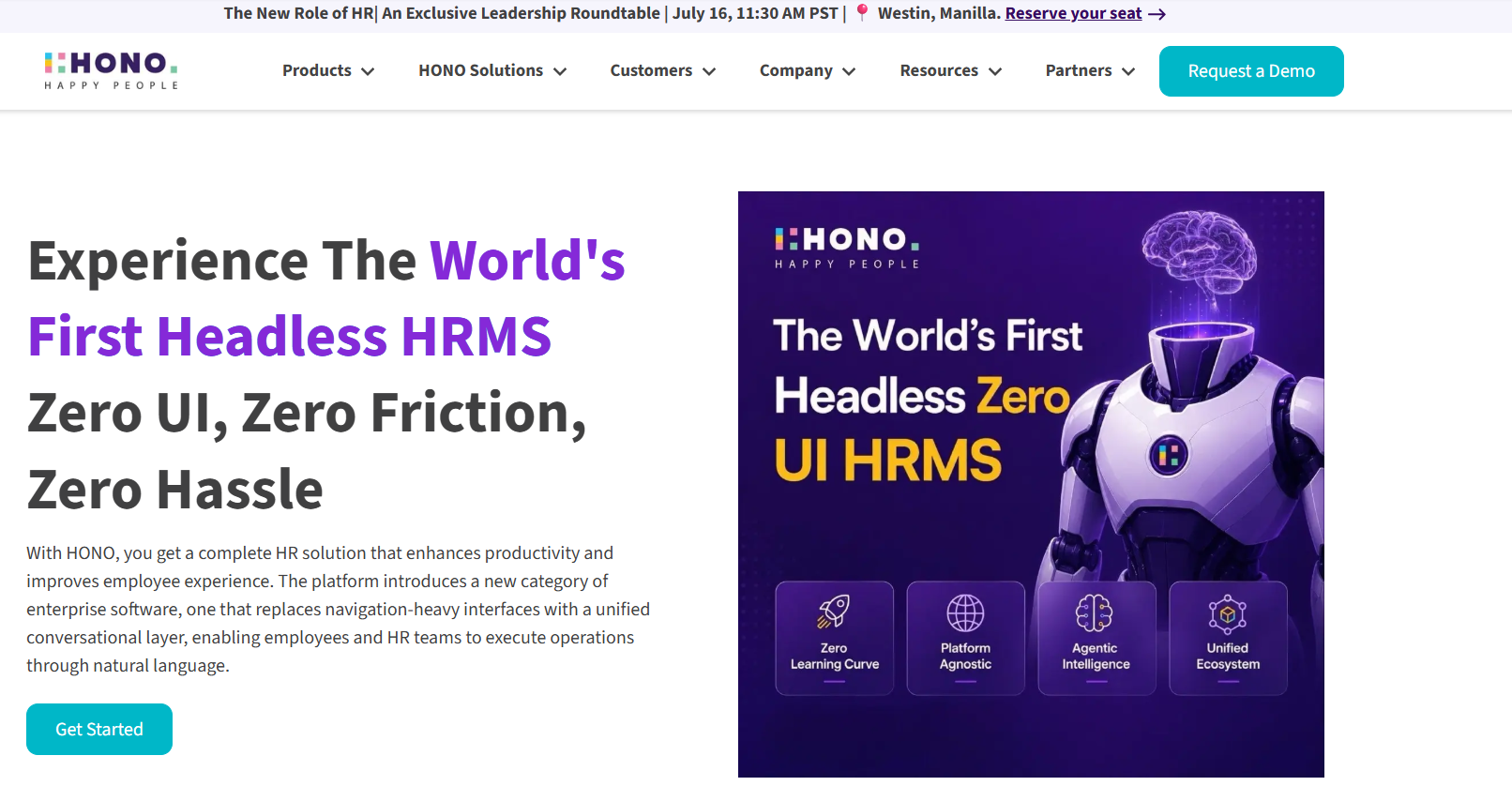
HONO is an AI-native, Zero UI conversational HRMS built around agentic execution rather than menus and dashboards. Instead of logging into a portal, employees and HR teams ask for what they need through WhatsApp, Microsoft Teams, Slack, or the web, and the system executes the action directly. HONO's recruitment module organizes screening into task-specific AI agents: one for parsing resumes into structured data, one for shortlisting against defined criteria, one for centralizing hiring-manager feedback, and one for producing an explainable ranked shortlist. The platform serves 300+ enterprise clients and over 1 million employees across India, the Middle East, and Southeast Asia.
Key features:
-
Zero UI conversational layer: across WhatsApp, Teams, Slack, and web, with no menu navigation required.
-
Four dedicated recruitment agents: covering parsing, shortlisting, feedback, and ranking.
-
Performance management: with goal tracking and continuous feedback (HONO Pulse).
-
People analytics: and attrition-risk flagging with human-in-the-loop review.
-
Multi-country payroll and compliance support: across 30+ countries.
You can book a live walkthrough at HONO's headless HRMS demo page.
2. Darwinbox
Darwinbox is a Hyderabad-headquartered, India-origin enterprise HCM platform built for organizations with 500 or more employees. It covers the full lifecycle from hiring through retirement, and is used by over 1,000 enterprises globally including JSW, Starbucks, HDFC Bank, and Mahindra. Darwinbox's Indian statutory coverage spans PF, ESIC, professional tax, TDS, LWF, POSH, and gratuity, and the platform is ISO 27001 certified.
Key features:
-
End-to-end HCM: core HR, talent acquisition, performance, learning, and workforce management in one suite.
-
AI features: for resume shortlisting and goal cascading.
-
Mobile-first self-service: with facial-recognition attendance and virtual ID cards.
-
Multi-legal-entity support: for enterprises running 15 to 25 business units pan-India.
-
Strong regional presence: across India, Southeast Asia, and the Middle East.
3. Zoho People (+ Zoho Recruit/People Plus)
Zoho People is the most affordable full-feature HRMS built by an Indian company, with pricing starting around ₹50 per employee per month for the Essential plan and going up to roughly ₹230 for Enterprise. A free tier covers up to 5 employees. It integrates with Zoho Payroll (roughly ₹33 per employee per month) for PF, ESI, TDS, and professional tax compliance, and with the wider Zoho ecosystem including CRM, Recruit, and Books.
Key features:
-
Tiered, publicly published INR pricing: from free (5 users) to Enterprise.
-
Native integration with Zoho Payroll: for full Indian statutory compliance.
-
Performance management, attendance, and employee self-service: in every paid tier.
-
Zoho Recruit add-on: for applicant tracking and hiring workflows.
-
Deep integration: with the broader Zoho One suite of 45+ business apps.
4. Keka
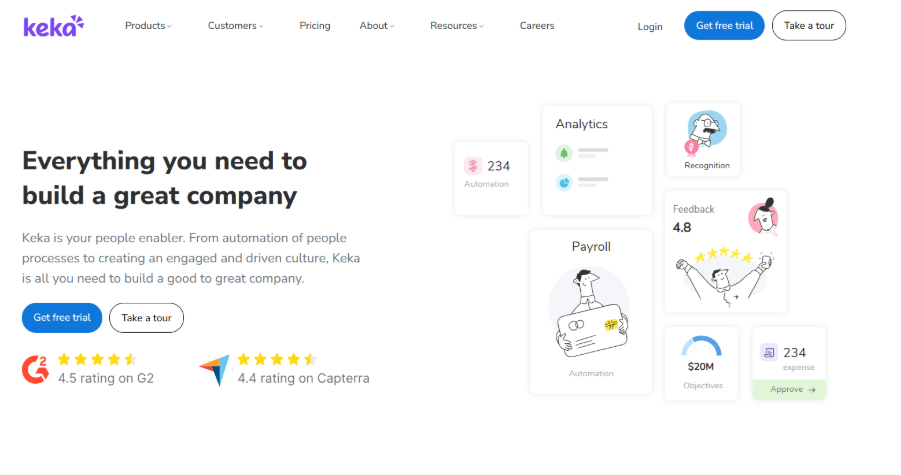
Keka is a Hyderabad-based, India-focused HR and payroll platform, founded in 2015, that has built a reputation for clean UX in a market often criticized for dated interfaces. Pricing runs in flat monthly bands for the first 100 employees: Foundation at roughly ₹9,999, Strength at ₹12,999, and Growth at ₹15,999, with additional employees billed at ₹90 to ₹150 per head. Keka holds a 4.5/5 rating on G2 from over 800 reviews, among the highest for an Indian HR platform.
Key features:
-
Automated statutory compliance: PF, ESI, TDS, professional tax, LWF, and gratuity calculations.
-
Performance management: with OKRs, 360-degree feedback, and 9-box grids.
-
GPS-based attendance: suited to field and distributed workforces.
-
Employee self-service: portal and mobile app with a strong usability track record.
-
Integrated HR workflows: hiring, onboarding, and project/timesheet tracking bundled into the same platform.
5. SAP SuccessFactors
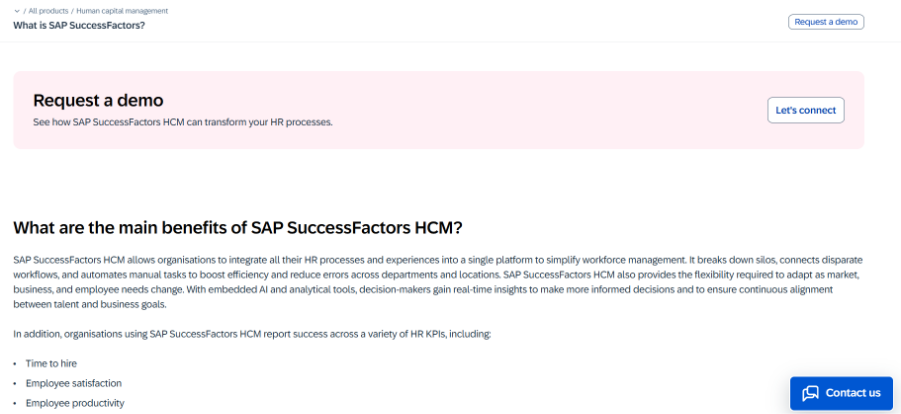
SAP SuccessFactors is SAP's global cloud HCM suite, covering Employee Central (core HR), recruiting, performance and goals, compensation, succession, learning, and workforce analytics. The platform serves over 10,000 customers and around 100 million users across 200-plus countries, and integrates tightly with SAP S/4HANA for organizations already on SAP's ERP stack.
Key features:
-
Employee Central: a single core-HR database across 100-plus countries.
-
Full talent suite: recruiting, performance and goals, compensation, succession, and learning.
-
Joule: SAP's AI assistant, embedded across most modules.
-
Deep native integration: with SAP S/4HANA and the broader SAP ecosystem.
-
Strong audit trail and compliance reporting: for regulated industries like BFSI and manufacturing.
6. Workday HCM
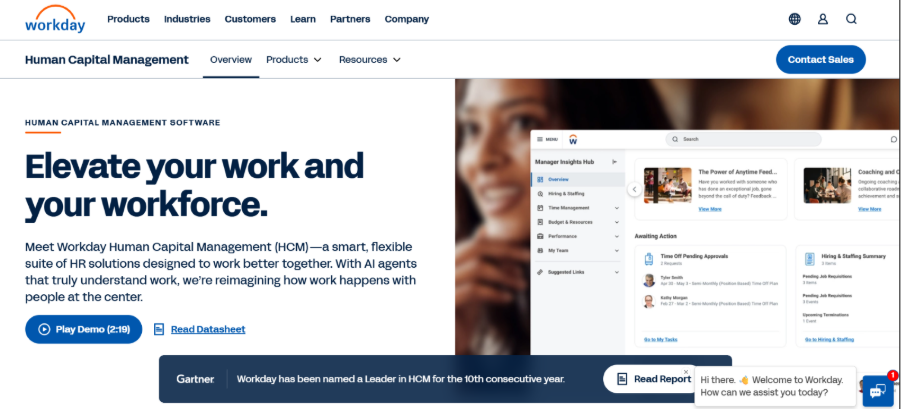
Workday HCM is an enterprise cloud platform that unifies HR, payroll, workforce planning, and financial data on a single data model, built primarily for organizations above 1,000 to 1,500 employees. Pricing is entirely custom, with published estimates ranging from roughly $100 to over $500 per employee annually depending on modules and scale. Native payroll is available only in a handful of countries (the US, Canada, UK, France, and Australia), with a Global Payroll Cloud partner network covering the rest.
Key features:
-
Single unified data model: spanning HR, finance, and workforce planning.
-
Illuminate AI: for workforce insights, skills matching, and scenario planning.
-
Skills Cloud: for organization-wide skills inventory and internal mobility.
-
Career development tools: including career path builder, mentor-mentee matching, and succession views.
-
Prism Analytics: provides deep reporting by merging HCM, CRM, and financial data.
7. BambooHR
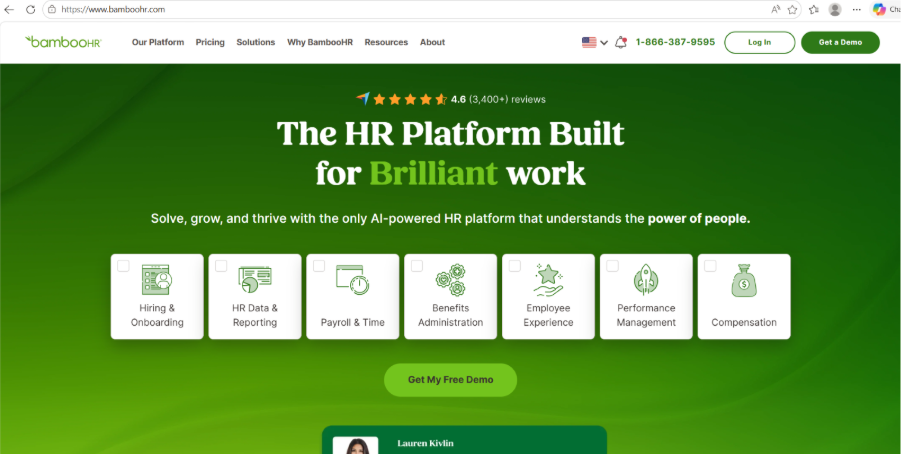
BambooHR is an SMB-friendly HRIS built around an easy applicant tracking system, onboarding workflows, and performance reviews, serving over 30,000 businesses including OpenAI and Zapier. Pricing starts around $6 to $8 per employee per month for the Core and Pro tiers, with payroll and benefits sold as separate add-ons. It carries a 92% ease-of-use rating on G2, among the highest in the SMB HRIS category, and its mobile app holds a 4.8/5 rating across more than 12,000 reviews.
Key features:
-
Built-in ATS: covering job posting, application tracking, and offer letters for up to 5 to 50 active openings depending on tier.
-
Automated onboarding: checklists with e-signature for new-hire paperwork.
-
Performance management: bundled into the Pro tier, including goal tracking and peer feedback.
-
Centralized employee database: acts as a single source of truth.
-
Mobile self-service: for time off, pay stubs, and the company directory.
8. Lattice
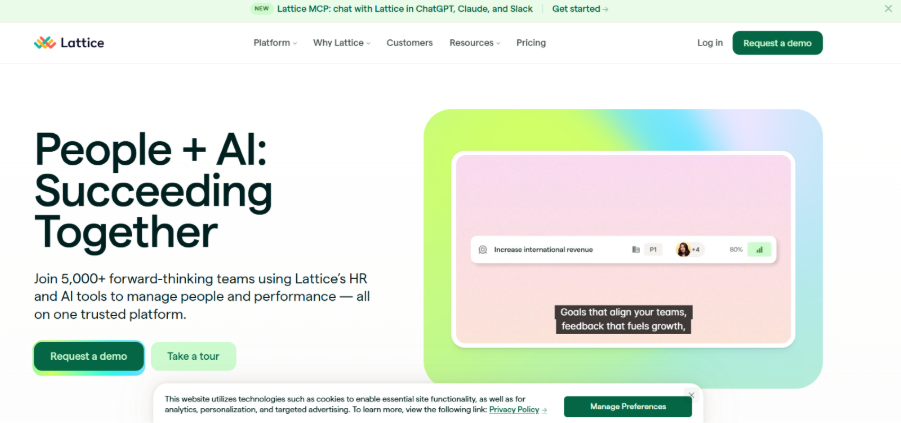
Lattice is a performance-enablement platform built to fix reviews, goals, and engagement for organizations that already have a system of record like Workday or BambooHR. Pricing starts at $11 per user per month for the combined Performance and OKRs bundle, with Engagement and Grow add-ons at $4 per user per month and Compensation at $6, subject to a $4,000 minimum annual contract. Lattice is sunsetting its own HRIS and payroll products by mid-2026 to focus entirely on performance.
Key features:
-
Configurable review cycles: annual, quarterly, project-based, and 360-degree feedback.
-
Cascading OKRs: from company to team to individual level with real-time progress tracking.
-
AI-assisted review drafting: summarizes goals and feedback into narrative text.
-
Engagement surveys: with eNPS, pulse surveys, and segmented benchmarking.
-
Compensation management: with merit-cycle planning and pay-equity analysis.
How to choose the right talent management software for your business?
Match the tool to your company's stage first, then to your budget. A 40-person startup needs speed and low cost far more than deep configurability, while a 5,000-person multinational needs compliance depth and analytics more than a slick interface.
SMB and startup
Choose Zoho People, Keka, or BambooHR. All three prioritize fast setup, published pricing, and enough core HR and hiring functionality to replace spreadsheets without a multi-month rollout.
Mid-market scaling
Choose Keka for India-first payroll depth, PeopleStrong for connected-lifecycle mid-market coverage, or HONO if you want AI-native, conversational HR from the start rather than bolting AI on later.
Enterprise or multi-entity
Choose HONO, Darwinbox, SAP SuccessFactors, or Workday. Each offers the configurability, multi-country compliance, and analytics depth that a large or multi-entity organization needs, with the trade-off of longer implementation timelines and higher total cost of ownership.
Frequently asked
FAQs
See it live
Ready to see HONO in action?
Book a 20-minute demo tailored to your team's HR stack.
Request a demo
About the author
Neha Sinha
Neha Sinha is a Talent Acquisition Lead at HONO with around 9 years of experience in HR and recruitment. She specializes in data-driven hiring, HR analytics, and strategic talent management, and has worked with organisations like CarDekho (Girnar Group) and American Cyber Systems. She is passionate about building high-performing teams, aligning people strategy with business goals, and mentoring aspiring HR professionals.