Key Takeaways
-
Every Dubai payroll run must produce a bank-accepted Wage Protection System file; confirm this before anything else.
-
Since 1 June 2026, WPS salary payments are due by the 1st of each month, with no grace period.
-
End-of-service gratuity is 21 days' basic wage per year for the first five years, 30 days per year after that, capped at two years' wage.
-
Workforce structure, office, field or multi-entity, decides the right platform more than brand name.
-
Only one platform compared here, Zoho Payroll, publishes its UAE pricing; every other vendor quotes on request.
What Is HR and Payroll Software?
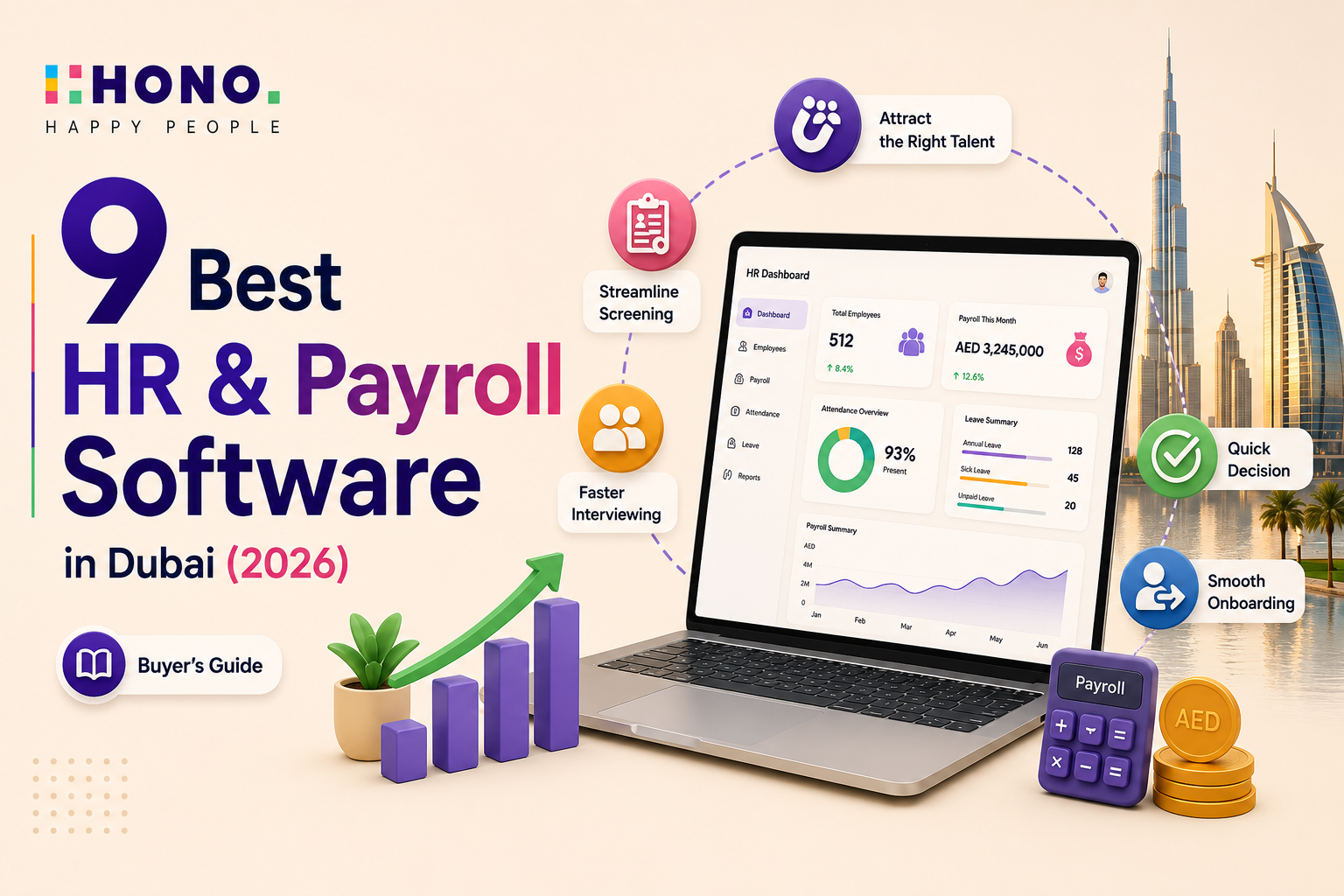
HR and payroll software is a single platform that centralises employee records, leave and attendance alongside automated salary processing, statutory deductions and payslip generation. In the UAE, it must also generate Wage Protection System files, calculate end-of-service gratuity, and handle multi-currency disbursement to stay compliant.
Why Dubai Businesses Need HR and Payroll in One System?
When attendance, leave and payroll sit in separate systems, someone has to reconcile them by hand every month. A missed leave entry or an unsynced attendance record turns into an incorrect salary figure, and an incorrect salary figure submitted through the Wage Protection System becomes a compliance problem, not just a payroll correction. Running HR and payroll on one platform removes that manual handoff and keeps both functions working from the same employee record.
What to Look for in HR and Payroll Software in Dubai?
Prioritise Wage Protection System compliance depth, gratuity accuracy and free zone jurisdiction handling over feature count. A platform that generates bank-accepted salary files, calculates gratuity correctly, and supports your free zone authority's rules is the baseline. Everything else is secondary.
WPS compliance and SIF File Generation
The Wage Protection System requires employers to pay wages only through banks or exchange houses licensed by the Central Bank and approved by MoHRE, submitted as a Salary Information File made up of one Salary Cover Record plus one Employee Detail Record per employee. Since 1 June 2026, Ministerial Resolution No. 340 of 2026 replaced the earlier 15-day grace period with a single deadline: wages are due by the 1st of every month, with no buffer. Non-compliance carries two separate penalties under Cabinet Resolution No. 21 of 2020: AED 1,000 per worker, capped at AED 20,000, for ordinary non-payment, and AED 5,000 per worker, capped at AED 50,000, for fraudulent conduct such as false wage receipts. Any platform still built around the old 15-day rule is already out of date.
End-of-Service Gratuity and EOSB Automation
Federal Decree-Law No. 33 of 2021 entitles any employee with at least one year of continuous service to gratuity calculated on basic wage only: 21 days' wage for each of the first five years, and 30 days' wage for each year after that, capped at two years' total wage. Resignation and termination are treated identically under current law, unlike the earlier law it replaced. Payroll software should accrue this liability monthly by contract type, rather than calculating it only when an employee leaves, so finance always has an accurate running figure.
GPSSA and DEWS Pension Handling
UAE nationals who joined the workforce on or after 31 October 2023 fall under Federal Decree-Law No. 57 of 2023, which set total GPSSA contributions at 26 percent of pensionable salary, 11 percent from the employee and 15 percent from the employer. For Emiratis earning under AED 20,000 a month, government funding brings the employer's effective share down to 12.5 percent. DIFC runs a separate system: DEWS replaced gratuity for expatriate employees there from 1 February 2020, and since DIFC Law No. 1 of 2024, employers must also top up GPSSA-registered nationals whose contribution falls short of DEWS-equivalent value.
Free Zone vs Mainland Payroll Rules
DMCC made Wage Protection System registration mandatory for its member companies, enforced from January 2024. DIFC operates under its own employment law, DIFC Law No. 2 of 2019, as amended, rather than MoHRE's WPS rules directly. Since the June 2026 federal resolution set a single 1st-of-month deadline, any free zone payment date that circulated before that change should be reconfirmed with the relevant authority. A platform built for Dubai needs to apply the correct rule set at the entity level, not one configuration across mainland and every free zone.
Emiratisation Tracking
Private-sector companies with 50 or more employees must raise Emiratisation of skilled roles by 2 percent a year, reaching 10 percent by the end of 2026, backed by a penalty of AED 6,000 a month per unfilled position that has risen roughly AED 1,000 a year since 2023. Since 2024, companies with 20 to 49 employees across 14 specified sectors must employ at least one Emirati, rising to two by the end of 2025, backed by a fixed annual penalty of AED 96,000 for missing the 2024 target and AED 108,000 for 2025, per U.AE. Software that tracks these ratios and flags a shortfall before MoHRE does is worth more than one that only reports headcount after the fact.
Attendance, Self-Service and Arabic/English Support
Beyond compliance, most Dubai employers need biometric, GPS or app-based attendance that feeds directly into payroll, a self-service portal for payslips and leave requests, and an interface that works in both Arabic and English for a genuinely multinational workforce. These features sit on top of compliance rather than replacing it, so evaluate them only after confirming the compliance layer is solid.
9 Best HR and Payroll Software in Dubai (2026)
The nine platforms below are compared on WPS and SIF depth, gratuity automation, free zone handling, self-service capability, and pricing transparency. Customer counts and ratings are vendor-reported unless a review platform is named.
Comparison Table
| Tool | Best For | WPS / SIF | Gratuity | Starting Price |
|---|---|---|---|---|
| HONO | Enterprise, AI-driven HR automation | Yes | Yes | Quote-based |
| Bayzat | SMEs wanting payroll, benefits and insurance together | Yes | Yes | Quote-based |
| ZenHR | SMEs and mid-market wanting compliance-first HR | Yes | Yes | Quote-based |
| GulfHR | Mid-to-large firms needing configurable GCC-wide payroll | Yes | Yes | Not published |
| greytHR | Cost-sensitive SMEs and startups | Yes | Yes | Quote-based |
| Zoho People + Zoho Payroll | Startups already using Zoho apps | Yes | Yes | AED 45/org/month + AED 9/employee |
| TrueBays StackHX | Multi-branch operations across the UAE | Yes | Yes | Quote-based |
| Paylite HRMS | Construction, retail and hospitality, modular payroll | Yes | Yes | Quote-based |
| Darwinbox | Large enterprises, multi-entity GCC payroll | Yes | Yes | Not published |
1. HONO
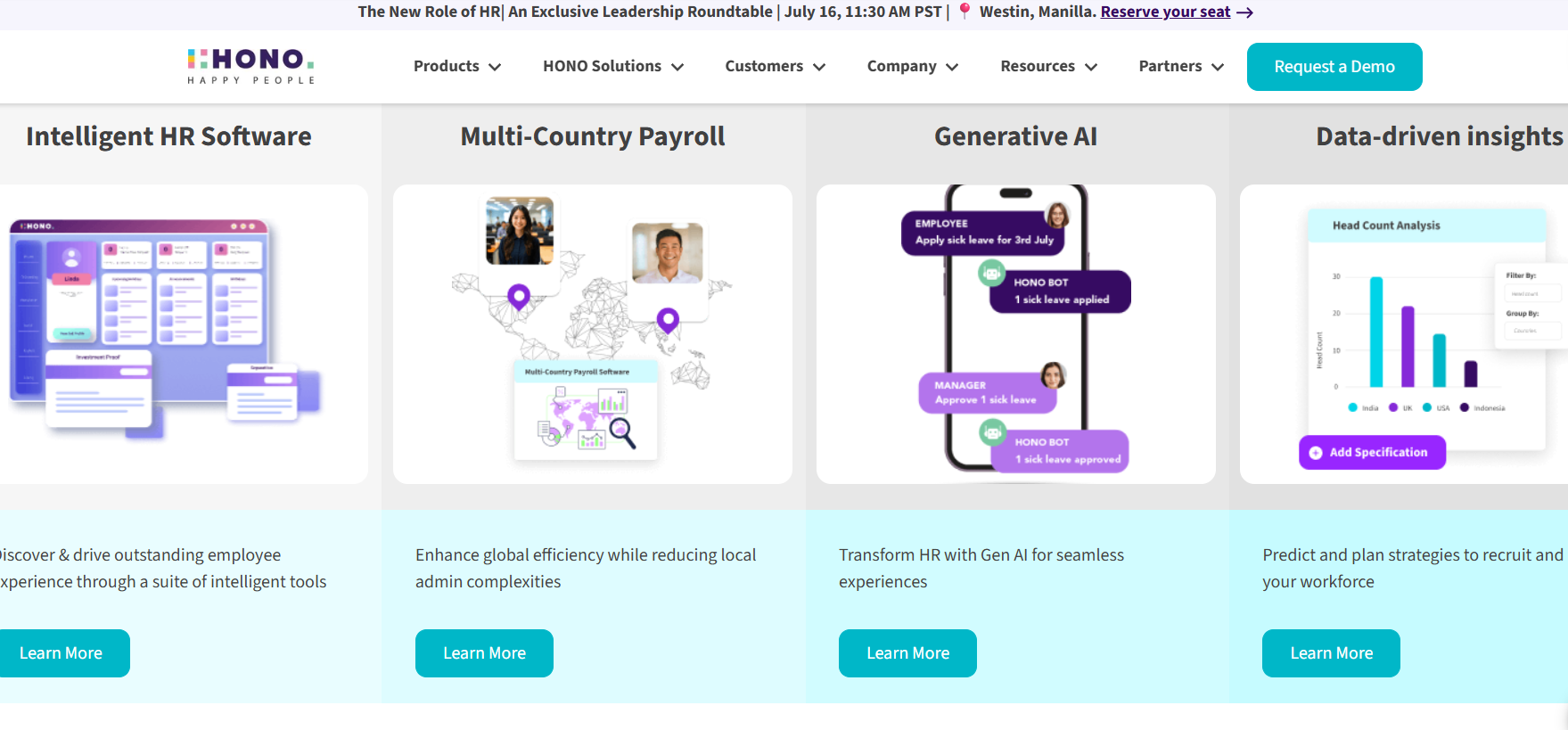
HONO is best suited to enterprise and mid-to-large businesses operating in Dubai and across the UAE that want AI-driven HR automation built on a solid UAE compliance foundation. Founded in 2016 and headquartered in Gurugram, India, HONO has made significant inroads into the GCC market, positioning itself as an AI-native HRMS built around ERA, its conversational assistant. It currently serves 300+ enterprise clients operating across 50+ countries, with a growing footprint among multinational and regional organisations managing large, diverse workforces in Dubai.
Key Features:
-
World's first Headless HRMS: ERA eliminates the traditional dashboard entirely, enabling HR interactions through conversational AI, AI agents, and no-code workflow orchestration.
-
Chat-First via WhatsApp, Slack and MS Teams: employees complete HR transactions inside apps they already use, removing the login barrier entirely — valuable in Dubai's mobile-first, multinational workforce.
-
Attrition prediction, not just reporting: HONO predicts who is likely to leave in the next 60 days, explains why, and prescribes an internal mobility plan to retain them.
-
Agentic AI onboarding with sentiment tracking: uses Agentic AI to curate a personalised first-90-days journey, identifying skill gaps, suggesting mentors, and tracking new hire sentiment from day one.
-
Native UAE compliance layer: WPS-compliant payroll and automated UAE Labour Law gratuity calculations are core to the platform, not bolt-on modules.
Pricing:
Quote-based.
Rated: 4.6/5 on G2.
See how HONO handles WPS, gratuity and Emiratisation tracking for your own workforce. Book a personalised demo.
2. Bayzat
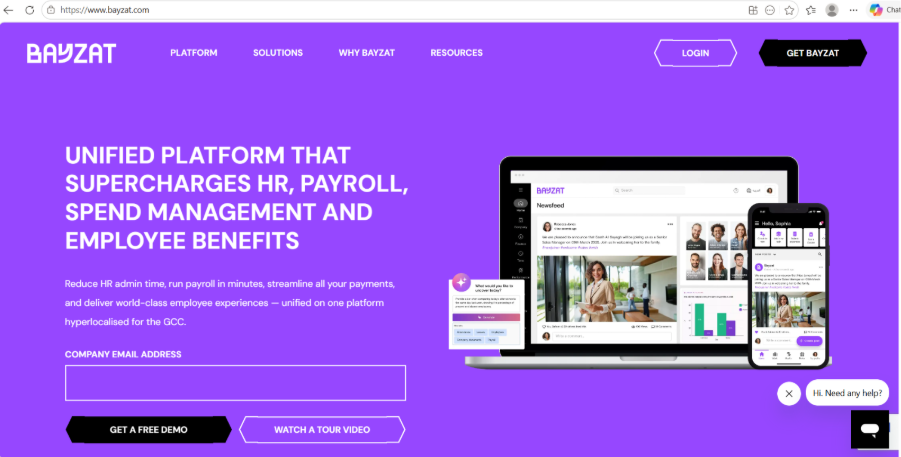
Bayzat is built for SMEs that want payroll, health insurance and employee benefits managed from a single platform. Founded in Dubai in 2012, it has grown to serve more than 4,000 client companies, according to its own figures, with a strong focus on combining compliance with employee-facing benefits.
Key Features:
-
Unified payroll and benefits: combines salary processing with health insurance and benefits administration in one system.
-
WPS-compliant SIF generation: produces Salary Information Files directly from payroll data.
-
Automated gratuity: calculates end-of-service benefits under UAE labour law.
Pricing:
Available through consultation only.
3. ZenHR
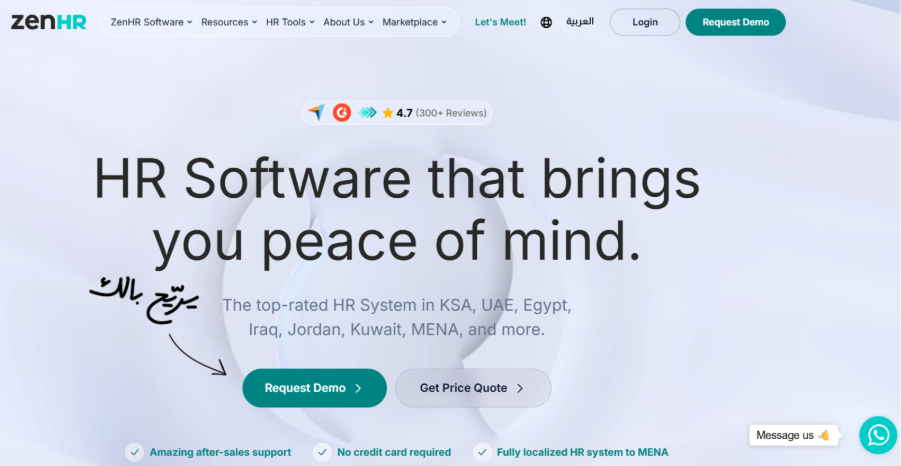
ZenHR is aimed at SMEs and mid-market firms that want a compliance-first platform built specifically for the region. It is headquartered in Riyadh with offices across five MENA markets, and its UAE product line is built around statutory reporting rather than adapted from a global product.
Key Features:
-
MoHRE-format WPS reporting: generates wage protection reports directly in the format regulators require, confirmed on its UAE page.
-
Contract-aware gratuity calculation: adjusts automatically for contract type, tenure and termination reason.
-
Bilingual interface: runs fully in Arabic and English, with integrations into Xero and QuickBooks.
Pricing:
Quote-based.
4. GulfHR
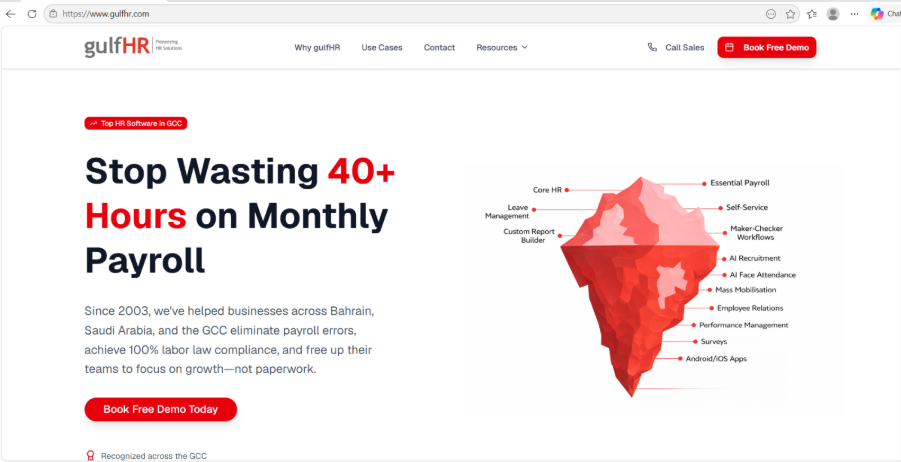
GulfHR suits mid-to-large firms that need a configurable payroll engine spanning multiple GCC countries. It has operated in the region since the early 2000s, though sources disagree on the exact founding year, and its focus has stayed on payroll depth rather than broader HR features.
Key Features:
-
Configurable payroll engine: supports multiple pay cycles and multi-country processing from one setup.
-
Automated WPS file generation: includes IBAN validation as part of the payroll run.
Pricing:
Not publicly listed.
5. greytHR
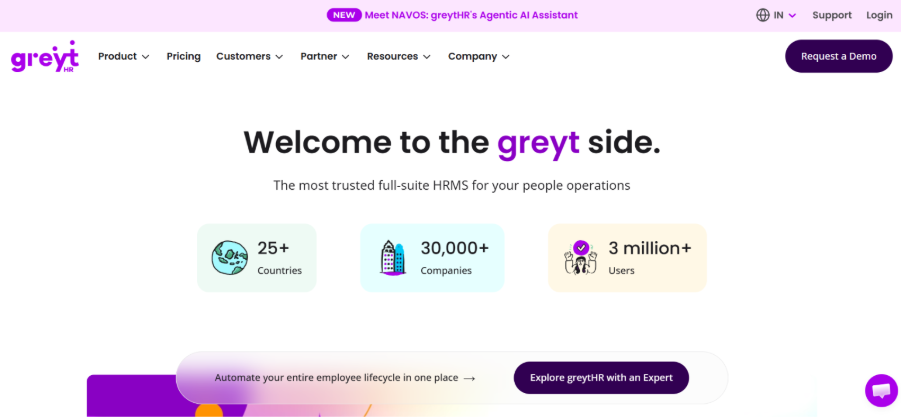
greytHR is a strong option for cost-sensitive SMEs and startups under 100 employees. Founded in Bengaluru in 1994 and acquired by Apax Partners in August 2024, it runs a dedicated Middle East product line built around UAE-specific statutory requirements.
Key Features:
-
GPSSA, ADRBPF and SSSF support: named explicitly as automated capabilities on its Middle East site.
-
WPS compliance tooling: confirmed as part of its regional payroll offering.
Pricing:
Quote-based.
6. Zoho People + Zoho Payroll
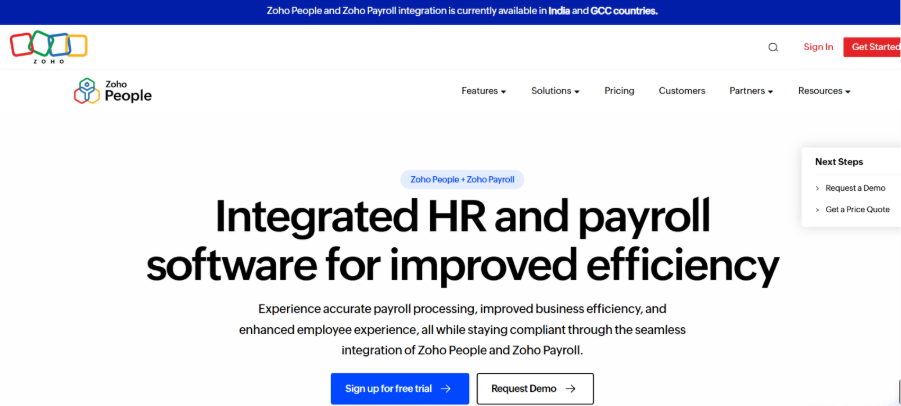
Zoho Payroll is a fit for startups already using other Zoho applications. It is officially available across the UAE and the wider GCC, and stands out in this comparison as the only vendor with fully published pricing rather than a custom quote.
Key Features:
-
Auto-generated SIF files: produces Wage Protection System files directly from payroll data.
-
GPSSA and gratuity support: both are built into the UAE payroll configuration.
-
One limitation worth flagging: Zoho People itself does not run payroll, and the sync with Zoho Payroll is one-way, requiring Zoho People's own Leave and Attendance module to be disabled first.
Pricing:
Standard tier runs AED 45 per organisation per month plus AED 9 per employee, rising to AED 90 per month plus AED 18 per employee at Premium, excluding VAT, with a 14-day free trial.
7. TrueBays StackHX
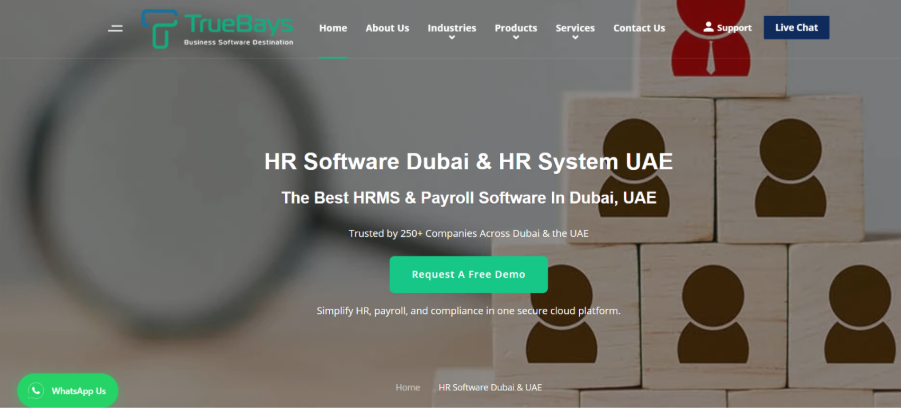
TrueBays StackHX is built for multi-branch operations spread across Dubai, Abu Dhabi and Sharjah. It emphasises bank-level WPS compatibility and field-ready attendance tracking over broader HR functionality.
Key Features:
-
Bank-accepted WPS files: confirmed to work with Emirates NBD, ADCB, Mashreq, FAB, DIB and RAKBANK.
-
Gratuity automation: built around Federal Decree-Law No. 33 of 2021.
-
Biometric attendance: supports GPSSA-ready data export alongside on-site attendance tracking.
Pricing:
Quote-based per employee, with no stated minimum headcount.
8. Paylite HRMS
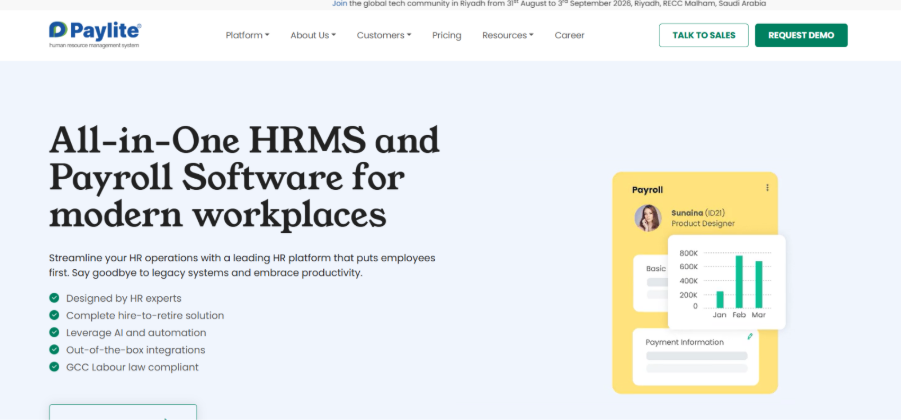
Paylite HRMS is suited to construction, retail and hospitality businesses that need modular payroll spanning different jurisdictions. It launched in 2007 under Citytech Software, a DMCC-based company established in 1993.
Key Features:
-
Jurisdiction-specific gratuity schemes: configurable across mainland, free zone and DEWS/GPSSA setups.
-
WPS and non-WPS file generation: both confirmed in its own product documentation.
Pricing:
Quote-based.
9. Darwinbox
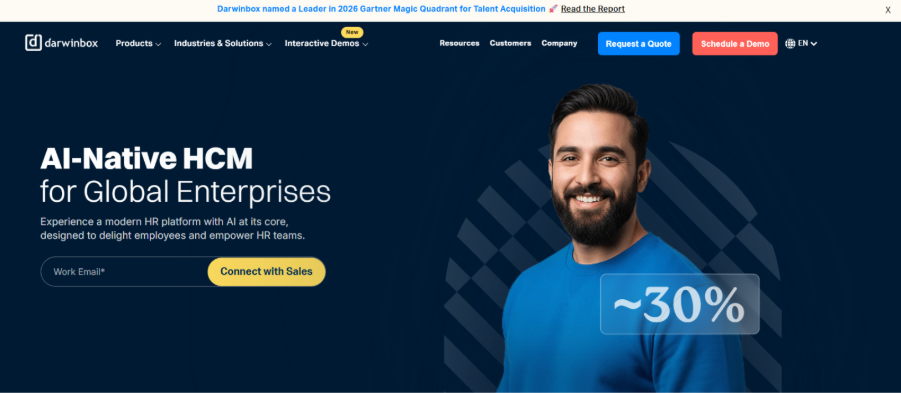
Darwinbox is built for large enterprises running complex, multi-entity payroll across the GCC. Founded in 2015, it operates a regional office in DIFC, Dubai, and names Lulu Group, Aramex and Mobily Infotech among its GCC clients.
Key Features:
-
Darwinbox Studio: a no-code configuration layer for building custom payroll rules.
-
SIF validation: its UAE content references error-free SIF validation for WPS reporting.
-
Full GCC compliance claim: states full statutory payroll compliance across all six GCC countries.
Pricing:
Not publicly disclosed.
How to Choose the Right HR and Payroll Software for Your Dubai Business?
The deciding factor is your workforce structure and regulatory jurisdiction, not brand name or feature count. Match the platform to your workforce reality first, then compare features within that shortlist.
Office and Hybrid Teams (DIFC, ADGM, Business Bay)
For office-based and hybrid teams, payroll accuracy and self-service depth matter more than field-attendance hardware. HONO, Bayzat and ZenHR are the strongest fits from this comparison for that profile.
Construction, Field and Multi-Site Crews
Field and multi-site workforces need GPS or biometric attendance tied directly into payroll, along with the ability to manage free zone and mainland entities side by side. TrueBays StackHX and Paylite HRMS are built around this use case.
SME and Startup (Under 50 Employees)
Smaller teams generally need a lower-cost entry tier that is WPS-ready from day one, without the configuration overhead of an enterprise platform. greytHR and Zoho People with Zoho Payroll fit this segment, and Zoho Payroll is the only one of the two with published pricing to plan around.
Enterprise and Multi-Entity GCC
Large, multi-entity organisations operating across several GCC countries need a configurable rule engine, deeper analytics and integration with existing finance systems. HONO, Darwinbox and GulfHR are built for this scale.
How Much Does HR and Payroll Software Cost in Dubai?
Quoted pricing usually depends on headcount, module selection (payroll only versus full HR suite), operations in number of free zone or mainland entities, and whether implementation and training are bundled in or billed separately.
There is also a cost to not automating. Every manual step in payroll, matching attendance records, correcting missed punches, reconciling leave balances by hand, is HR time that a synced system removes, and it is also a point where a keying error can turn into an incorrect Wage Protection System submission. That risk, more than the software's monthly fee, is usually the real cost comparison worth making.
Conclusion
Dubai's HR and payroll requirements are shaped as much by regulation as by workforce size. WPS compliance, gratuity accuracy under Federal Decree-Law No. 33 of 2021, and free zone-specific rules are baseline requirements, not competitive extras. Once a platform clears that bar, the right choice comes down to workforce structure: HONO and Darwinbox for large, multi-entity enterprises; Bayzat and ZenHR for compliance-first SMEs; TrueBays and Paylite for field and construction operations; Zoho Payroll for startups wanting transparent, published pricing. For businesses managing complex, multi-entity compliance across the UAE, HONO's AI-driven automation is built specifically for that scale.
Ready to Simplify HR and Payroll Compliance in Dubai?
See exactly how HONO handles WPS, gratuity and Emiratisation tracking for your workforce. Book your personalised demo.
Frequently asked
FAQs
See it live
Ready to see HONO in action?
Book a 20-minute demo tailored to your team's HR stack.
Request a demo
About the author
Harshita Bhalla
Harshita Bhalla is an Assistant Manager - HR at HONO and a Certified HR Payroll Specialist with around 4 years of experience in HR operations, payroll, and employee lifecycle management. She has worked across domestic and international payroll functions and brings a detail-oriented, people-first approach to everything she does. Harshita is passionate about building efficient HR systems that support both people and business growth.