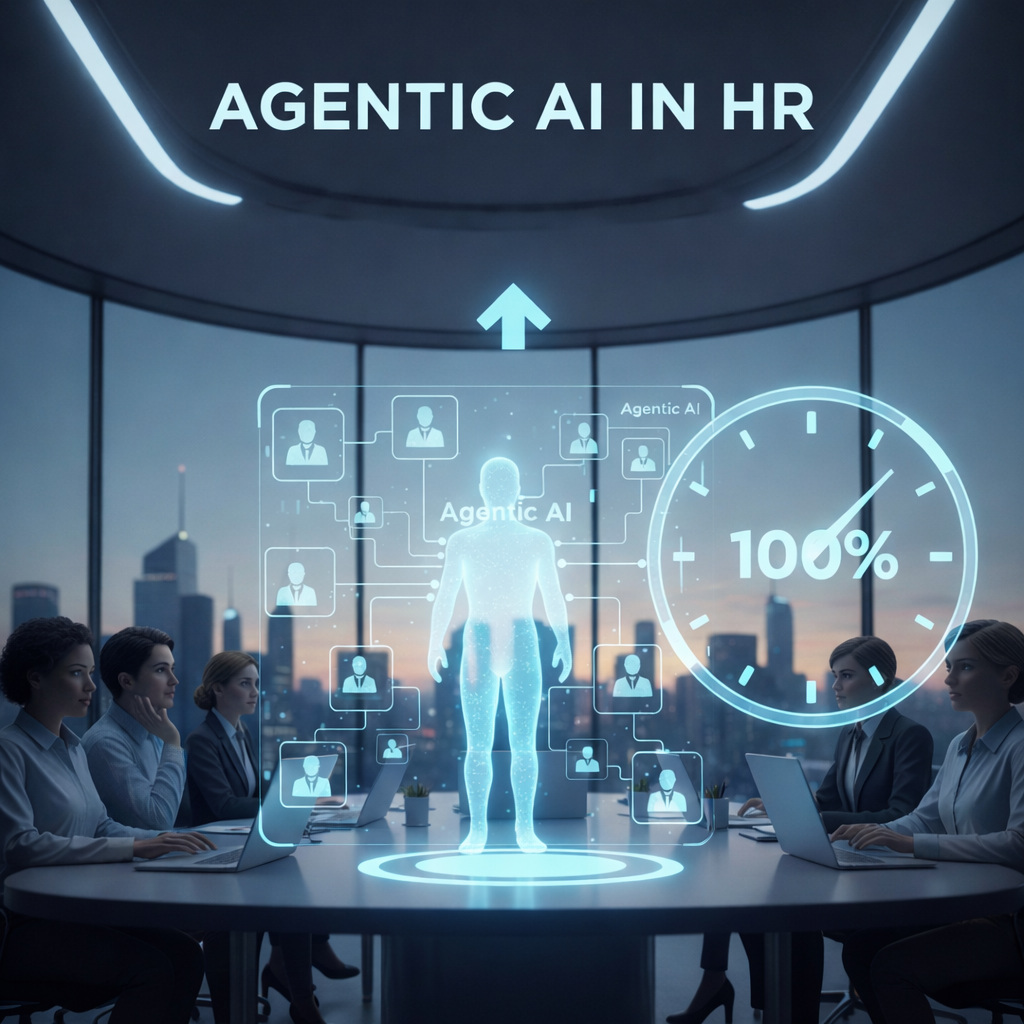
The Anatomy of the 100% Productivity Model
To achieve total productivity, an HRMS must evolve from a "system of record" to a "system of agency." This requires a shift from linear automation to Autonomous Workflows. Key capabilities include:
- Task Management: While automated systems trigger notifications for humans, Agentic HRMS executes the task and notifies the human of completion.
- Problem Solving: Instead of just flagging errors, agents investigate the cause, correct it, and log the fix.
- Decision Making: Agents go beyond providing data to recommending and executing based on pre-set guardrails.
- Context Awareness: Agentic systems cross-pollinate data between Recruitment, Payroll, and OD rather than operating in silos.
Deep-Dive: Specific Agentic Features Driving the 100% Shift
How does this look in a global enterprise context? It comes down to three specialized "Digital Workers" within the HONO ecosystem:
1. The Journey Orchestration Agent (Onboarding to Offboarding)
In most companies, onboarding is a series of "90% ready" steps. The 100% Frontier: The HONO Journey Agent perceives the moment an offer is signed. It autonomously triggers IT provisioning, sets up the local tax profile for specific countries (e.g., Kenya or Vietnam), and schedules the first week of training based on the manager's live calendar.
2. The Anomalous Intelligence Agent (Payroll & Compliance)
Payroll leakage is the silent killer of productivity. The 100% Frontier: Instead of a payroll manager spending days on reconciliation, the Agentic AI performs Continuous Validation. It scans attendance data against local labor laws and identifies compliance risks—like a breach of the "Right to Disconnect" in France—before it becomes a fine.
3. The Skill Intelligence Agent (Strategic OD)
Traditional HRMS cannot tell you what skills employees are gaining in real-time. The 100% Frontier: This agent monitors work output and autonomously updates the "Global Skills Inventory." When a new project arises, it orchestrates internal mobility offers, gauging interest before a manager even opens a job requisition.
Achieving Zero-Touch via Chat-First Interaction
The final 10% of productivity is often lost in the "UI Gap"—the time employees spend logging in and out of portals. Forrester’s 2026 Workforce Productivity Index highlights that "Employee Effort" is at an all-time high. HONO solves this by making every Agentic feature accessible through Chat-First interfaces.
Example: A VP asks the HONO bot: "What’s the attrition risk in Vietnam this quarter?" The Agentic Response provides the risk percentage, identifies the cause (local salary shifts), and drafts a retention bonus plan for review.
The Expert Analyst Verdict: Why This Matters for the C-Suite
As an expert content analyst would highlight, the Gap in most AI implementations is Governance. In 2026, the CIO’s primary concern with Agentic AI is: How do I control it?
HONO’s Agentic Frontier is built with Twist-Lock Governance:
- Human-in-the-Loop (HITL): Agents execute the mundane but escalate the "Moral" or "Strategic" decisions to a human.
- Auditability: Every autonomous action taken by an agent is logged in a "Reasoning Trace," showing exactly why it made a specific decision.
- Data Sovereignty: Agents operate within the localized data silos of each country, ensuring compliance with laws like India’s DPDPA or the EU’s AI Act.
Conclusion: From 90% Efficiency to 100% Autonomy
Moving to the Agentic Productivity Frontier is not just a technological upgrade—it’s a competitive necessity. By 2027, Gartner predicts that organizations without autonomous process agents will face a 20% cost disadvantage compared to their agentic peers.
For the progressive, productivity-focused enterprise, the goal is clear: Remove the friction, empower the agents, and let your humans focus on the high-value strategy that only a human can provide.
See it live
Ready to see HONO in action?
Book a 20-minute demo tailored to your team's HR stack.
Request a demoAbout the author
Akanksha Shekhar
With over 9 years immersed in the world of content marketing for SaaS, Cloud, HRMS and multiple other industries, Akanksha Shekhar currently leads the content initiatives as Manager of Content Marketing. Her expertise lies in the art of bringing words to life, creating engaging narratives and technically sound pieces that are both catchy and deeply informative.