![Top 5 Attendance Management Software in India [2026 updated]](https://25298601.fs1.hubspotusercontent-eu1.net/hubfs/25298601/Best%20Attendance%20Management%20System%20in%20India.webp)
What is Attendance Software?
Attendance software can be referred to as a digital tool used by organizations to automatically track, record, and manage employee working hours. It captures employee data such as check-in time, check-out time, multiple shifts, overtime, long or short absences, and even short breaks through access card punch-ins, biometric systems, or location-based mobile app tracking.
This attendance software ensures that there is complete accuracy, simplified payroll processing, and the labor law compliance is being followed. The major reason why attendance management is implemented in the system is because it provides real-time visibility into workforce availability and lets the HR team have lesser tasks on their plate.
Read Here: Attendance Management System: A Comprehensive Guide
What Are the Types of Time & Attendance Software?
There are multiple types of time and attendance software, each works on a different principle and is used for a special perspective, listed below are the three major types, their benefits, working mechanism and typical use cases-
RFID Attendance Management System
RFID, known as Radio Frequency Identification, is a type of attendance management system that records employee attendance through RFID cards or tags. In this process, employees scan their assigned card at a reader which is installed at the entry or exit points of the organization. The system automatically logs their attendance through biometric or access card punch in/outs. This method is relatively speedy, contactless, and extremely easy to use, making it suitable for large organizations such as large on-site workforce, manufacturing units, factories, enterprise-level corporate offices and schools. The RFID systems reduce manual entry inaccuracies and speed up the attendance marking possibilities. However, it does have a downside as employees can mark proxy attendance by sharing their cards among the rest of the employees.
Biometric Attendance Management System
A biometric attendance system includes using a biological fact check to mark attendance. The traits include fingerprints, facial recognition, and retina scan. As the biometric data is unique in nature, basis everyone, this system smartly eradicates proxy attendance/ access card punching, making the attendance marking more accurate and useful. This system is used widely in corporate organizations, factories, hospitals, and even in government institutions where attendance accuracy plays a crucial role. A biometric system can integrate seamlessly with the payroll and HRMS platforms, making sure that the tracking is accurate and precise, be it working hours, employee’s overtime, leaves etc. However, integrating biometric requires hardware installation and data privacy safeguards.
Mobile- Application Based Attendance System
This is another major type of time and attendance management software, mostly utilized by organizations irrespective of its size and configuration. A mobile application-based attendance system allows employees to mark their regular attendance through a white label application or a website where employee’s organization credentials are used to login. App-based systems include features such as GPS tracking, selfie capture marking, geo-fencing marking are an excellent choice for remote teams, hybrid working teams, sales teams, or field staff. These systems also provide at most flexibility, easy scalability, all in minimal hardware costing, letting the managers have real-time visibility into workforce movement and employee attendance trends.
5 Best Attendance Management Software in India
While choosing the right attendance management software, organizations must analyze the core challenges they require the system to solve. Listed below are the top five attendance management system in India that could help organizations ease employee’s attendance and leaves management.
HONO
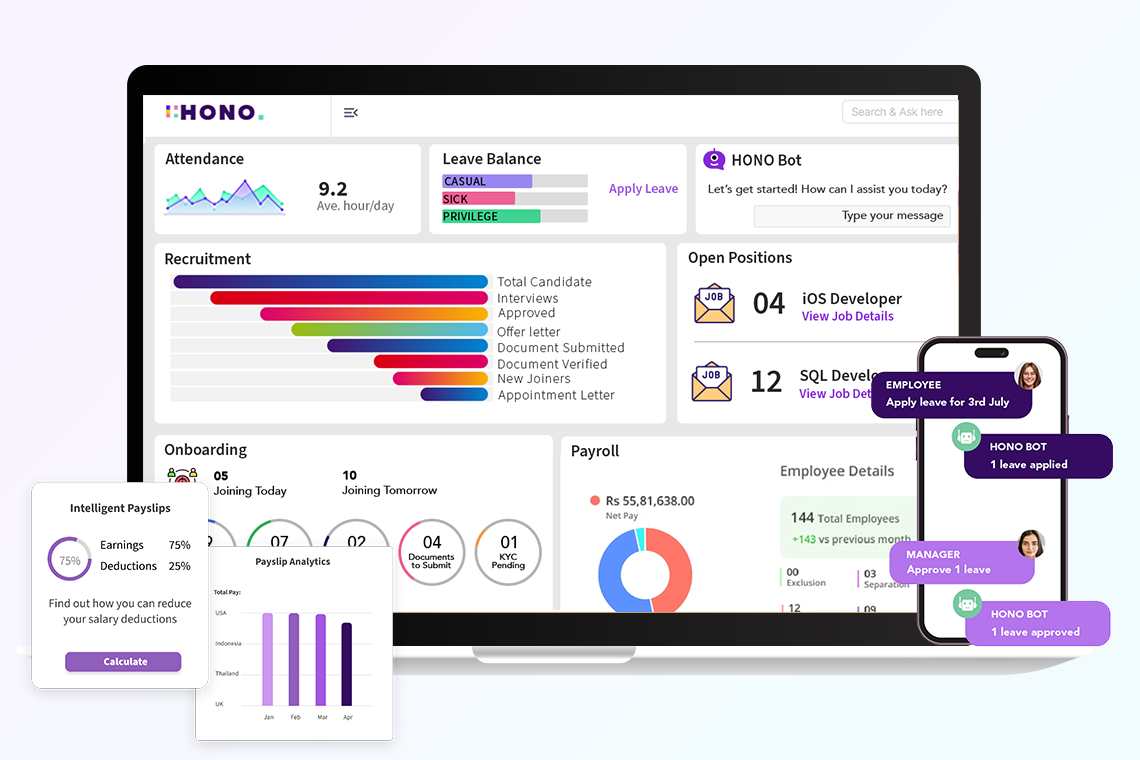
Leading the next-generation, AI-powered attendance and workforce management, HONO tops the list. The attendance management system offered by HONO is designed for modern, hybrid organizations offering multiple attendance modules including mobile, web, geo-fencing capabilities, marking through QR codes, and facial recognition alongside smart insights to track employee absenteeism, overtime, and overall productivity. HONO leads with features that sets it apart, its biggest USP is the Agentic AI-driven analytics and predictive workforce insights, blended with an all-in-one HCM suite that integrates attendance seamlessly with leave, payroll, performance, compliance and the aspect of employee engagement. This makes HONO an ideal choice for enterprises seeking features like automation and scalability to drive data-powered decisions.
Zimyo
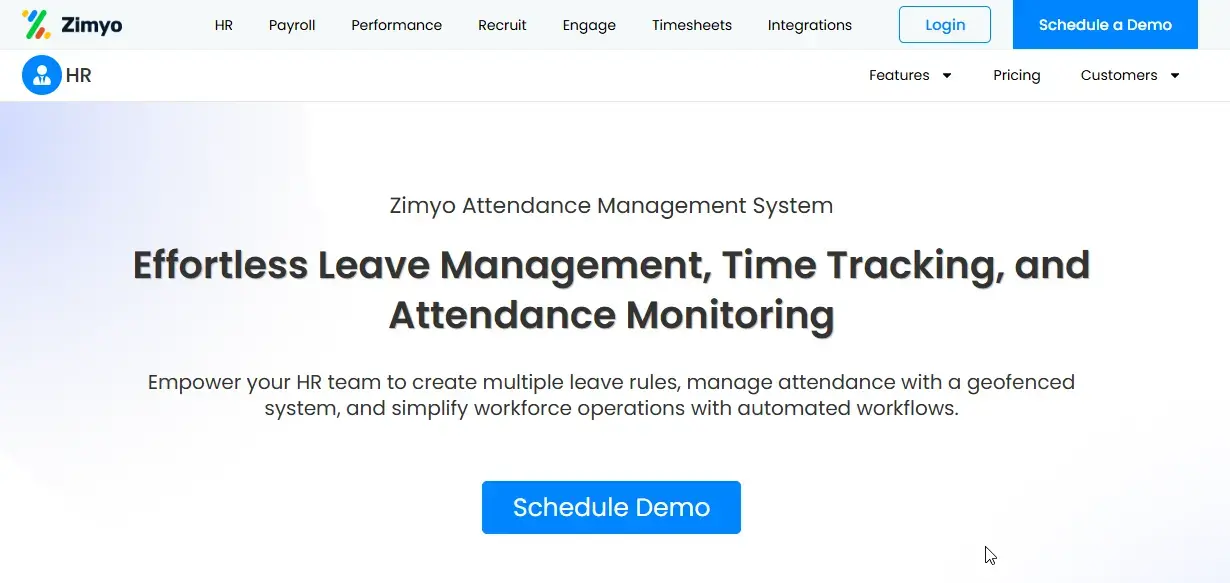
Zimyo is another name in providing a robust attendance management system which brings in features such as GPS-based check-ins, marking attendance offline, geo-fencing, and automated shift tracking. The smart software integrates employee’s attendance data directly with leave and payroll modules, which in turn helps the HR teams in significantly reducing manual efforts and elevating accuracy all at the same time. Zimyo is perfectly suited for organizations that require reporting capabilities and attendance rules that can be flexible and distributed across multiple teams.
Superworks
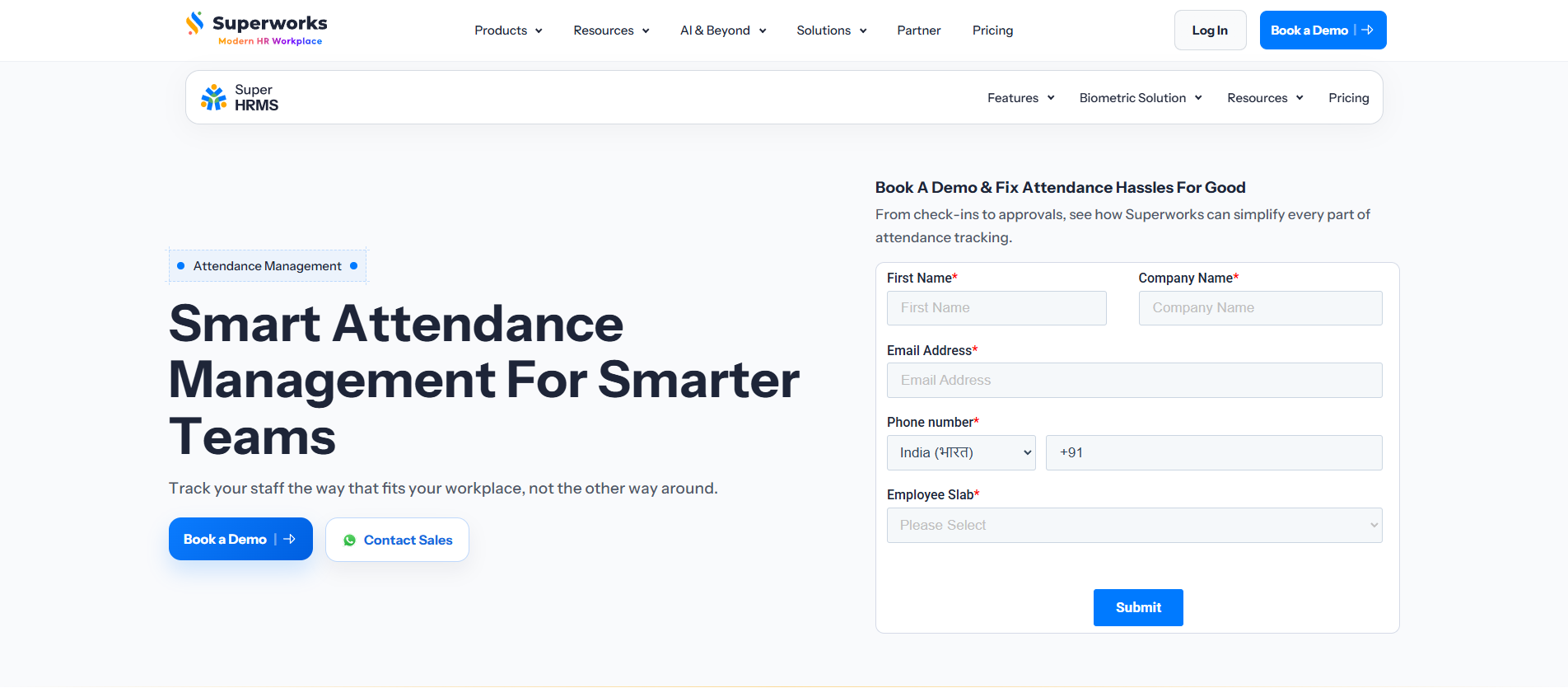
Super HRMS by Superworks is a smart, all-in-one attendance management solution that automates and centralizes workforce attendance for Indian businesses. It handles clock-in/clock-out, breaks, leave, shifts, and more - all of it gets managed from a single dashboard. Whether employees work from the office, home, or in the field, it accurately tracks attendance and work hours with real-time visibility. With real-time attendance reports & analytics, customizable policies, biometric integration, geo-fencing, and automated alerts, the platform simplifies attendance management and eliminates the need to do it with spreadsheets, saving the time of HR teams.
FactoHR
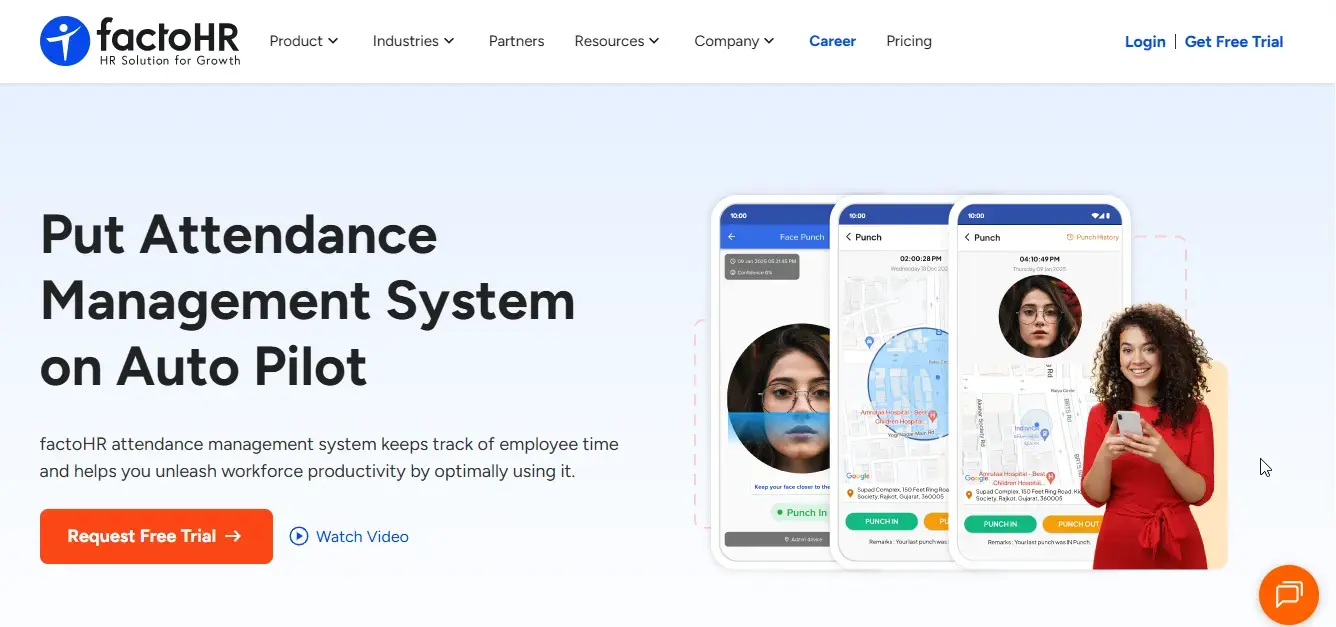
FactoHR is a ready-to-use, mobile-first attendance management system that is carefully curated for teams working on field or remotely. Supporting a range of attendance marketing capabilities such as selfie-based attendance marking, geo-tagging, flexible shift management, and facial recognition possibilities. Offering strong employee self-service features and a streamlined payroll integration, the platform works wonders for organizations that heavily trust mobile attendance and location-based tracking.
Jibble

Jibble is a attendance management system designed for businesses needing robust tracking without HR suite complexity. It enables seamless clock-ins via mobile, web, desktop, and Chrome. GPS, geofencing, and AI facial recognition verify identity, while kiosk mode supports QR codes, NFC, RFID, and liveness detection. Beyond daily tracking, it streamlines leave management, tracks projects, generates payroll-ready timesheets with automated hours, overtime, and break calculations, and delivers AI-powered insights to surface productivity trends. With core attendance features available for free, Jibble is a highly practical choice for cost-conscious Indian SMBs managing both site and office teams.
Conclusion:
To sum it up, the above listed five platforms offer smart and reliable attendance management capabilities that could ease organization’s regular attendance operations. However, HONO is one HCM suite that emerges as the top choice due to its AI-enabled intelligence, highly comprehensive HRMS solution, and its major HR tasks automation which helps organizations take a step beyond basic attendance tracking to smarter, more resilient workforce management.
How to Choose Time and Attendance Software
Choosing the best suited time and attendance software isn’t just a matter of option; it is a strategic decision which impacts the entire payroll process’s accuracy, compliance, productivity and employee experience at the same time. Listed below are the key points organizations should analyze before making the final choice.
Understand Workforce Structure
Initiate by assessing employee’s mode of work; it can be remote, hybrid, complete in office or even on site. Organizations with field/onsite workforce might require GPS and mobile attendance; however, factories or offices would have better benefits through biometric or RFID systems. Choosing the right software that stays in line with your workforce model makes sure you achieve higher adoption and accuracy tracking.
Attendance Modes & Flexibility
Make sure that the software you choose can be integrated with multiple attendance marking modes such as biometric, mobile application, geo-fencing, QR code, etc. Utilizing flexible attendance options significantly help in accommodating diverse roles and eliminate dependency on a single system. This aspect is a must to keep in mind when there are chances of scalability or global team expansion.
Compliance with Labor Laws
Ensure that the software stays in compliant with the geography specific labor laws and automatically track the statutory requirements such as employee’s working hours, overtime management, weekly offs, fixed holidays, leave accruals etc. If the system has built-in compliance, there would be better chances of reduced risks, helping organizations stay audit ready.
Payroll & HRMS Integration
Another aspect is understanding if the system can be seamlessly integrated with aspects like payroll and leave management. Organization's attendance data should automatically flow into the payroll calculations to eliminate any sort of manual errors/inaccuracies. This ensures that the salary processing is accurate, and a transparency is maintained between the employee and the employer, making the month-end closer simple and convenient.
Shift, Roster & Overtime Management
This factor is imperative for organizations which operate multiple shifts or flexible work schedules. Ensure that the software you choose supports shift planning, rotational shift management, overtime tracking and have a fair understanding of providing employees compensatory off when they work on off hours/weekends/week offs/fixed holidays. Moreover, having advanced scheduling features also improves workforce planning and creates cost effectiveness.
Real-Time Tracking & Reporting
Having real-time visibility in terms of employee attendance is imperative. It helps in planning payroll and fetching the required data for better employee experience. Make sure that the software which is chosen has an interactive dashboard, customizable reports and insights that highlight absenteeism trends, overtime costs, and late arrivals. This helps in better workforce utilization, which in turn benefits high level managerial decisions.
Data Security and Privacy
The attendance management system should be able to handle sensitive employee data, especially in terms of biometrics and location, as this is confidential information. The leave and attendance management software should always follow strong data security practices like end-to-end encryption, access controls, secure cloud hosting, and complete compliance with the data protection norms- basis geographies, if specified.
Related Articles:
Frequently asked
FAQs
See it live
Ready to see HONO in action?
Book a 20-minute demo tailored to your team's HR stack.
Request a demoAbout the author
Akanksha Shekhar
With over 9 years immersed in the world of content marketing for SaaS, Cloud, HRMS and multiple other industries, Akanksha Shekhar currently leads the content initiatives as Manager of Content Marketing. Her expertise lies in the art of bringing words to life, creating engaging narratives and technically sound pieces that are both catchy and deeply informative.