Why HRIS Requirements are Different for Large Companies?
The requirements of an HR system change dramatically once an organisation grows beyond a few hundred employees.
At smaller companies, HR teams can often compensate for process gaps manually. When an organisation reaches thousands of employees across multiple legal entities and countries, those workarounds become impossible to sustain. The HRIS becomes a critical operational platform rather than simply an administrative system.
Large enterprises typically face challenges that smaller organisations never encounter. Reporting structures often include matrix relationships that do not fit neatly into traditional hierarchies. Employees may be spread across multiple legal entities, business units, and jurisdictions, each with different regulatory requirements. Payroll may involve several currencies, tax frameworks, and statutory obligations.
Security requirements also become significantly more demanding. Enterprise organisations need role-based permissions, detailed audit trails, data residency controls, and compliance with regulations such as GDPR.
Analytics requirements grow as well. Leadership teams increasingly expect workforce planning insights, attrition forecasting, diversity reporting, and labour cost analysis rather than basic headcount reports.
Perhaps the most overlooked challenge is employee adoption. Gartner research cited by SHRM found that the average HRIS is actively used by only 32% of employees. That means many organisations invest heavily in enterprise technology only to discover that employees continue relying on email, spreadsheets, or HR teams to complete routine tasks.
At scale, adoption is not a nice-to-have. It is one of the biggest drivers of HR technology ROI.
The Real Problems Large Companies Face with HRIS
Regional Compliance Gets Missed
Many enterprise HR teams build processes around the regulations they know best, usually those of the country where headquarters is located. Unfortunately, employment law rarely works the same way across borders.
Leave entitlements, statutory deductions, working time requirements, notice periods, and termination regulations vary significantly between countries. If those differences are not configured correctly from the beginning, compliance issues often remain hidden until an audit, employee dispute, or regulatory investigation exposes them.
Payroll Is Not Truly Global
Most enterprise HR vendors advertise global payroll capabilities. In reality, many rely on a network of local providers and integrations.
There is nothing inherently wrong with that model, but it often creates fragmented support structures and reconciliation challenges. For organisations operating across multiple countries, understanding which payroll capabilities are native and which depend on partners is essential.
Buying Features Instead of Solving Problems
Enterprise buying processes frequently reward vendors with the longest feature lists.
The result is often an expensive platform packed with capabilities that are never implemented or adopted. Organisations end up paying for sophisticated functionality while still relying on manual workarounds.
Successful HR technology projects start with operational outcomes rather than feature checklists. The better question is not whether a platform has a particular capability, but whether the organisation can realistically deploy and use it.
Poor Data Migration Planning
Legacy HR data is almost always messier than it appears.
Duplicate employee records, inconsistent job structures, missing information, and conflicting data definitions frequently emerge during implementation. Industry studies consistently identify data quality issues as one of the most common reasons enterprise technology projects exceed timelines and budgets.
Treating migration as a technical task rather than a business transformation initiative is often an expensive mistake.
Cost and Over-Engineering
Enterprise HRIS projects can represent multi-million-dollar investments over a five-year period.
Licensing costs are only part of the equation. Implementation, integrations, change management, training, internal administration, and ongoing support all contribute to total cost of ownership.
Many organisations discover that they have purchased a platform designed for complexity they simply do not have.
What to Look for in an Enterprise HRIS system?
Adoption and User Experience
A platform that HR loves but employees avoid is simply an expensive system of record. Evaluate how employees complete everyday tasks, not just how administrators configure workflows.
Organisational Flexibility
Enterprise structures are rarely straightforward. Look for support for matrix reporting, multiple legal entities, contractors, contingent workers, and varied employment types.
Implementation Complexity
Ask vendors for realistic implementation timelines based on customers with similar size and complexity.
Large-scale deployments often take longer than expected, and prolonged implementations create significant hidden costs.
Multi-Country Compliance
Understand how compliance is maintained in every country where you operate. Ask how regulatory updates are managed and how quickly changes are reflected in the platform.
Integrations
HR systems rarely operate in isolation. Integration with ERP, payroll, finance, collaboration, and workforce management tools should be evaluated carefully.
Analytics
Basic reporting is no longer enough. Modern enterprises increasingly expect workforce planning, retention analysis, organisational health metrics, and predictive insights.
AI and Automation
AI is rapidly becoming a core part of HR technology. Focus on automation that reduces administrative work and improves employee experiences rather than standalone AI features that provide limited practical value.
Security
Single sign-on, role-based permissions, audit trails, data encryption, and compliance controls should be considered mandatory for enterprise deployments.
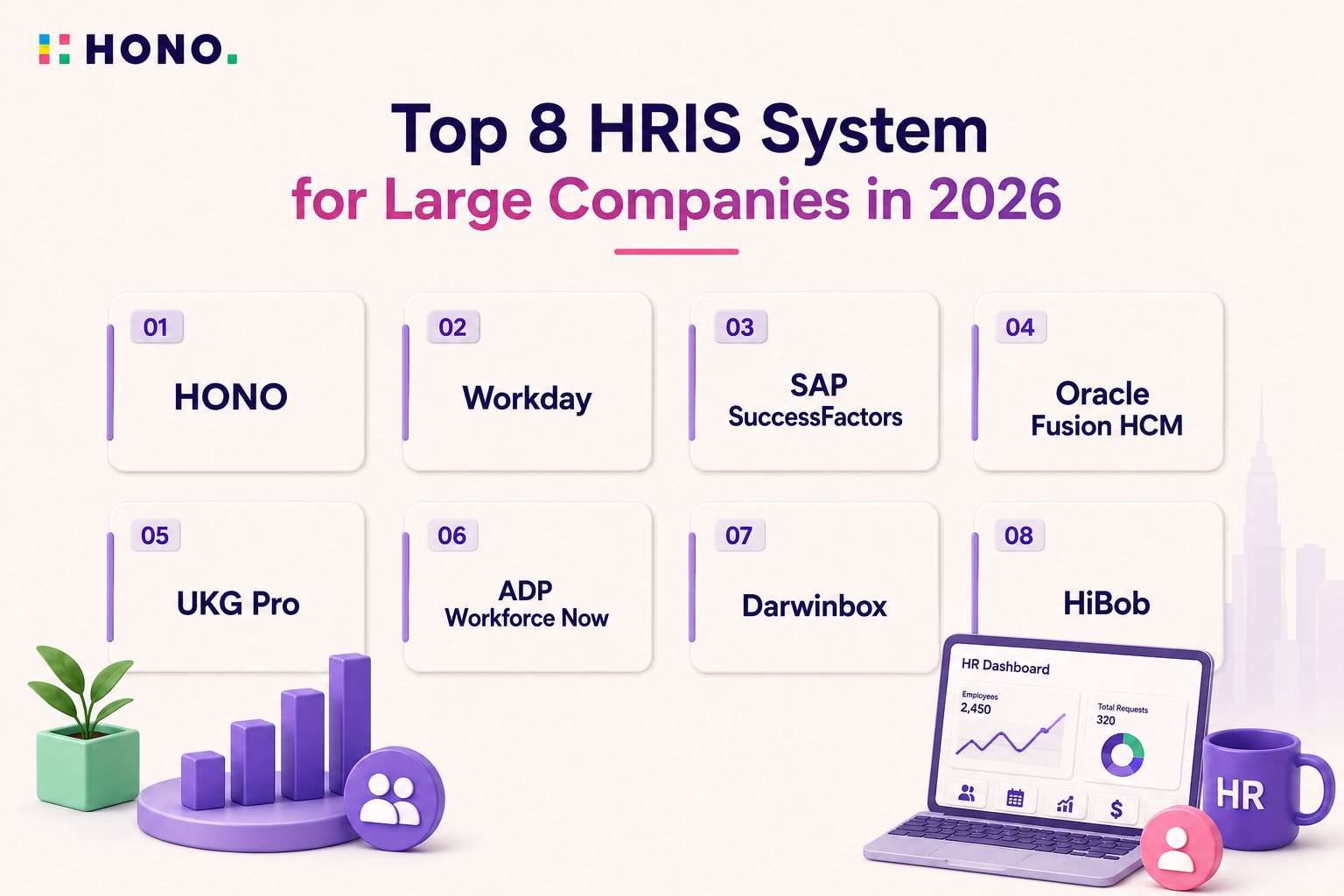
8 Best HRIS Softwares in 2026 - At a Glance
| Software | Best For | Standout Strength | UX & Adoption | Starting Price |
|---|---|---|---|---|
| HONO | Large enterprises globally | Conversational Zero UI | Excellent | Custom |
| Workday | Global enterprises | HR + Finance platform | Good | Custom |
| SAP SuccessFactors | Complex multinationals | Compliance depth | Moderate | Custom |
| Oracle Fusion HCM | Oracle customers | Native ERP integration | Good | Custom |
| UKG Pro | Frontline workforces | Workforce management | Strong | Custom |
| ADP Workforce Now | Payroll-first organisations | Payroll reliability | Moderate | Custom |
| Darwinbox | APAC and MEA enterprises | Modern UX | Strong | Custom |
| HiBob | Mid-to-large businesses | Employee experience | Excellent | Custom |
The Best HRIS Software for Large Companies
1. HONO
Best for: Large enterprises prioritising workforce adoption and conversational employee experiences.
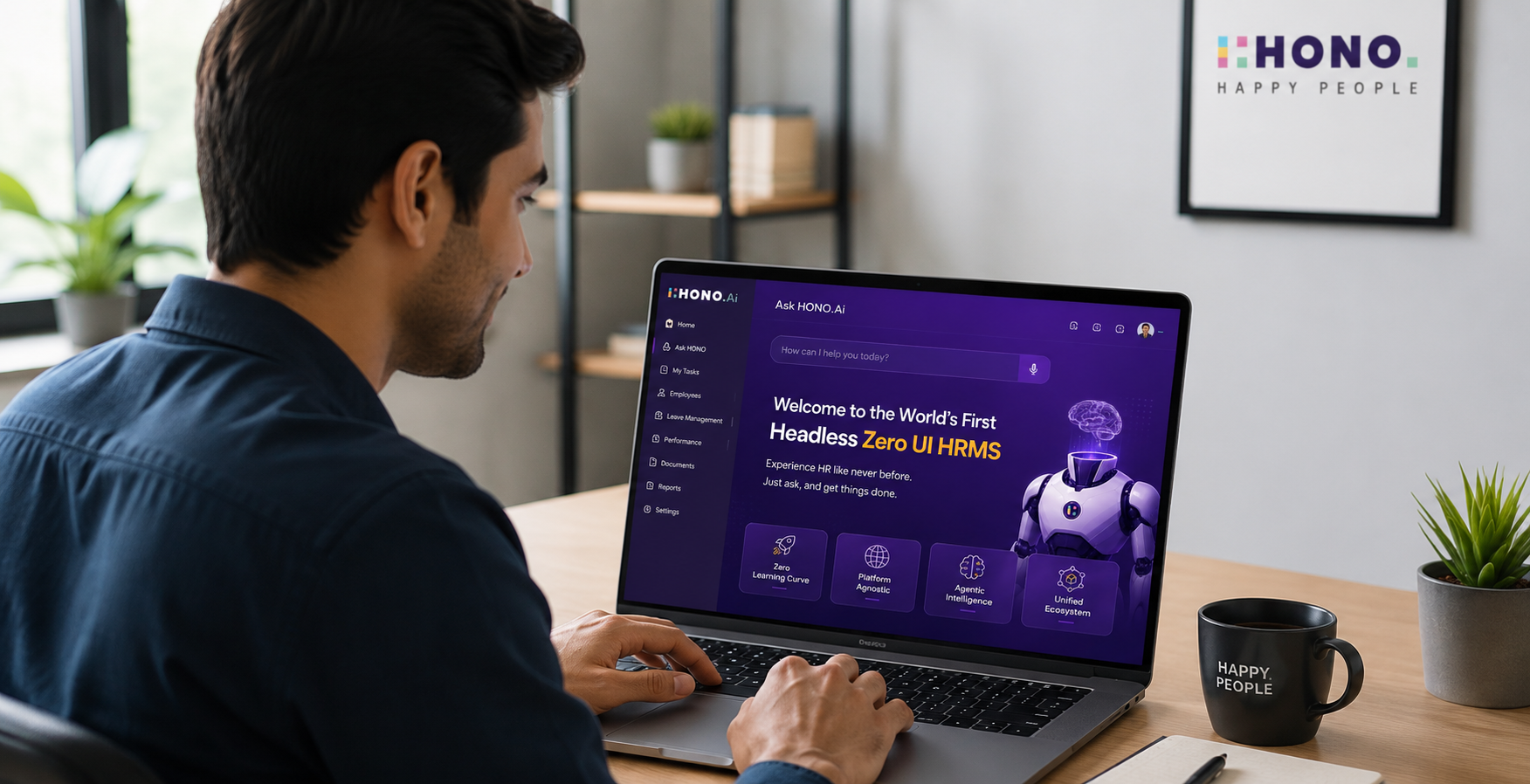
HONO’s Zero UI approaches enterprise HR differently from traditional platforms. Rather than requiring employees to navigate a dedicated portal, it enables HR interactions through tools employees already use every day, including Microsoft Teams, Slack, WhatsApp, and web channels.
Employees can request leave, access payslips, retrieve documents, and complete HR tasks through natural conversations. Behind that experience sits a full HR platform covering payroll, attendance, performance, recruitment, compliance, people analytics, and automation.
Key features
- Conversational employee self-service
- Zero UI employee experience
- Agentic AI workflows
- Global payroll and HR management
- Workforce analytics
Pros
- Removes common adoption barriers
- Strong fit for large distributed workforces
Cons
- Less established globally than Workday or SAP
- Requires a detailed discovery process to evaluate full scope
Pricing: Custom quote
Who it suits: Enterprises seeking higher adoption, lower HR friction, and AI-driven automation.
2. Workday
Best for: Global organisations seeking unified HR and finance management.
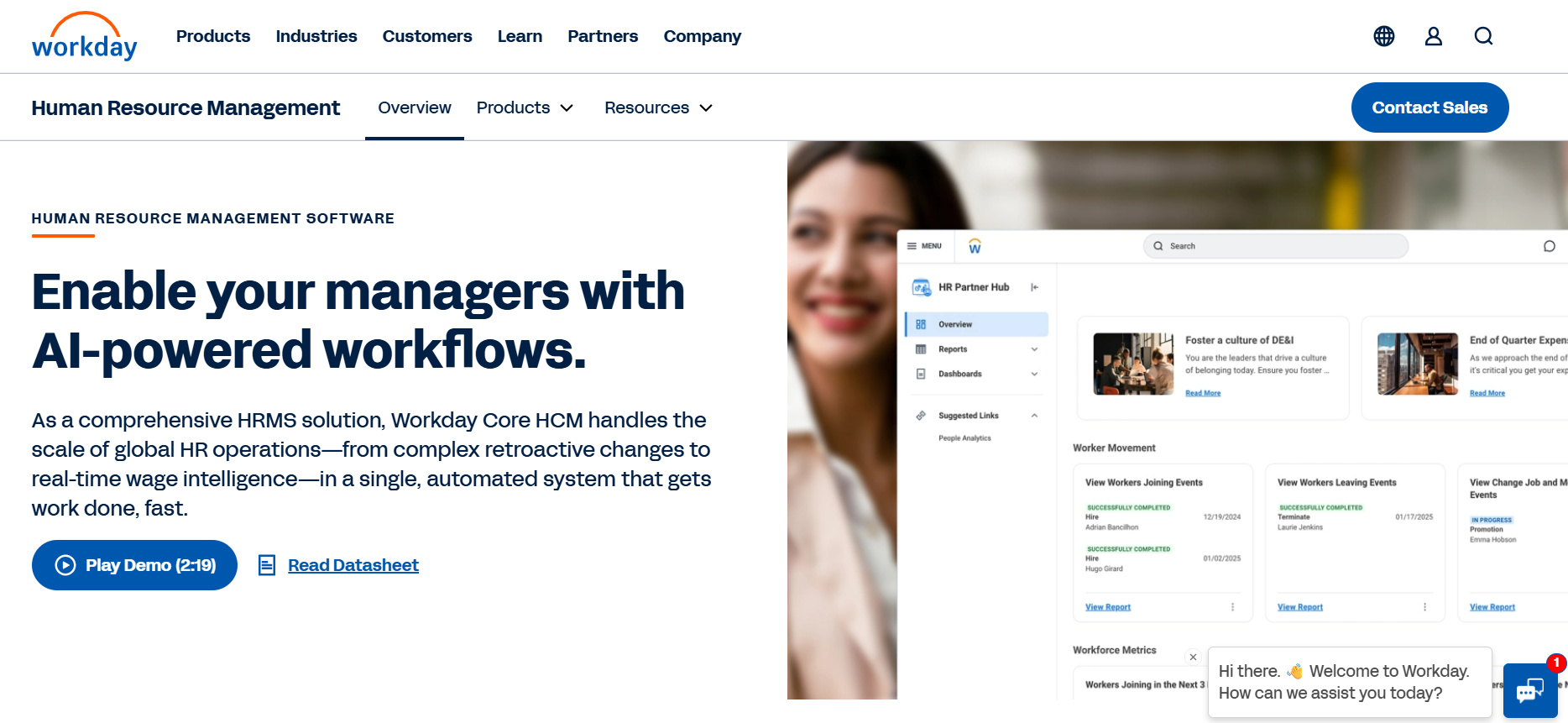
Workday remains one of the most influential enterprise HCM platforms. Its biggest advantage is the ability to connect workforce planning, finance, and HR data within a single ecosystem.
The platform offers strong workforce planning capabilities, extensive analytics, and a mature implementation partner network.
Pros
- Excellent HR and finance integration
- Strong workforce planning tools
Cons
- Expensive compared to many alternatives
- Long implementation timelines
Pricing: Enterprise quote
Who it suits: Large global organisations with sophisticated workforce planning needs.
3. SAP SuccessFactors
Best for: Large multinational organisations with complex compliance requirements.
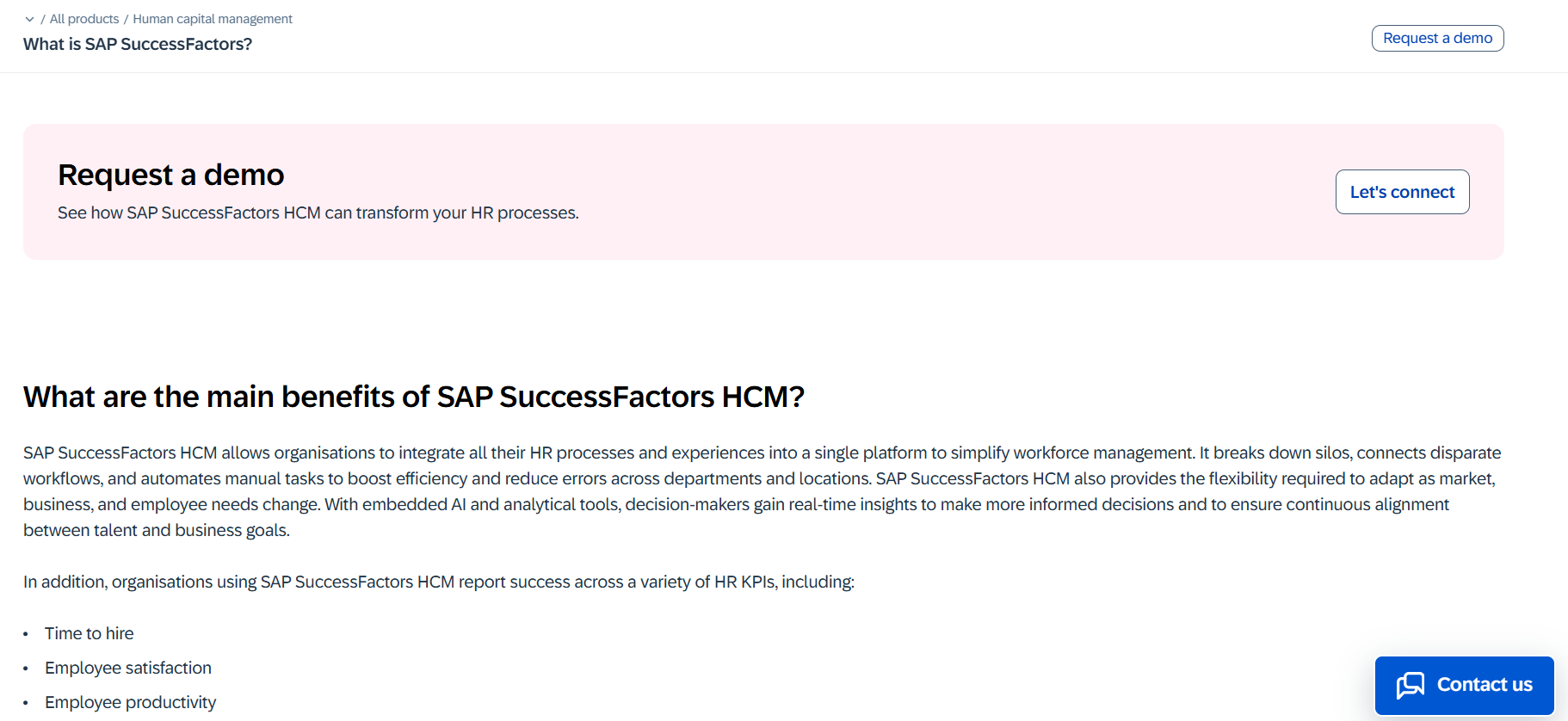
SuccessFactors has built a strong reputation for localisation and regulatory coverage across global markets. For organisations operating across numerous jurisdictions, this remains one of its biggest strengths.
Pros
- Extensive compliance support
- Strong SAP ecosystem integration
Cons
- User experience can feel complex
- Significant implementation effort
Pricing: Modular enterprise pricing
Who it suits: Organisations prioritising compliance and SAP integration.
4. Oracle Fusion HCM
Best for: Enterprises already invested in Oracle technologies.
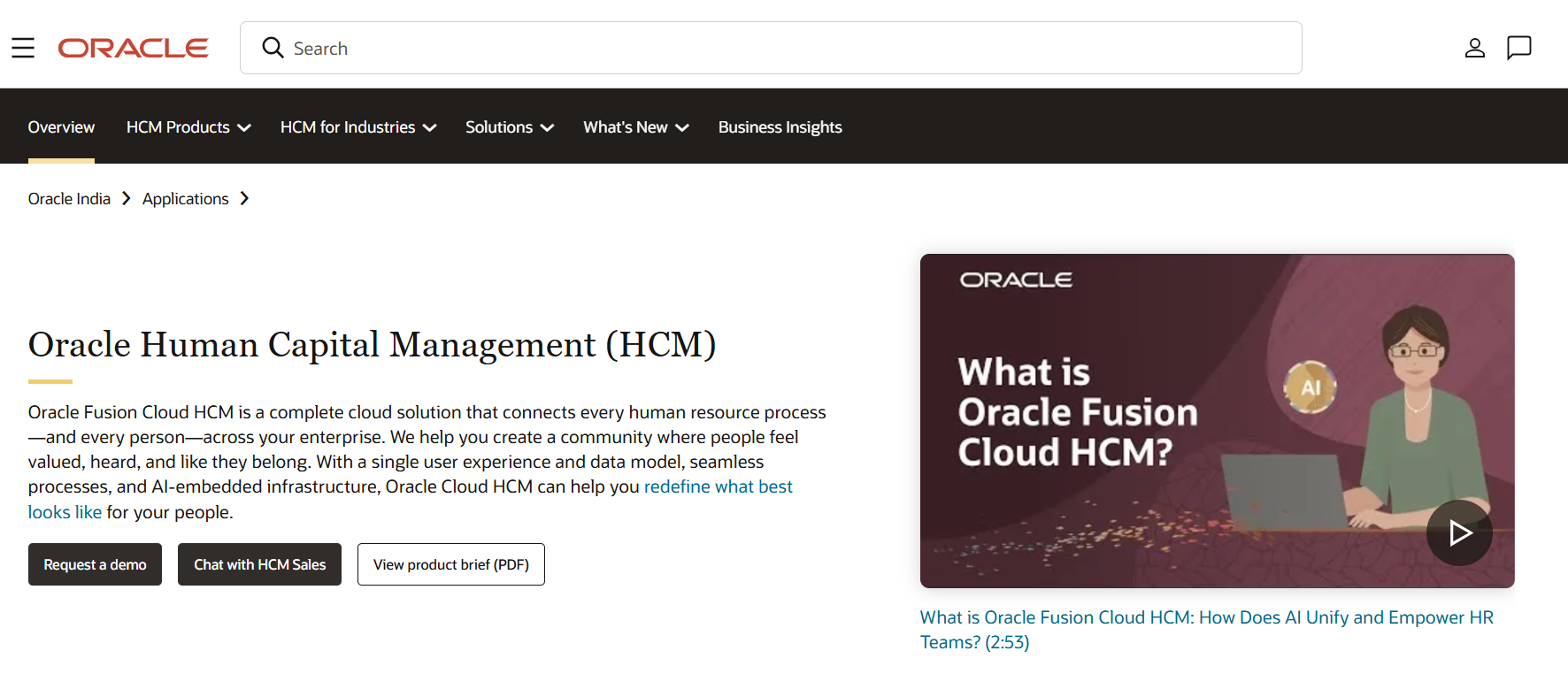
Oracle Fusion HCM delivers comprehensive HR, payroll, talent management, workforce planning, and analytics capabilities. The platform is particularly attractive for organisations seeking deep integration with Oracle ERP.
Pros
- Strong Oracle ecosystem alignment
- Comprehensive functionality
Cons
- Integration advantage weakens outside Oracle environments
- Premium support increases costs
Pricing: Enterprise quote
Who it suits: Existing Oracle customers seeking a unified ecosystem.
5. UKG Pro
Best for: Large frontline and shift-based workforces.
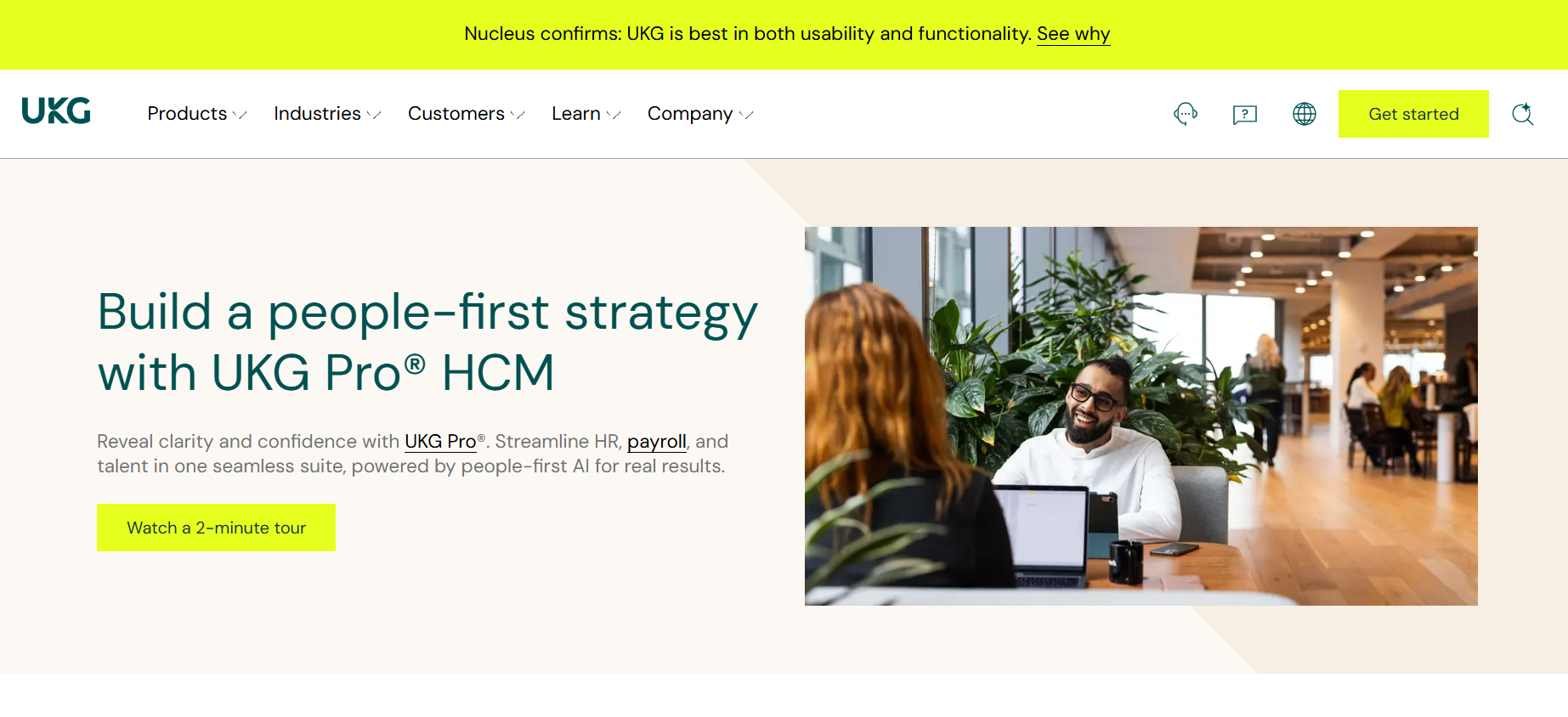
UKG combines workforce management, scheduling, payroll, and HR functionality in a platform built around operational workforce needs.
Healthcare, retail, manufacturing, and logistics organisations often find UKG particularly compelling.
Pros
- Excellent workforce management
- Strong scheduling capabilities
Cons
- US-centric payroll strengths
- Integration complexity in some environments
Pricing: Enterprise quote
Who it suits: Organisations with large hourly workforces.
6. ADP Workforce Now
Best for: Payroll-focused enterprises.
ADP's reputation is built on payroll reliability and compliance expertise. While it offers a complete HCM suite, payroll remains the platform's defining strength.
Pros
- Trusted payroll infrastructure
- Broad compliance coverage
Cons
- User experience feels dated compared to newer platforms
- Talent management capabilities are less differentiated
Pricing: Enterprise quote
Who it suits: Organisations where payroll accuracy is the highest priority.
7. Darwinbox
Best for: Enterprises across Asia-Pacific and the Middle East.
Darwinbox has gained significant traction through its combination of modern user experience, regional localisation, and AI-powered capabilities. Forrester recognised Darwinbox as a Strong Performer in The Forrester Wave™: Human Capital Management Solutions, Q4 2025.
Pros
- Strong user experience
- Deep regional localisation
Cons
- Smaller global ecosystem than legacy vendors
- Additional integrations may be needed outside core markets
Pricing: Custom quote
Who it suits: Enterprises with significant operations in APAC and MEA.
8. HiBob
Best for: Mid-sized and growing enterprises focused on employee experience.
HiBob has become known for making HR technology feel approachable and engaging. The platform performs particularly well in employee engagement, culture, and manager enablement.
Pros
- Excellent user experience
- Fast implementation
Cons
- Less suitable for highly complex enterprises
- Relies on payroll integrations
Pricing: Custom quote
Who it suits: Organisations prioritising culture, engagement, and employee experience.
How to Choose the Right HRIS?
Start by defining the problems you need to solve.
If compliance complexity is your biggest challenge, prioritise localisation and regulatory depth. If payroll accuracy is critical, focus on payroll capabilities and support models. If adoption has been a problem in previous implementations, evaluate how employees will interact with the system every day.
Consider your existing technology stack. Organisations already invested in Oracle or SAP often benefit from tighter ecosystem integration. Others may prioritise flexibility and ease of deployment.
Implementation resources matter just as much as software capabilities. The most powerful platform in the market can still fail if the organisation lacks sufficient bandwidth for change management, migration, training, and governance.
Finally, evaluate total cost of ownership over five years rather than focusing only on licence fees. Long-term costs often differ dramatically from initial pricing conversations.
The Bottom Line
Choosing an HRIS for a large enterprise is rarely about finding the platform with the longest feature list. Most leading vendors have reached a point where feature parity is relatively high.
The bigger question is whether the platform can support the realities of enterprise operations while remaining accessible to employees.
That is where many implementations succeed or fail.
For organisations focused on improving adoption, reducing HR friction, and bringing AI directly into everyday employee workflows, HONO offers a fundamentally different approach through conversational HR, automated multi-country payroll, Zero UI experiences, and agentic automation.
If you're evaluating HRIS software for a large company in 2026, start with the problems you're trying to solve, then assess which platform is best positioned to solve them at scale.
Frequently asked
FAQs
See it live
Ready to see HONO in action?
Book a 20-minute demo tailored to your team's HR stack.
Request a demo
About the author
Mazna Majeed
Mazna is a strategic HR leader with over 10 years of experience driving talent success and organizational growth. As Head of Talent Acquisition and Operations at HONO, she leads HR initiatives across India and South-East Asia, including manpower planning, employee lifecycle management, talent development, engagement, and retention. Mazna is known for aligning people strategy with business goals, building inclusive high-performing teams, and strengthening culture to enable sustainable growth.