Key Takeaways
- Jisr and ZenHR currently offer the deepest native integration with GOSI, Mudad and Muqeem for companies operating only inside the Kingdom.
- GOSI now runs two parallel rate schedules. Employees registered before July 3, 2024 stay on the old fixed rates, while new entrants are on a schedule that rises 0.5 percentage points every July until 2028.
- Late or missing Mudad wage files carry a fine of SAR 3,000 per employee per month, and the violation also affects your Nitaqat score.
- As of April 15, 2026, a Saudi employee only counts toward your Nitaqat headcount if their contract is electronically documented and authenticated on Qiwa. GOSI registration alone is no longer enough.
- Enterprise-wide HR platforms like Darwinbox and HONO bring strong analytics and automation, but buyers should confirm the depth of their Saudi-specific GOSI, Mudad and Qiwa integration before signing, since not every regional or global platform has built that layer natively.
HR and Payroll Software in Saudi Arabia Compared
We compared these eight vendors on how directly they connect to Saudi Arabia's core compliance platforms, not just on general HR features.
| Vendor | Best for | GOSI auto calc | Nitaqat dashboard | EOS/gratuity calc | Arabic & Hijri support | Starting price |
|---|---|---|---|---|---|---|
| HONO | Enterprise HRMS expanding into the GCC | Partial | Partial | ✓ | ✓ | Custom quote |
| Jisr | Saudi-only SMBs and mid-market | ✓ | ✓ | ✓ | ✓ | Custom quote |
| ZenHR | Multi-country MENA operations | ✓ | ✓ | ✓ | ✓ | Custom quote |
| Bayzat | Employee experience and benefits | ✓ | ✓ | ✓ | ✓ | Custom quote |
| Darwinbox | Large enterprise HCM with payroll | Partial | Partial | ✓ | ✓ | Custom quote |
| MenaITech | Long-running KSA payroll, large orgs | ✓ | ✓ | ✓ | ✓ | Custom quote |
| PalmHR (Palm.hr) | Saudi-native SMBs | ✓ | ✓ | ✓ | ✓ | Custom quote |
| GulfHR | Multi-country GCC HCM | ✓ | ✓ | ✓ | ✓ | Custom quote |
Legend: ✓ = supported, Partial = supported with gaps or limited scope, Not available = not currently offered. Verify current integration status directly with each vendor before purchase, since government portal integrations are updated frequently.
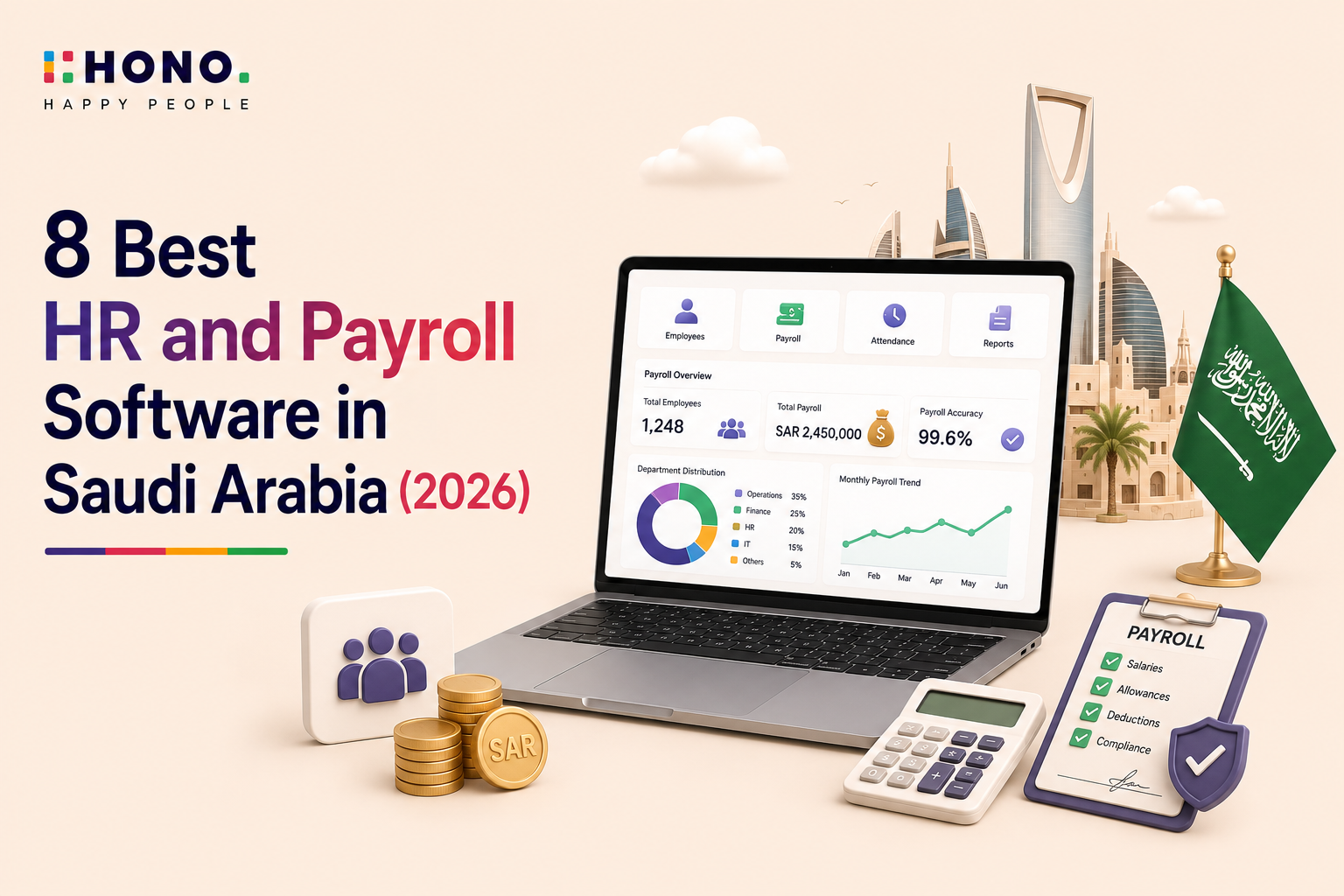
8 Best HR and Payroll Software in Saudi Arabia in 2026
1. HONO
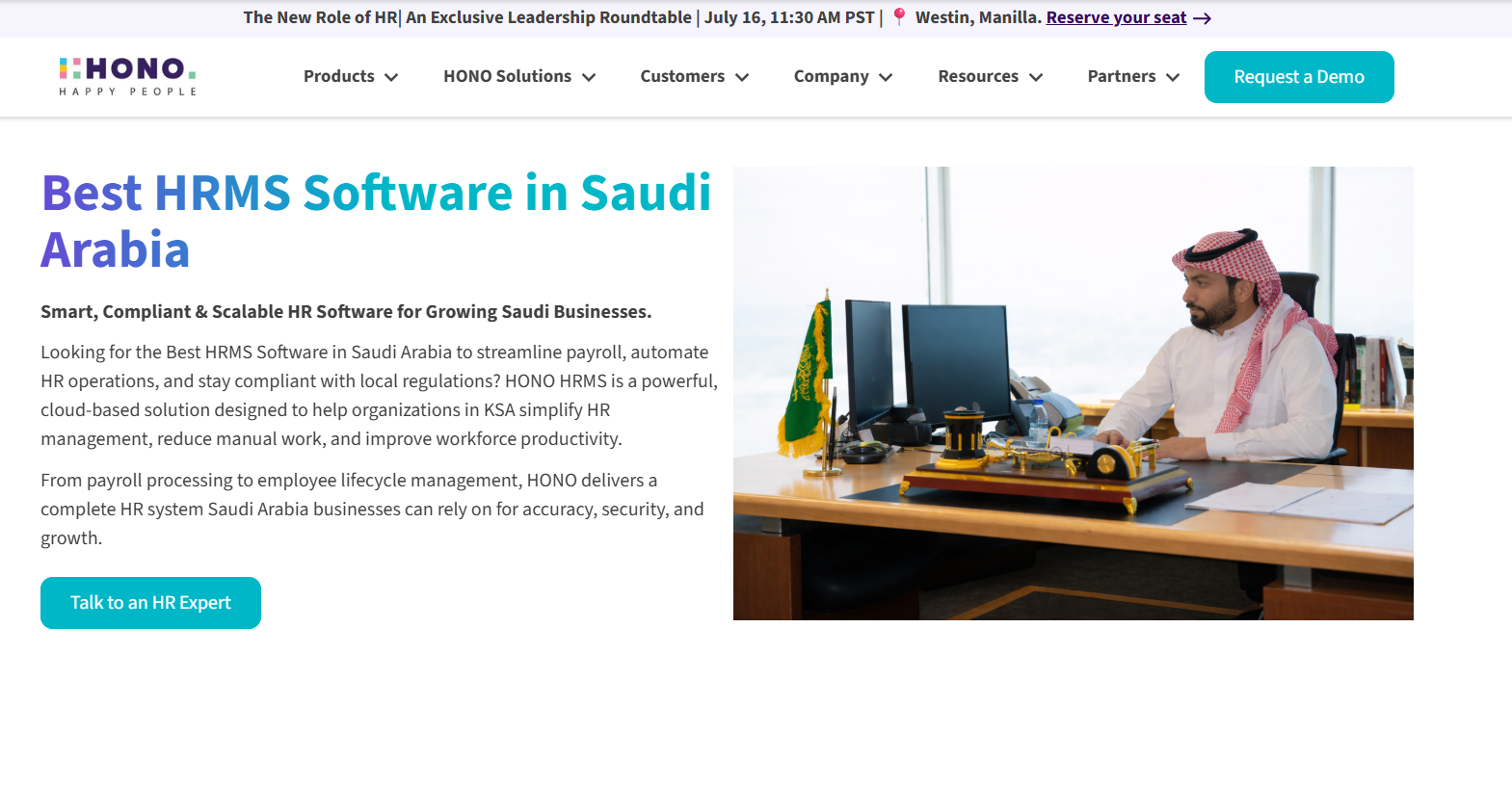
HONO is an AI-native HR and payroll platform built from the ground up around conversational, "zero UI" workflows and autonomous, agentic payroll automation, with advanced people analytics layered on top. It stands apart from traditional vendors by replacing rigid, forms-based HRMS structures with an AI-first employee experience that automates complex data collection and workflows through natural interaction. Positioned as a highly capable enterprise HCM expanding rapidly across the GCC and international markets, it offers organizations a unified platform capable of managing modern, predictive workforce strategies at scale. While it markets its general alignment with Saudi labor regulations, enterprises deploying HONO for a KSA rollout can easily validate its live GOSI contribution calculations, native Mudad wage file submissions, and Qiwa contract syncing during standard implementation to unlock an entirely automated, future-proof payroll engine.
Key Capabilities
- AI-native, "zero UI" conversational workflows that replace traditional forms-based HR interaction.
- Autonomous agentic payroll automation with deeply embedded workforce and people analytics.
- Broad enterprise-grade HCM architecture built for multi-country scale across the GCC and beyond.
- Modern, friction-free employee experience designed to automate data capture and reduce administrative overhead.
Best for: Forward-thinking enterprises that want an AI-first, automated employee experience and predictive analytics rather than a traditional, manual HRMS.
2. Jisr
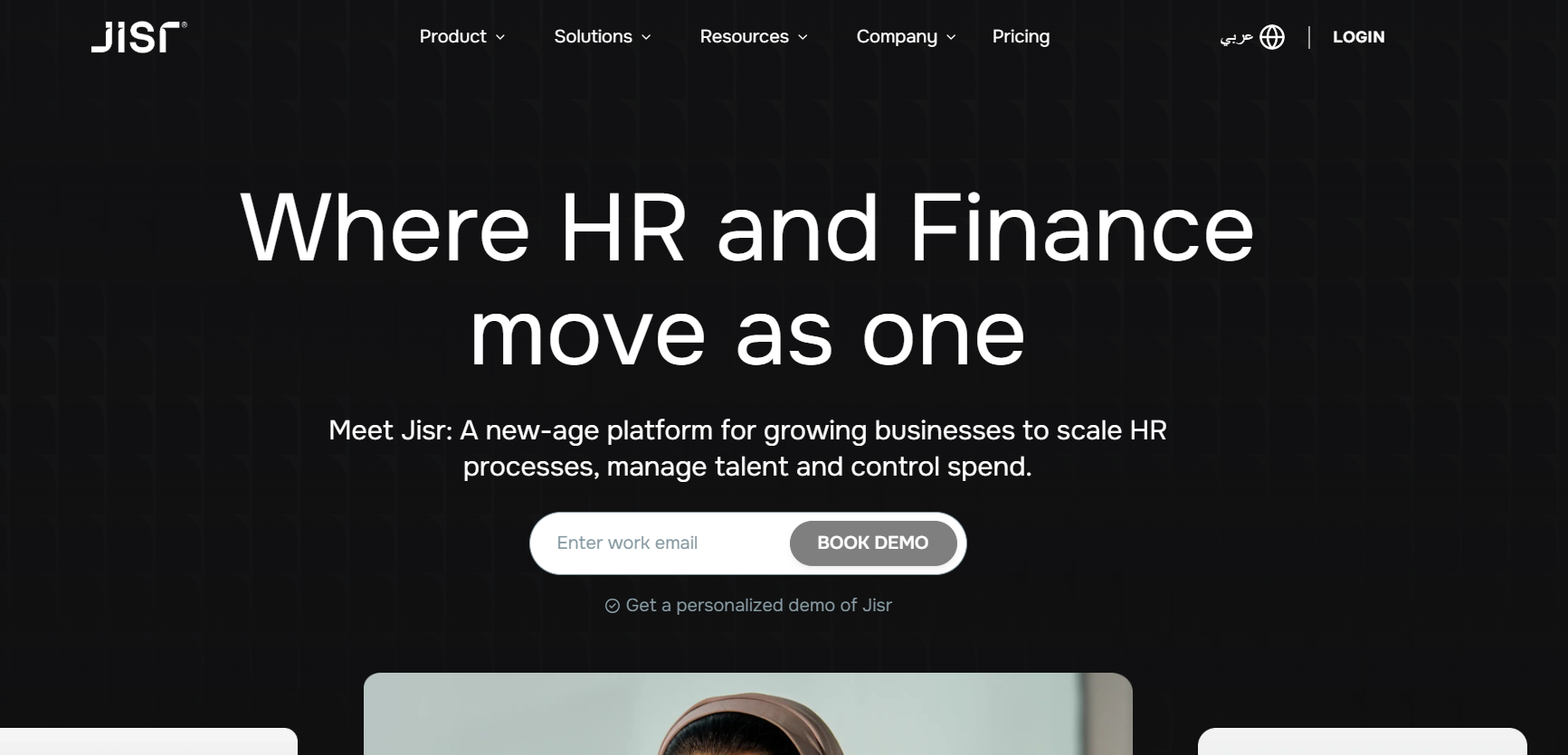
Jisr is a dedicated, Saudi-built HR platform widely recognized for delivering the deepest native government integrations available for businesses operating exclusively within the Kingdom. Built Arabic-first with secure local data hosting, the system features built-in compliances including GOSI calculations, Muqeem residency services, and direct Mudad payroll processing. Because it focuses entirely on the KSA ecosystem, it processes over 10 billion SAR in payroll for more than 5,000 local HR and finance teams. However, its specialized local architecture is strictly bounded to Saudi Arabia and does not support multi-country GCC operations.
Key Capabilities
- Deepest native Saudi government integrations, including direct Mudad payroll processing.
- Built-in compliance modules for GOSI contributions, Muqeem residency services, and end-of-service settlements.
- Fully Arabic-first user interface with local data hosting tailored to KSA regulations.
- High-volume local processing track record serving over 5,000 Saudi HR and finance teams.
Best for: KSA-exclusive businesses that prioritize deep, localized Saudi government integrations and absolute compliance above all else.
3. ZenHR
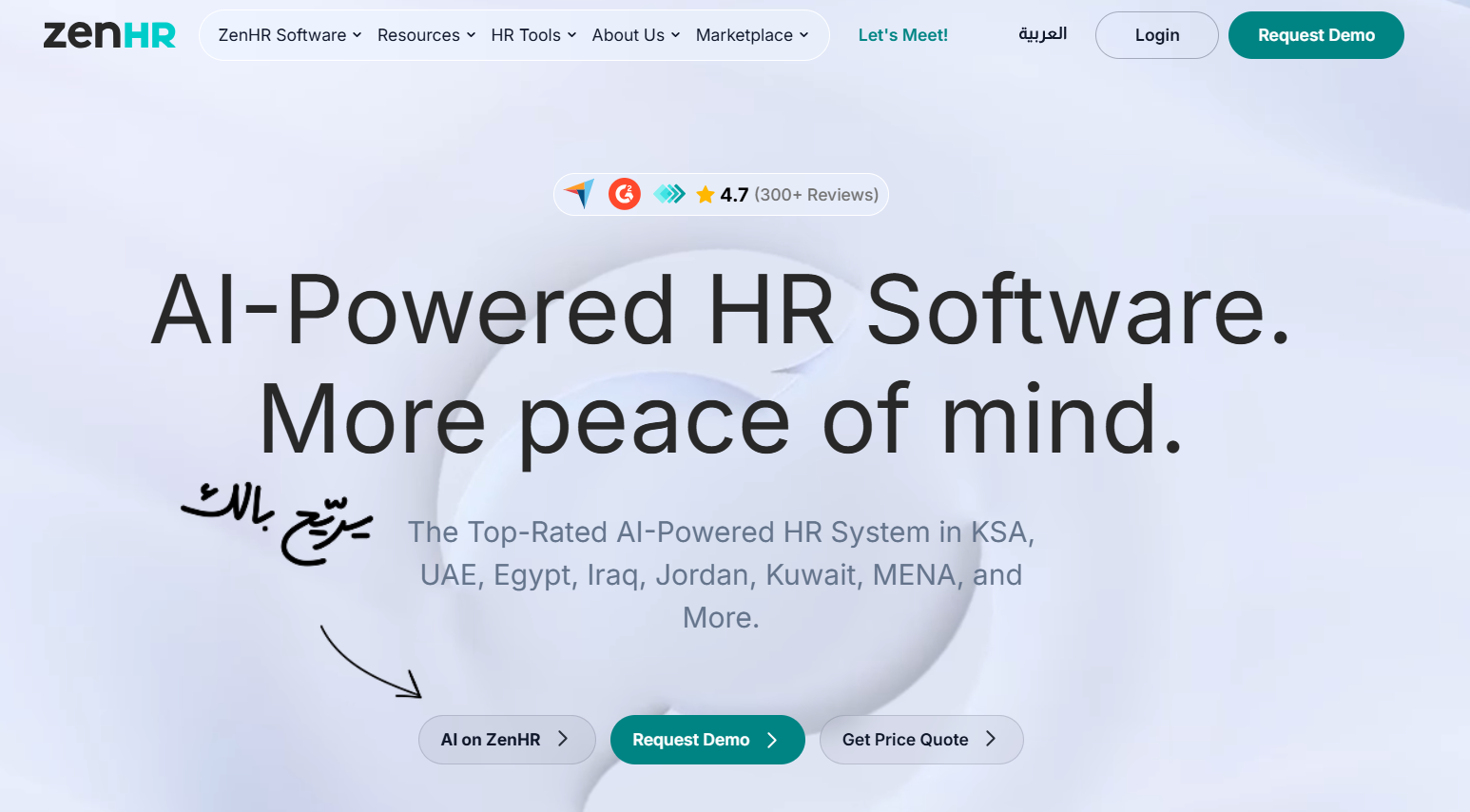
ZenHR is a comprehensive, MENA-wide HR and payroll platform that scales across more than 20 countries while maintaining an exceptionally robust and highly updated Saudi compliance layer. The platform stands out for its proactive compliance management, automatically adjusting to GOSI's legacy and modern contribution schedules and connecting directly to Mudad for wage file generation. While its multi-market design means that some highly specific workflows can occasionally feel more generalized than a KSA-only point tool, it provides an ideal balance for companies requiring regional reach without sacrificing core Saudi statutory accuracy.
Key Capabilities
- Automated GOSI contribution scheduling that updates seamlessly alongside phased regulatory adjustments.
- Direct Mudad integration for instant wage file generation and compliance status tracking.
- Comprehensive multi-country architecture covering more than 20 markets across the MENA region.
- Industry-leading compliance documentation and clear regional payroll guidance built into the system.
Best for: Regional businesses requiring strong, automated Saudi payroll compliance managed under a single, multi-country MENA platform.
4. Bayzat
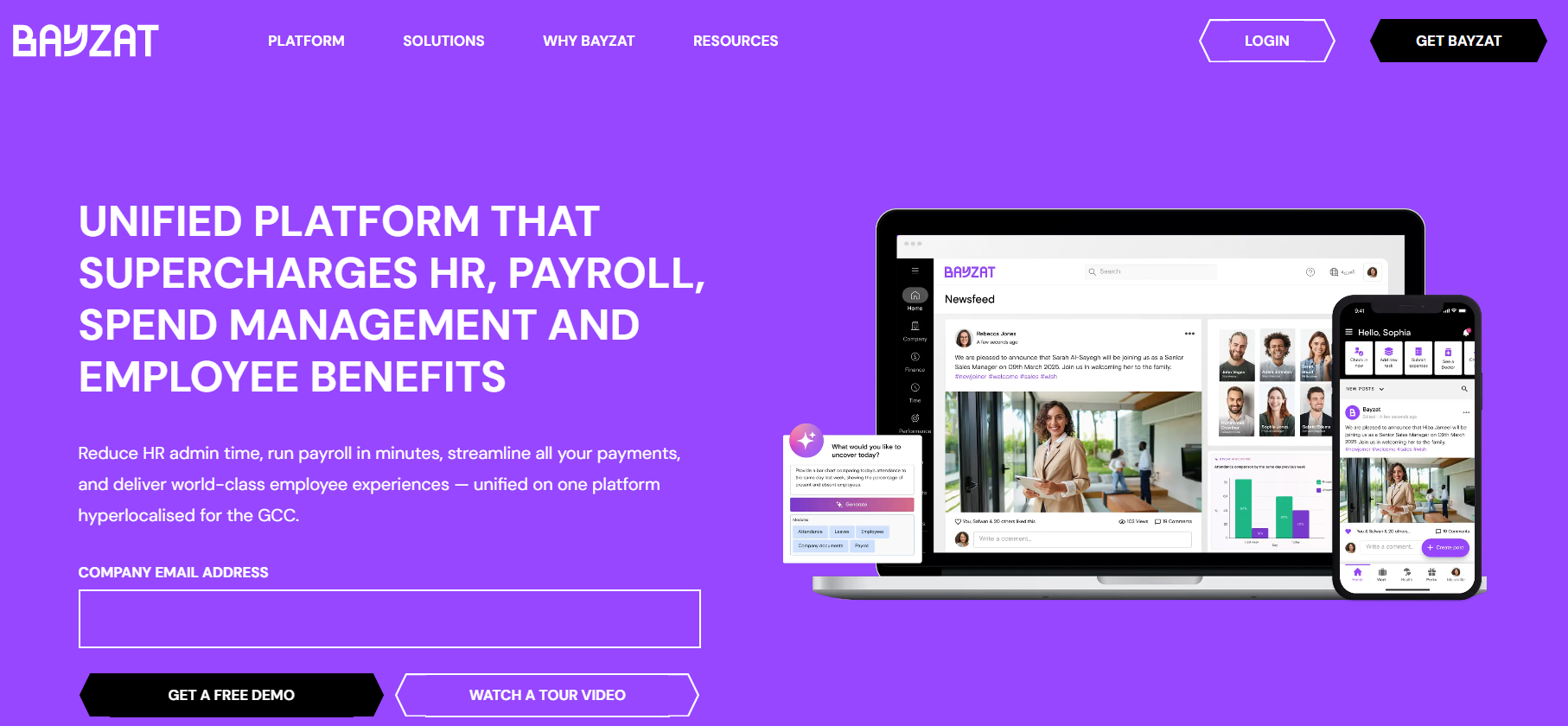
Bayzat shifts the focus of regional HR by placing employee experience, self-service tools, and robust benefits administration directly alongside its core payroll processing engine. It is designed specifically for companies that want their HR platform to actively drive engagement, automating standard payroll variables like attendance tracking, leave balances, and deductions within a highly polished interface. While it maintains standard compliance integrations with GOSI, Muqeem, and Mudad to ensure legal operations within the Kingdom, its core product depth remains anchored in wellness and benefits rather than deep statutory heavy-lifting.
Key Capabilities
- High-engagement employee experience platform with native mobile self-service and benefits administration.
- Automated payroll calculations factoring in real-time attendance, leave, bonuses, and deductions.
- Core compliance integrations covering standard GOSI, Muqeem, and Mudad requirements.
- Streamlined digital onboarding and automated shift/time-off tracking tied to the pay run.
Best for: Companies seeking a modern, engagement-driven HR platform that doubles as an employee perks and benefits tool while handling standard KSA payroll.
5. Darwinbox
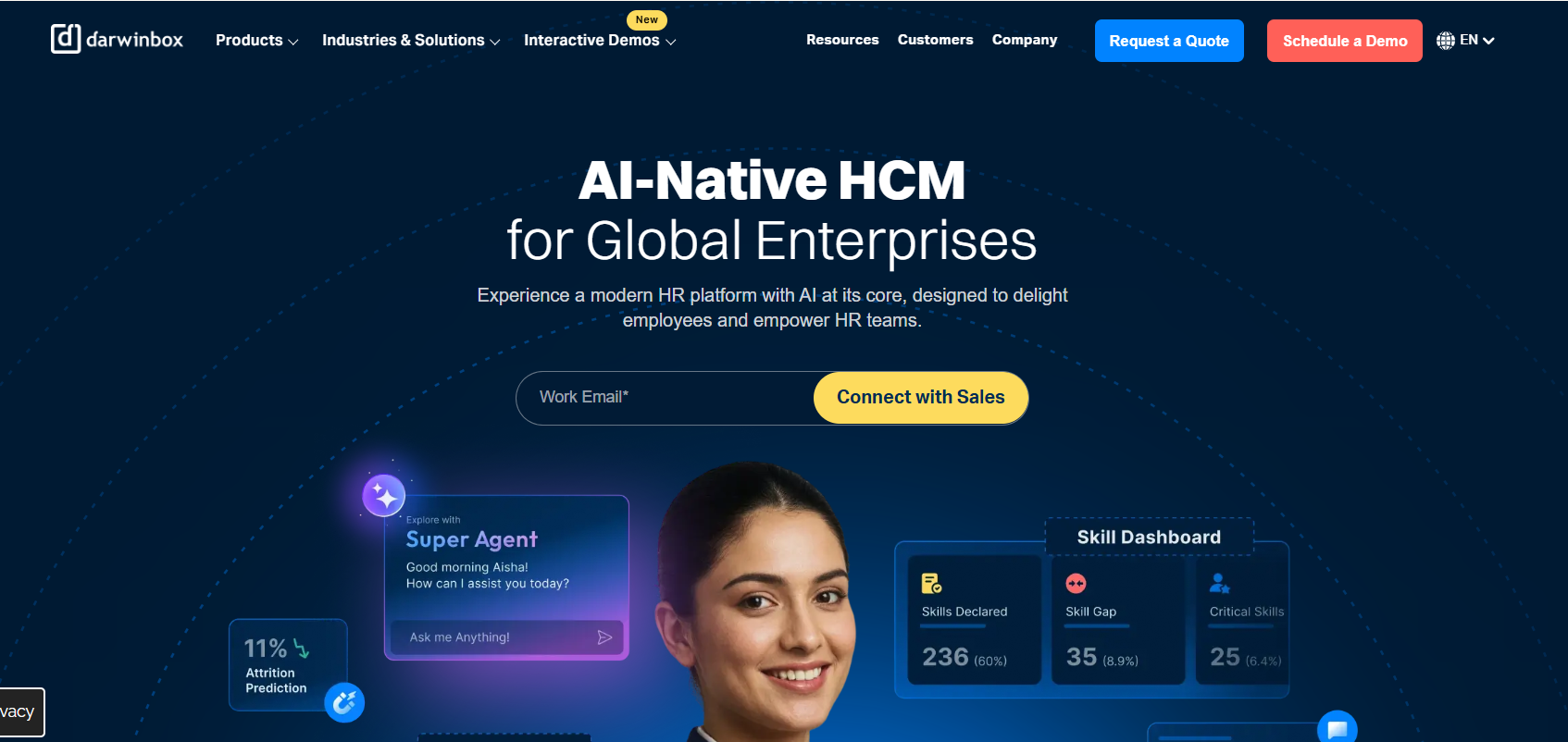
Darwinbox delivers a heavy-duty, enterprise-grade HCM suite featuring an embedded payroll module engineered specifically for large-scale organizations that demand a single system for the entire employee lifecycle. From talent acquisition and performance management to granular payroll execution and regional analytics, it provides customization depth and enterprise reporting that smaller tools cannot match. Because it is architected as a global engine serving massive enterprise workforces across multiple countries, its localized Saudi compliance modules are built to handle immense organizational complexity, though they should be verified against your exact requirements during the live demo.
Key Capabilities
- Enterprise-grade HCM architecture spanning the full employee lifecycle from hire to retire.
- Highly customizable workflow engines and advanced corporate reporting modules.
- Deep data modeling built to handle complex, multi-tiered enterprise organizations.
- Integrated payroll module designed to handle high-volume runs alongside core HR data.
Best for: Large, complex enterprises requiring a highly customizable, global HCM suite with robust reporting and unified payroll capabilities.
6. MenaITech
MenaITech is a long-standing veteran of the Middle Eastern payroll landscape, frequently serving as the system of record for large, multi-entity conglomerates with intricate compliance setups. It provides mature, time-tested automation for GOSI calculations, Nitaqat nationalization tracking, and complex end-of-service benefit formulas, making it highly reliable for heavy industrial or multi-branch operations. While its user interface and deployment timelines reflect a heavy, traditional enterprise software model rather than a lightweight SaaS experience, it remains a trusted anchor for organizations that value proven regional maturity and compliance depth over modern UX aesthetics.
Key Capabilities
- Deeply mature payroll engine specialized in complex, multi-entity corporate structures.
- Built-in support for high-level local tracking, including GOSI, Nitaqat, and end-of-service benefits.
- Robust compliance architecture proven across large-scale industrial and multi-branch operations.
- Highly granular policy configuration options to match strict internal corporate governance.
Best for: Large industrial groups and legacy conglomerates with complex, multi-entity compliance requirements that value platform maturity over modern design.
7. PalmHR (Palm.hr)
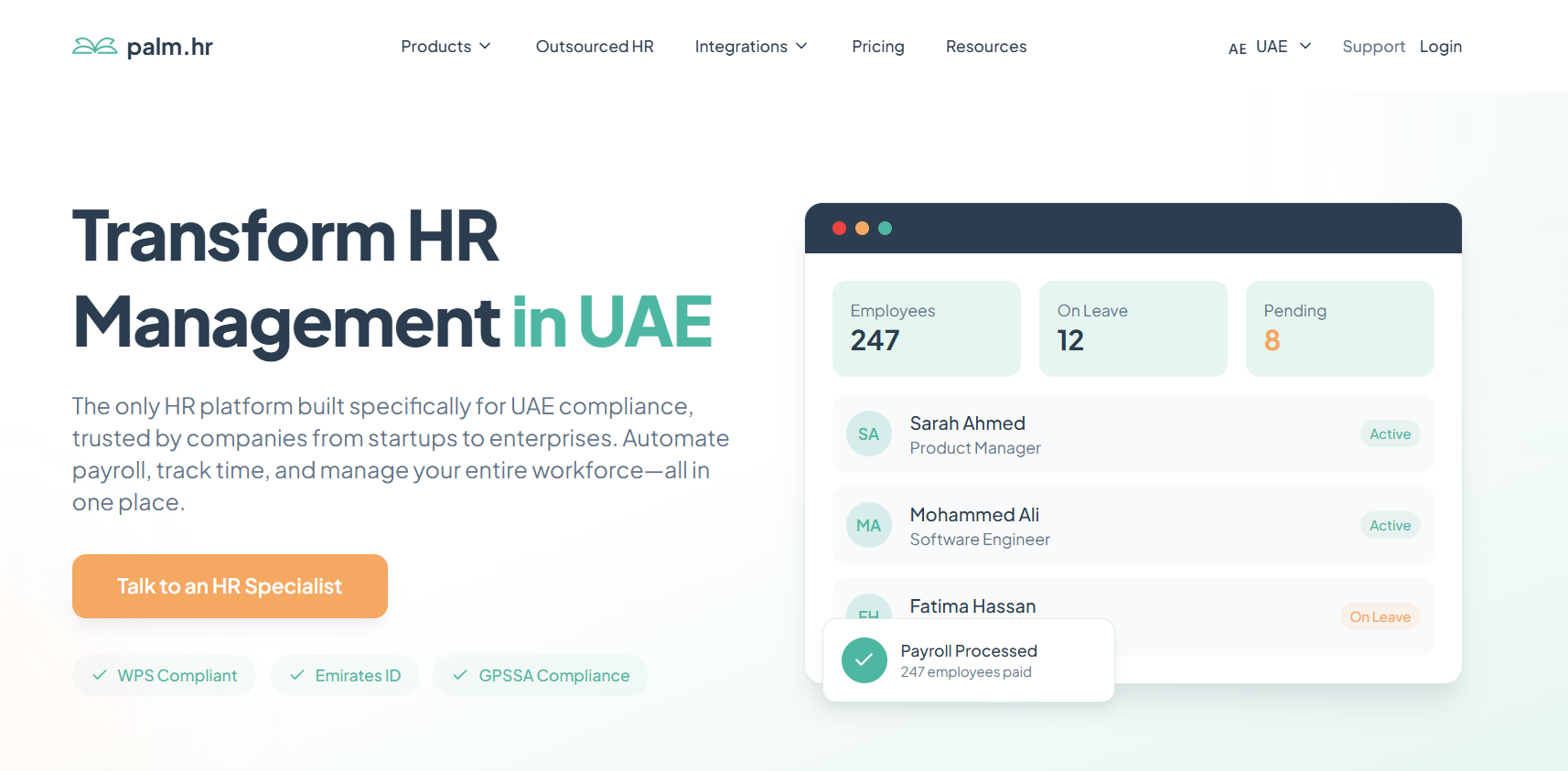
Palm.hr is an agile, Saudi-native platform built explicitly to alleviate administrative burdens for small and mid-sized businesses operating within the Kingdom. It delivers standard KSA compliances—including GOSI, Mudad, and Muqeem tracking—alongside a clean, accessible toolkit for managing everyday employee attendance, leave requests, and basic payroll runs. A key differentiator for lean teams is its direct out-of-the-box integration with localized accounting platforms like Wafeq, which ensures that payroll data flows directly into finance ledgers without manual duplicate entry. However, its lightweight footprint is not architected to support massive scale or multi-country GCC breadth.
Key Capabilities
- Lightweight, Saudi-native HRMS designed specifically for intuitive SMB management.
- Out-of-the-box integrations with local accounting platforms like Wafeq to bridge payroll and finance.
- Streamlined handling of core local compliance mandates including GOSI, Mudad, and Muqeem.
- Easy-to-deploy modules for everyday time tracking, leave approvals, and employee records.
Best for: Small to mid-sized Saudi businesses wanting a clean, easy-to-use platform that connects payroll directly to their local accounting software.
8. GulfHR
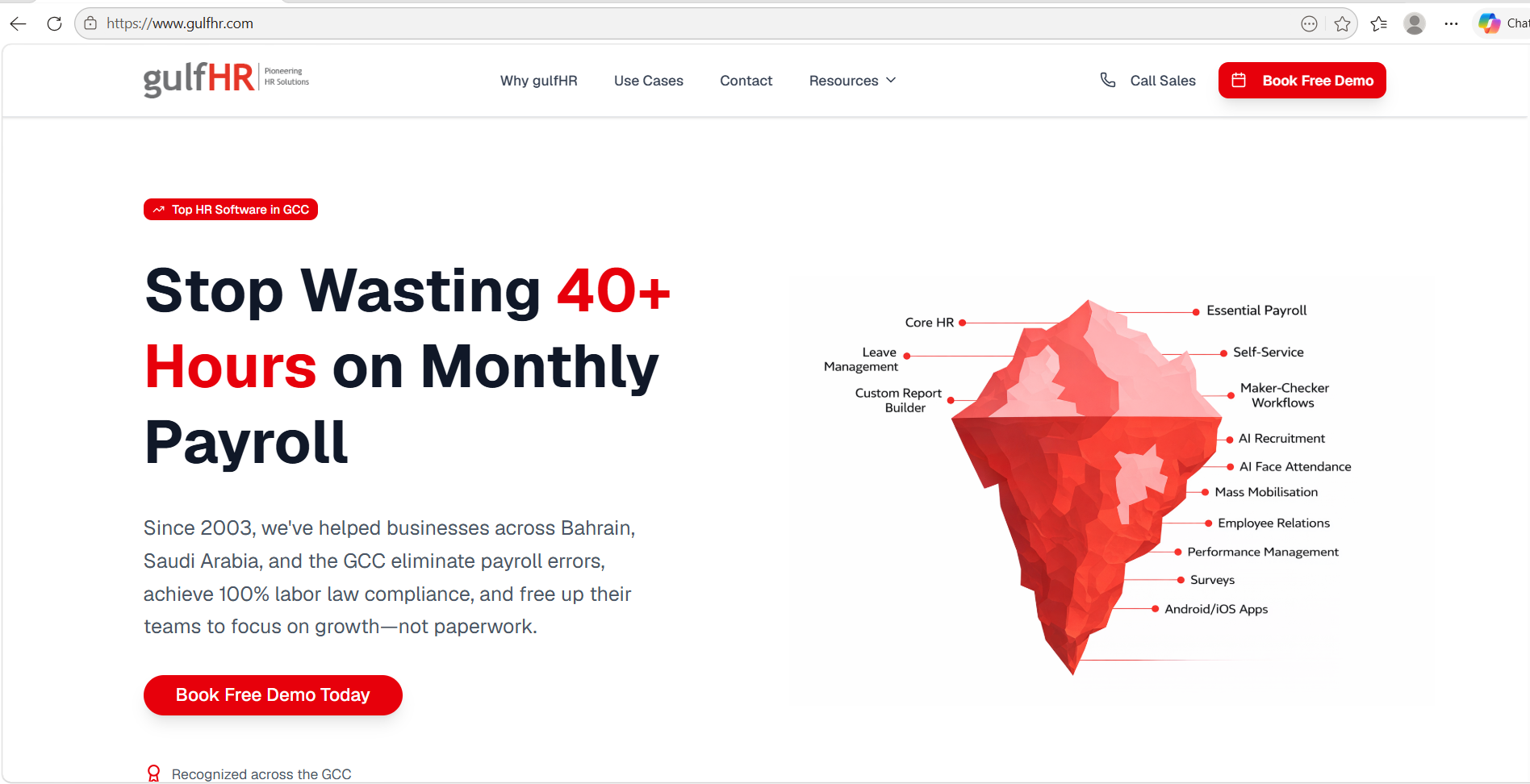
GulfHR is a dedicated multi-country GCC human capital management platform tailored for organizations tasked with managing cross-border workforces across Saudi Arabia, the UAE, and neighboring Gulf states from a single login. The platform solves the complexity of regional expansion by unifying KSA requirements like GOSI, Mudad, and Nitaqat tracking with the distinct Wage Protection Systems (WPS) and labor laws of neighboring countries. This centralized data model allows regional HR directors to maintain complete visibility over total labor costs without deploying siloed software for every country, though very large industrial groups often benchmark it against custom setups like Mawared to ensure exact fit.
Key Capabilities
- Unified cross-border GCC payroll processing supporting KSA, UAE, and adjacent Gulf markets.
- Simultaneous management of distinct regional compliances including GOSI, Mudad, and local WPS formats.
- Centralized dashboarding for cross-border labor costs and regional end-of-service liabilities.
- Consolidated employee database built to scale with regional corporate expansion.
Best for: Mid-to-large regional organizations running operations across multiple Gulf countries that want to consolidate compliance and payroll under one system.
What to Look for in HR and Payroll Software for Saudi Arabia
Saudi payroll compliance sits on top of several interlocking government systems, so the features below matter more here than in most other markets.
- GOSI contribution calculation. Saudi employees registered before July 3, 2024 stay on the legacy fixed rates. Employees who entered the workforce after that date follow a new schedule that started at 9% each side for the pension branch and rises 0.5 percentage points every July through 2028. Non-Saudi employees only require a 2% employer-paid occupational hazard contribution. Confirm the exact current-year rate with GOSI directly before running payroll, since the schedule updates annually.
- Mudad and WPS file generation. Salary payments must be submitted through Mudad on a consistent schedule, and late or partial payments trigger fines of SAR 3,000 per employee per month, with escalating consequences including service freezes after roughly two months of delay and the right for employees to transfer sponsorship after three months.
- Qiwa contract integration and the reconciliation risk. Since April 15, 2026, a Saudi employee's contract must be electronically documented and authenticated on Qiwa to count toward your Nitaqat headcount at all. Salary figures in Qiwa, Mudad and GOSI must match, and any drift between them is exactly the kind of mismatch that freezes government services.
- Nitaqat and Saudization band tracking. The current Nitaqat Mutawar phase, running 2026 through 2028, raised the required Saudization percentages across most sectors and removed the old Yellow tier, folding those companies into Red. A real-time dashboard that recalculates your band as headcount changes is far more useful than a static annual check.
- Muqeem residency and visa data. Iqama renewals, exit and re-entry permits, and visa transfers all depend on clean, current records, and a Mudad or GOSI mismatch can block Muqeem services even when the residency data itself is correct.
- End of service benefit automation. Saudi Labor Law ties gratuity to tenure, with different calculation rules depending on who initiates termination, so manual calculation is a common source of underpayment disputes.
- Data residency and Arabic-first localization. Payslips, contracts and reports need genuine Arabic support and Hijri calendar handling, not a translated overlay on a Western system.
How to Choose the Right HR and Payroll System for Your Saudi Business?
Match the platform to your operating footprint and compliance depth rather than to brand recognition alone.
- Saudi-only SMB: prioritize Arabic-first design, Saudi-hosted data and a lean, direct Mudad and GOSI setup. Jisr and PalmHR are built for this profile.
- Multi-country GCC operations: look for one platform that spans Saudi WPS and the equivalent UAE WPS requirements without forcing you to run two separate systems. ZenHR and GulfHR both operate across borders.
- Large enterprise or industrial sector: deep customization, multi-entity reporting and Saudi data residency options matter more than a slick interface. Darwinbox and MenaITech are the more common fits here.
- Employee experience led organizations: if self-service, benefits administration and engagement are as important as compliance, Bayzat and HONO both lean into that side of the product, though HONO's Saudi compliance depth should be verified directly before commitment.
Frequently asked
FAQs
See it live
Ready to see HONO in action?
Book a 20-minute demo tailored to your team's HR stack.
Request a demo
About the author
Harshita Bhalla
Harshita Bhalla is an Assistant Manager - HR at HONO and a Certified HR Payroll Specialist with around 4 years of experience in HR operations, payroll, and employee lifecycle management. She has worked across domestic and international payroll functions and brings a detail-oriented, people-first approach to everything she does. Harshita is passionate about building efficient HR systems that support both people and business growth.