Defining Employee Experience in Today's Workplace
Gartner defines employee experience as the sum of how employees perceive every interaction with their organization. Leading companies recognize a fundamental truth: strategic investment in workforce experience directly correlates with measurable business outcomes—heightened productivity, stronger cultural alignment, and dramatically reduced attrition.
Building exceptional employee experiences requires organizations to:
- Deploy intuitive tools that eliminate workflow friction
- Cultivate diverse, inclusive environments that fuel innovation
- Prioritize holistic employee well-being and sustained engagement
The Hidden Costs of Neglecting Employee Experience
Organizations that deprioritize employee experience face significant financial consequences—escalating recruitment costs, prolonged training cycles, and expensive customer churn. Current research shows companies pursuing digital transformation are substantially increasing technology investments, highlighting the strategic importance of solutions that genuinely elevate employee satisfaction and engagement.
How Conversational AI in HR Creates Competitive Advantage
Transforming Employee Engagement Through Intelligent Automation
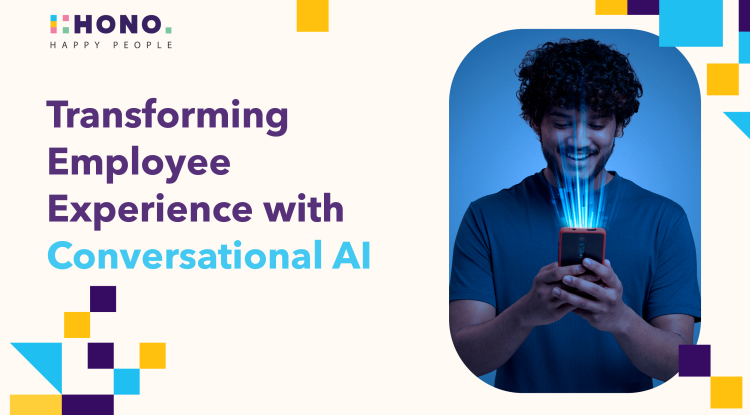
Conversational AI represents a paradigm shift in employee support systems. By deploying intelligent chatbots and virtual assistants throughout HR workflows, organizations deliver personalized, instant assistance that fundamentally changes how employees access information and resolve issues. This technology eliminates communication bottlenecks, minimizes response delays, and ensures employees receive relevant support exactly when needed.
Why Conversational AI Delivers Measurable HR Impact:
1. Always-On Accessibility: Employees receive immediate support across time zones and schedules, eliminating frustration from delayed responses.2. Contextual Personalization: AI in HR adapts interactions based on individual roles, preferences, and historical patterns—creating genuinely human-feeling exchanges.
3. Streamlined Resolution: Automating repetitive inquiries liberates HR professionals to focus on strategic initiatives that drive organizational value.
4. Actionable Intelligence: Conversational platforms continuously gather behavioral data that informs smarter HR strategies and evidence-based decisions.
Real-World Applications: Conversational AI Solving Actual HR Challenges
Consider these practical implementations demonstrating AI in HR effectiveness:
- Seamless Onboarding: New hires navigate organizational complexity through AI assistants that proactively answer questions, share relevant resources, and accelerate time-to-productivity.
- Continuous Feedback Loops: AI-powered pulse surveys capture real-time sentiment and experience data, enabling organizations to identify friction points and implement meaningful improvements.
- Personalized Development Pathways: Intelligent systems recommend tailored learning opportunities aligned with individual career aspirations and skill gaps.
Strategic Implementation: Integrating Conversational AI into Your HCM Solution
Selecting the Right HCM Solution for Your Organization
Successfully integrating conversational AI requires choosing an HCM solution that aligns with your specific organizational context. Consider these selection criteria:
1. Map Business Requirements: Identify precise HR functions where conversational AI creates maximum value—whether recruitment efficiency or engagement depth.2. Prioritize Scalability: Select platforms that evolve alongside your organization, accommodating growth while adapting to emerging technologies.
3. Demand Intuitive Design: Optimal solutions feel natural and effortless, encouraging genuine adoption rather than requiring extensive training.
4. Ensure Ecosystem Compatibility: Verify seamless integration with existing HR technology stacks, avoiding data silos and workflow disruptions.
Implementation Best Practices That Drive Adoption
1. Co-Create with Employees: Involve your workforce throughout implementation—gathering feedback and building genuine ownership.2. Invest in Enablement: Equip HR teams with comprehensive training to confidently manage and optimize conversational AI capabilities.
3. Measure and Iterate: Establish clear performance metrics and continuously refine your approach based on usage patterns and employee feedback.
The Business Case: Conversational AI as Strategic HR Investment
ROI Beyond Cost Savings
While conversational AI reduces operational expenses through automation, the strategic value extends far deeper. Organizations implementing AI in HR report:
- Enhanced Talent Retention: Employees experiencing responsive, personalized support demonstrate significantly higher engagement and loyalty.
- Accelerated Decision-Making: Real-time data and insights enable HR leaders to identify trends and anticipate challenges.
- Improved Employer Brand: Exceptional employee experiences translate directly into stronger talent attraction and positive market reputation.
Future-Proofing Your Workforce Strategy
As workplace expectations evolve and technology advances, conversational AI positions organizations to adapt quickly. The most effective HCM solutions incorporate continuous learning capabilities, improving responses without requiring constant manual intervention.
Conclusion: Embracing the Conversational AI Imperative
Creating workplaces where employees thrive requires more than good intentions—it demands strategic technology investments that fundamentally transform how organizations support their people. AI in HR, particularly conversational AI integrated within comprehensive HCM solutions, represents a proven pathway to enhanced employee experiences, optimized operations, and sustainable competitive advantage.
See it live
Ready to see HONO in action?
Book a 20-minute demo tailored to your team's HR stack.
Request a demo