The Global HR Revolution: How HONO’s Headless Zero UI HRMS is Reshaping Enterprise HR
Enterprise HR technology has become significantly more sophisticated over the past decade. AI, automation and cloud platforms have transformed how organisations manage talent, payroll and workforce operations. Yet, despite these advances, the employee experience has changed far less. Everyday interactions with HR systems still involve logging into portals, navigating menus, locating the right module and completing a series of actions before a task is complete.
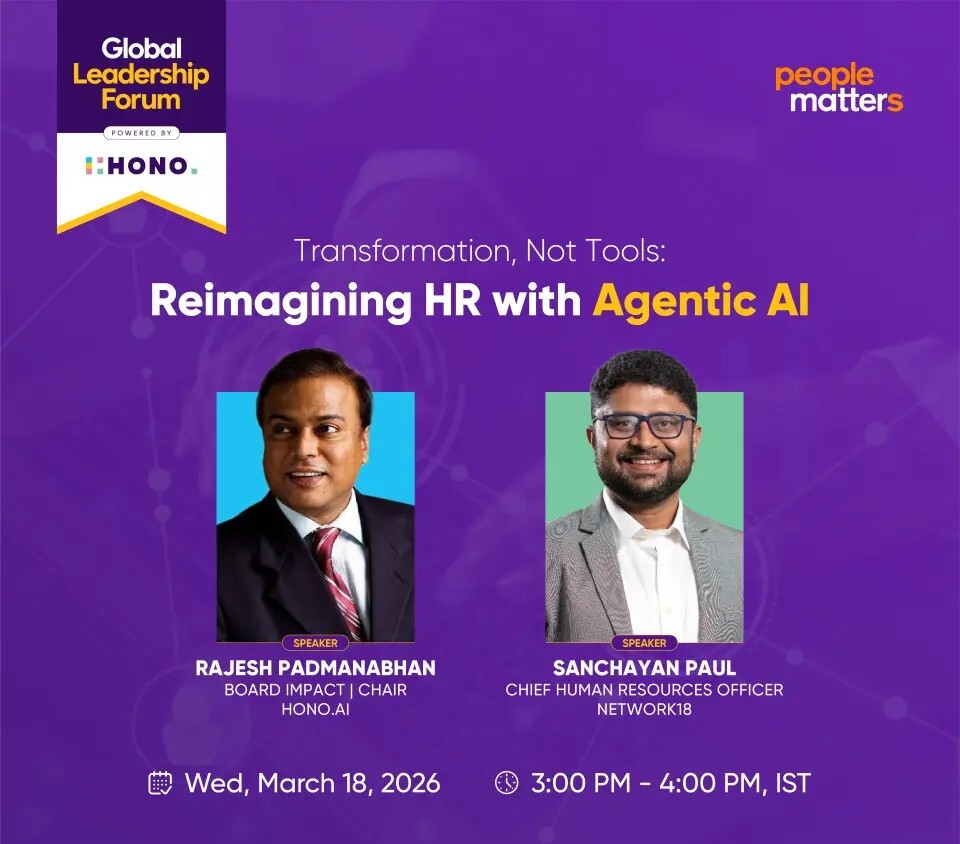
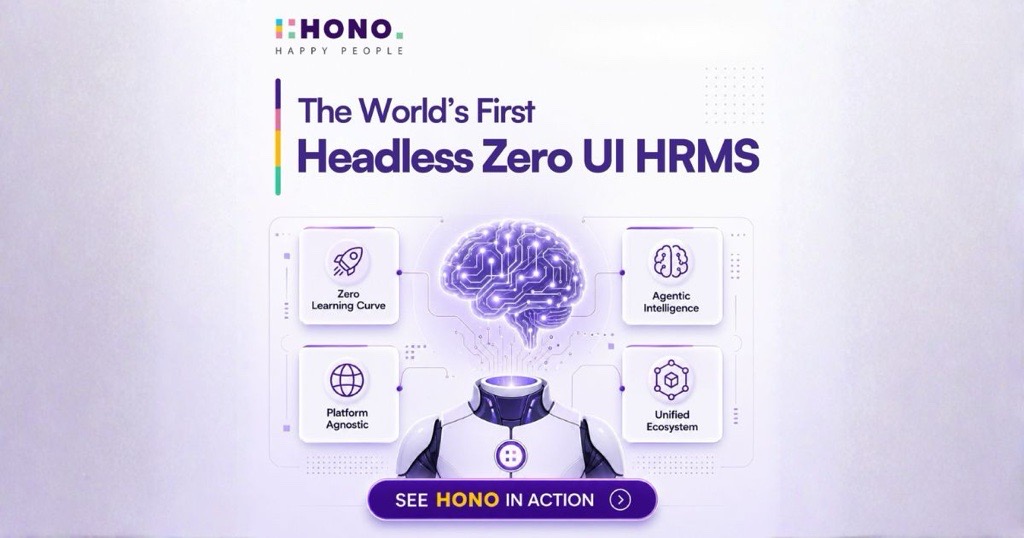
As organisations scale across geographies and manage increasingly distributed and multilingual workforces, expectations from workplace technology are changing. Employees want interactions that are intuitive, conversational and embedded within the flow of work. This formed the focus of a recent product showcase hosted by People Matters and HONO, where Prasanth Padharthi, Co-Founder & CTO, HONO, and Amandeep Singh Minhas, Head of PreSales, Implementation, Customer Success and Support - EMEA, HONO, introduced ERA, described as the world's first Headless Zero UI HRMS. Through a live demonstration, the speakers explored how conversational AI, AI agents and workflow orchestration are shaping a new approach to enterprise HR technology.
Rethinking the way employees interact with HR
According to the speakers, the idea behind a Headless Zero UI HRMS is simple. The HR engine continues to perform all the heavy lifting, from payroll and compliance to workflows and employee records, while the traditional interface fades into the background. Instead of navigating dashboards and forms, employees interact with the system using natural language.
During the demonstration, employees could request leave, retrieve payslips, understand company policies or check attendance simply by asking a question. The platform interpreted the request, identified the relevant workflow and completed the transaction without requiring users to search across multiple screens. This, Amandeep explained, shifts the interface from menus and navigation to conversation itself.
Beyond conversational AI
While conversational interfaces have become increasingly common, ERA is designed to perform more than a chatbot. As Prasanth demonstrated, the platform works directly with live enterprise data and can integrate with multiple business systems through APIs, allowing users to retrieve information and perform actions across applications from a single interface.
The showcase highlighted several enterprise use cases, including:
- Retrieving HR and business data from multiple connected systems through a single query.
- Correlating workforce metrics such as attendance with operational data from CRM platforms.
- Scheduling meetings directly from the conversation after identifying employees requiring follow-up.
- Executing approvals and routine HR transactions without navigating separate applications.
The objective is to simplify enterprise interactions while reducing the time employees spend moving between different systems.
One platform, multiple experiences
Another key aspect of the demonstration was the platform's ability to adapt to different users across the organisation. Instead of creating separate experiences for employees, managers and HR teams, the same conversational interface responds according to the user's role and access permissions.
Some of the capabilities demonstrated included:
- Employees accessing leave balances, payroll information, attendance records and policy documents.
- Managers reviewing team performance, approving requests and scheduling discussions with employees.
- HR teams generating workforce analytics, responding to policy queries and managing employee requests more efficiently.
- Business leaders accessing real-time workforce insights to support organisational planning and decision-making.
Speaking during the session, Amandeep noted that one of the biggest barriers to HR technology adoption has traditionally been ease of access and ease of use. By replacing complex navigation with natural language interactions, organisations can significantly reduce training requirements while improving employee adoption.
AI that understands context
The showcase also demonstrated how conversational AI can move beyond answering individual questions to providing contextual guidance. Instead of displaying isolated information, the platform combines data from multiple sources to generate richer and more meaningful responses.
For example, when an employee checked their leave balance, the platform also highlighted leave that was likely to lapse, explained the relevant policy and suggested suitable dates for applying leave. Managers reviewing employee performance could access competency information, learning history and peer feedback within the same conversation, providing a more complete picture ahead of performance discussions.
The presenters also showcased dynamic workforce analytics, where charts and dashboards were generated in real time based on conversational prompts instead of relying solely on predefined reports. This allows users to explore workforce information without requiring dedicated dashboards for every business scenario.
Balancing intelligence with governance
As AI becomes more deeply embedded within enterprise systems, governance remains a key priority. During the session, Prasanth explained that ERA continues to operate within existing role-based access controls, ensuring employees can only access information they are authorised to view. Every interaction is logged, providing organisations with complete audit trails while maintaining enterprise security standards.
The platform also includes administrative controls that allow organisations to monitor AI usage, manage token consumption and configure guardrails based on business requirements. Multilingual support further enables employees to interact with the system in their preferred language, making the experience more accessible across diverse workforces.
Looking ahead
The conversation around enterprise AI is increasingly moving beyond automation towards experience. As employees expect workplace technology to mirror the simplicity of consumer applications, organisations are exploring new ways to make enterprise systems more intuitive and accessible.
The introduction of Headless Zero UI HRMS reflects this shift. By placing conversations at the centre of the employee experience, it reimagines how people access information, complete transactions and interact with HR systems. Through ERA, HONO has introduced a new perspective on enterprise HR technology, one that places equal emphasis on AI, user experience and enterprise readiness, while signalling how the next generation of HR systems may evolve.