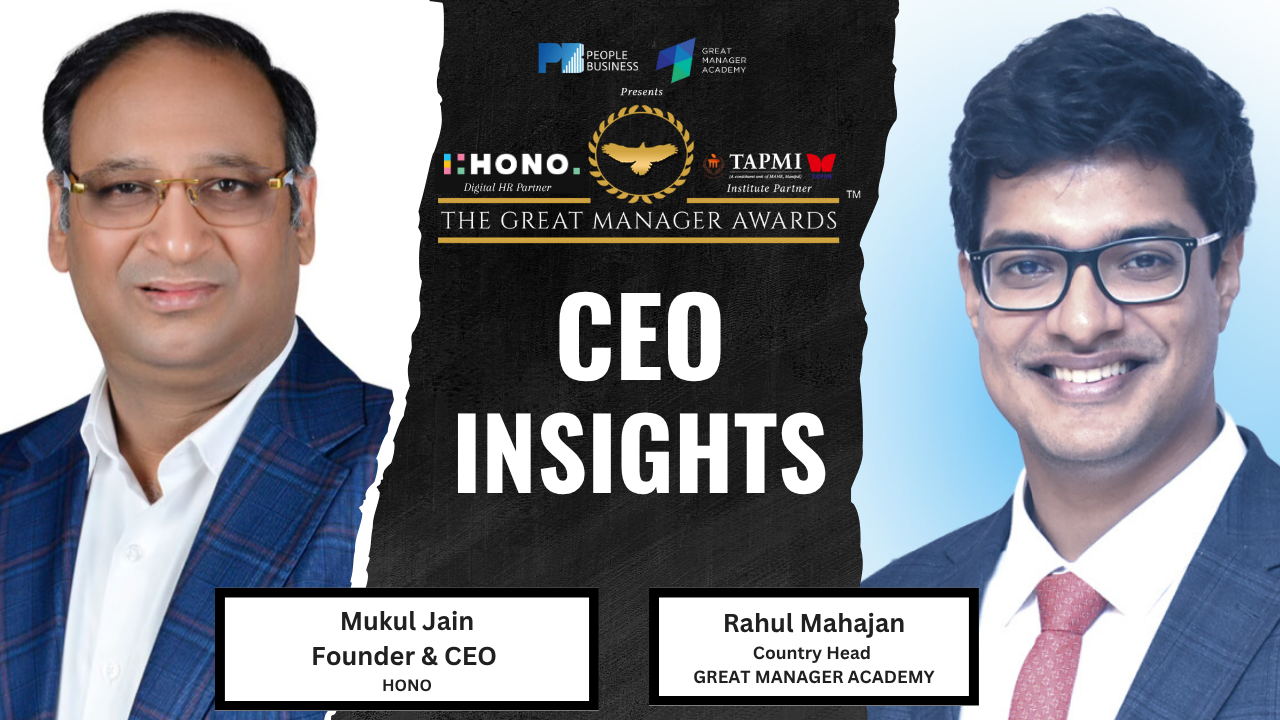
Rahul: How would you describe your leadership style and what are some of the dos and don’ts around you?
Mukul: I wouldn’t define it as a fixed leadership style; it’s more of an evolution. Having worked across startups, I’ve realized that leadership changes with the phase of the organization. In the early stages, customer centricity comes first. As the organization grows, people become the most critical lever for scale. And across all phases, performance orientation remains essential.
You can’t build or scale anything alone; people help you grow and eventually take the organization forward.
In terms of dos, I appreciate individuals who are prepared, disciplined, and detail oriented. Personally, I structure my day very intentionally breaking it down into priorities aligned to long-term goals and strategy. I also believe that as a leader, you should start your day by enabling others first, before focusing on your own work.
As for don’ts:
- Don’t hide problems; bring them to the table
- Don’t work in silos; collaborate as a team
- And most importantly, never compromise on integrity or commitment
Rahul: Looking at the next 3–5 years, what are the bold priorities for the organization?
Mukul: Our focus remains consistent; build a strong product and keep improving it every day. We see AI not as a threat, but as a massive opportunity to innovate and strengthen what we offer. Over the past few years, we’ve expanded globally, and in the next phase, we aim to scale further across geographies.
Broadly, our priorities are:
- Product excellence and innovation
- Global expansion and scale
- Building capability and capacity within people
Product, capability, and capacity are what will drive sustainable growth.
Rahul: What are the X-factors or critical competencies leaders need in today’s fast-changing world?
Mukul: Leaders today need to be multitaskers with a strong learning mindset. They should not limit themselves to one specialization. Instead, they should build understanding across domains - commercial, legal, product, and organizational dynamics.
What’s equally important is:
- Learning continuously - from peers, juniors, and seniors alike
- Being flexible, disciplined, and collaborative
- Solving problems collectively and building organizational capability
A leader’s real contribution is not just delivering tasks - it is building capacity and capability in the organization.
Rahul: If you could ask just one question to assess a candidate for a leadership role, what would it be?
Mukul: I would ask:
👉 “Tell me about a major failure and what you learned from it.”
Failures teach you far more than success. What matters is how you adapt, learn, and move forward.
In my own journey, failures have far outweighed successes. But taking risks - even if only 20% succeed - often delivers disproportionate returns compared to the failures.
Rahul: How would you define a Great Manager?
Mukul: The most important capability of a great manager is building capability in others.
Managers should:
- Provide clear direction and vision
- Empower teams with autonomy
- Focus on developing people, not just managing tasks
Great managers inspire through experiences - sharing both successes and failures and allow their teams to learn, interpret, and grow.
Rahul: If you could go back in time to when you started your career, what would you do differently?
Mukul: Three things:
- Invest more in talent from the very beginning
- Prioritize health as a non-negotiable
- Build strong systems for people development early on
In fact, today I strongly believe that health should be part of KPIs. If you lose your health, everything else becomes irrelevant.
Rahul: What advice would you give to young professionals today?
Mukul: Be patient. Focus on strategy, not just tasks. Also:
- Don’t neglect family
- Don’t neglect health
- Don’t neglect teamwork
If these are in place, results will follow whether now or later. Long-term success is not about speed; it’s about sustainability.
Rahul: If you had to describe yourself in one word?
Mukul: Passionate.
Passion is what keeps you going through both success and failure; it drives energy, focus, and resilience.
Frequently asked
FAQs
See it live
Ready to see HONO in action?
Book a 20-minute demo tailored to your team's HR stack.
Request a demo