In every organization, employees come and go, but how you manage their exit can significantly impact your company’s future. A well-structured exit management process is not just a final formality; it’s an opportunity to protect your organization’s reputation, maintain team morale, and ensure business continuity. According to a 2024 McKinsey report, companies with poor exit strategies are more likely to face challenges such as reduced productivity and increased employee turnover, affecting long-term growth and profitability. Given the impact on morale and the knowledge left behind, it’s crucial to handle departures thoughtfully.
Preparing for the Exit: Establishing Clear Guidelines
A structured exit management plan is essential for managing transitions smoothly. Without a proper framework, the process can become chaotic, leading to confusion for the departing employee and the team left behind. HR and managers play an important role in this, ensuring communication is clear and consistent throughout. Establishing clear guidelines helps set expectations for all parties, from the initial resignation to the final handover.
For example, companies like Accenture have established exit management plans, which include structured steps and clear communication, ensuring exits are handled professionally. This process not only helps manage employee emotions but also safeguards company interests. The exit management plan ensures that the right measures are taken at each stage of the process, from revoking access to securing valuable knowledge.
Conducting Exit Interviews: Insights for Improvement
Exit interviews are a critical tool for organizations seeking continuous improvement. They provide an opportunity to gather honest feedback about the employee experience, which can be invaluable in reducing turnover and boosting engagement. Asking the right questions during an exit interview can help identify issues that may be affecting employee satisfaction, thus offering actionable insights for improvement.
A recent report from McKinsey in 2024 revealed that organizations that implemented changes based on exit interview feedback reduced their employee turnover by 20%. By listening to departing employees and addressing their concerns, companies can refine their internal policies, thereby improving the employee retention rate. This data-driven approach ensures that exit interviews are not just a formality but a powerful tool for long-term organizational growth.
Knowledge Transfer: Ensuring Continuity
One of the most critical aspects of a well-managed exit is knowledge transfer. A departing employee often holds valuable information about ongoing projects, clients, and workflows, making it essential to establish a clear plan for transferring that knowledge. This process involves identifying key documents, assigning responsibilities, and ensuring that any ongoing work is handed over smoothly to a successor or interim solution.
A successful transition plan should have a clearly defined timeline and specific milestones. Take the example of IBM, a company known for minimizing productivity dips during employee exits. Their detailed exit management process includes step-by-step knowledge transfer plans, ensuring that no information is lost during the transition, thus maintaining workflow continuity and avoiding unnecessary delays.
Handling Employee Emotions and Team Morale
Exits can stir up emotions among both the departing employee and the remaining team members. Poorly managed exits can lead to low morale and even fear among the remaining workforce. To mitigate this, organizations must adopt strategies that address emotional concerns and promote open communication. Allowing employees to express their concerns and offering transparency in the exit process can foster a more supportive work environment.
Providing support systems such as counseling or mentorship programs for both exiting and remaining employees can help alleviate the stress that often accompanies such transitions. A positive exit experience not only benefits the departing employee but also strengthens your employer branding, making your company more attractive to future talent. According to a McKinsey study in 2023, companies that prioritize employee morale during exits report a 15% increase in team engagement post-exit, highlighting the importance of emotional management in the exit process.
Security and Compliance Considerations
While focusing on the human aspects of exit management is crucial, security and compliance should not be overlooked. Ensuring IT security, such as revoking system access and securing data, is vital in protecting the organization from potential risks. In addition, HR must ensure that all legal and compliance issues, including exit agreements, non-compete clauses, and benefits termination, are handled smoothly and by regulations.
A well-rounded exit management process addresses these concerns early on, reducing the risk of legal complications or data breaches. The 2024 Gartner report shows that companies with a solid exit management plan reduce compliance risks by 30%, demonstrating the importance of a structured approach to the legal aspects of employee exits.
Post-Exit Follow-up: Maintaining Positive Relations
An exit does not always have to be the end of the relationship. Maintaining positive relations with former employees can be beneficial for both parties. Boomerang employees—those who return to the company after leaving—are often highly valuable due to their familiarity with the organization’s processes and culture. Additionally, former employees can be strong advocates for your employer brand, referring talent, or contributing through alumni networks.
Companies like Deloitte have successful alumni programs that keep former employees engaged and connected to the organization. These programs provide opportunities for networking, professional development, and even potential rehires, making it a win-win for both the company and its former employees.
The Role of Technology in Streamlining the Exit Process
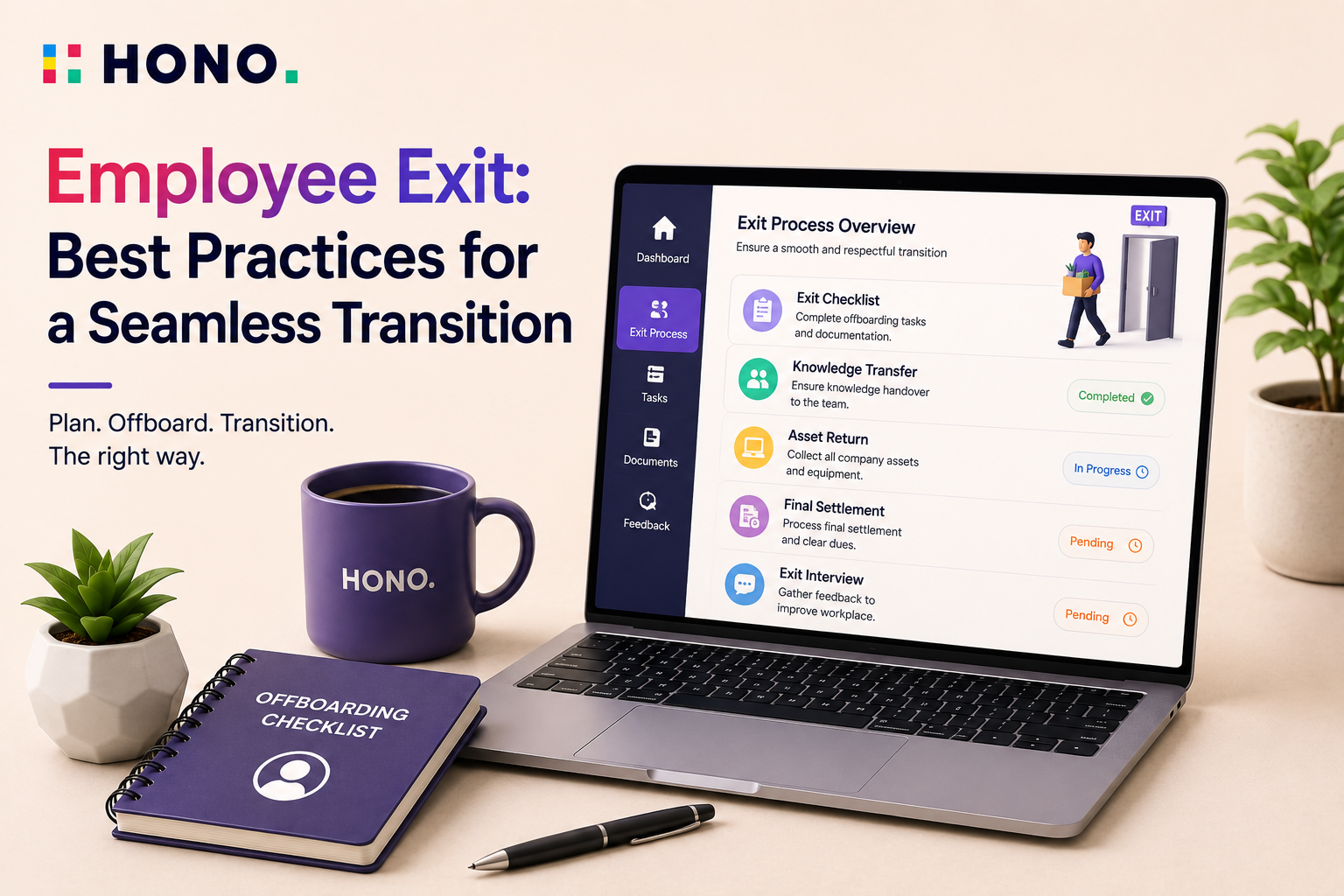
Technology has revolutionized many HR processes, and exit management is no exception. By using digital tools and platforms, organizations can streamline the employee exit process, making it more efficient and less burdensome. HR software can automate many aspects of exit management, from generating exit agreements to revoking system access and conducting virtual exit interviews.
Frequently asked
FAQs
See it live
Ready to see HONO in action?
Book a 20-minute demo tailored to your team's HR stack.
Request a demo
About the author
Mazna Majeed
Mazna is a strategic HR leader with over 10 years of experience driving talent success and organizational growth. As Head of Talent Acquisition and Operations at HONO, she leads HR initiatives across India and South-East Asia, including manpower planning, employee lifecycle management, talent development, engagement, and retention. Mazna is known for aligning people strategy with business goals, building inclusive high-performing teams, and strengthening culture to enable sustainable growth.