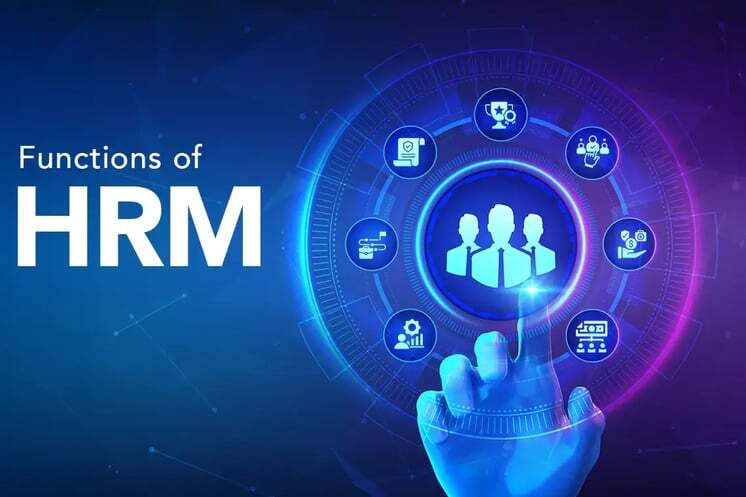
Core HR Functions That Power Organizational Success
Talent Acquisition & Recruitment
Great organizations are built by great hiring decisions. But recruitment today isn’t just about filling roles. It’s about managing high candidate volumes, aligning hires with long-term workforce strategy, and ensuring speed without sacrificing quality.
Enterprise HRMS recruitment modules bring structure to the chaos:
- Centralized job postings
- Clear candidate pipelines
- Streamlined interview scheduling
- Transparent hiring workflows
No more email chains. No more spreadsheet gymnastics. The result? Faster hiring, better collaboration between HR and business leaders, and consistent decision-making — even as the organization scales.
Employee Onboarding & Digital Documentation
First impressions matter — especially on Day One. Traditional onboarding often means paperwork piles, scattered documents, and slow approvals. That friction delays productivity and frustrates new hires.
Digital onboarding changes the experience entirely. With Enterprise HRMS platforms, employees can:
- Upload documents
- Complete formalities
- Access policies
- Explore onboarding resources
All from one place. HR teams reduce administrative load. Records stay secure. Employees feel supported from the start. And when hiring happens frequently, automation ensures consistency every single time.
Attendance & Workforce Management
Workforces are no longer confined to one office or one schedule. Remote teams. Multiple locations. Shift-based roles. Flexible work.
Manual attendance tracking simply can’t keep up. Modern HRMS platforms automate attendance through:
- Biometric integrations
- Mobile check-ins
- Shift management systems
- Real-time tracking dashboards
Managers gain instant visibility into availability, trends, and leave patterns. Employees manage requests through self-service portals. Less admin. Better planning. Full transparency.
Payroll & Compensation Management
Payroll is personal. And precision here is non-negotiable. Employees expect accurate salaries, correct deductions, and on-time payments — every cycle.
Manual payroll systems increase the risk of calculation mistakes and compliance gaps. Enterprise HRMS platforms automate the entire workflow:
- Salary calculations
- Tax and statutory deductions
- Payslip generation
- Banking integrations for disbursement
Automation reduces risk, ensures compliance, and brings consistency — especially for large, distributed workforces.
Performance Management & Employee Development
Annual performance reviews are outdated. Growth doesn’t happen once a year. Continuous performance management creates alignment between employee effort and organizational goals.
HRMS platforms make this possible by enabling:
- Goal setting and tracking
- Structured performance reviews
- Continuous feedback loops
- Performance trend analysis
Leaders identify high performers faster. Skill gaps become visible earlier. Development becomes intentional. Employees gain clarity. Organizations build a culture of accountability and improvement.
Also read: key features of HRM
Employee Engagement & Workplace Experience
Engaged employees don’t just stay longer — they perform better. Organizations that actively listen and respond to employee sentiment build stronger cultures and healthier teams.
Enterprise HRMS platforms support engagement through:
- Feedback surveys
- Recognition programs
- Internal communication channels
- Learning and development portals
Employees feel heard. Leaders stay informed. Communication flows better. A connected workplace is a productive workplace.
Compliance & Policy Management
Compliance isn’t optional — and it isn’t simple. Labor laws, payroll regulations, workplace policies — especially across multiple regions — can get complicated fast.
HRMS platforms simplify compliance by:
- Centralizing employee records
- Automating documentation
- Generating compliance reports
- Organizing audit-ready records
Less legal risk. More operational confidence.
The Real Value of an Enterprise HRMS
As organizations scale, HR becomes more data-heavy and operationally demanding. A centralized HRMS acts as the infrastructure layer that holds everything together:
- Unified workflows
- Accurate data
- Reduced admin effort
- Complete workforce visibility
And beyond operations, analytics unlock strategic insights: Hiring trends, performance patterns, retention signals, and workforce costs. HR stops reacting. Leadership starts planning.
Conclusion
Human Resources sits at the heart of organizational performance. Recruitment, onboarding, attendance, payroll, performance, engagement, and compliance — these aren’t isolated functions. They’re interconnected levers that shape how work gets done.
When powered by an Enterprise HRMS, these functions become scalable, structured, and intelligent. Manual effort drops. Visibility improves. Employee experience becomes seamless.
And as workplaces evolve, one thing is clear: HR technology isn’t just supporting the organization. It’s helping run it.
See it live
Ready to see HONO in action?
Book a 20-minute demo tailored to your team's HR stack.
Request a demoAbout the author
Neha Sinha
Neha Sinha is a Talent Acquisition Lead at HONO with around 9 years of experience in HR and recruitment. She specializes in data-driven hiring, HR analytics, and strategic talent management, and has worked with organisations like CarDekho (Girnar Group) and American Cyber Systems. She is passionate about building high-performing teams, aligning people strategy with business goals, and mentoring aspiring HR professionals.