Key Takeaways
- Annual reviews are becoming increasingly ineffective in measuring employee performance and driving development.
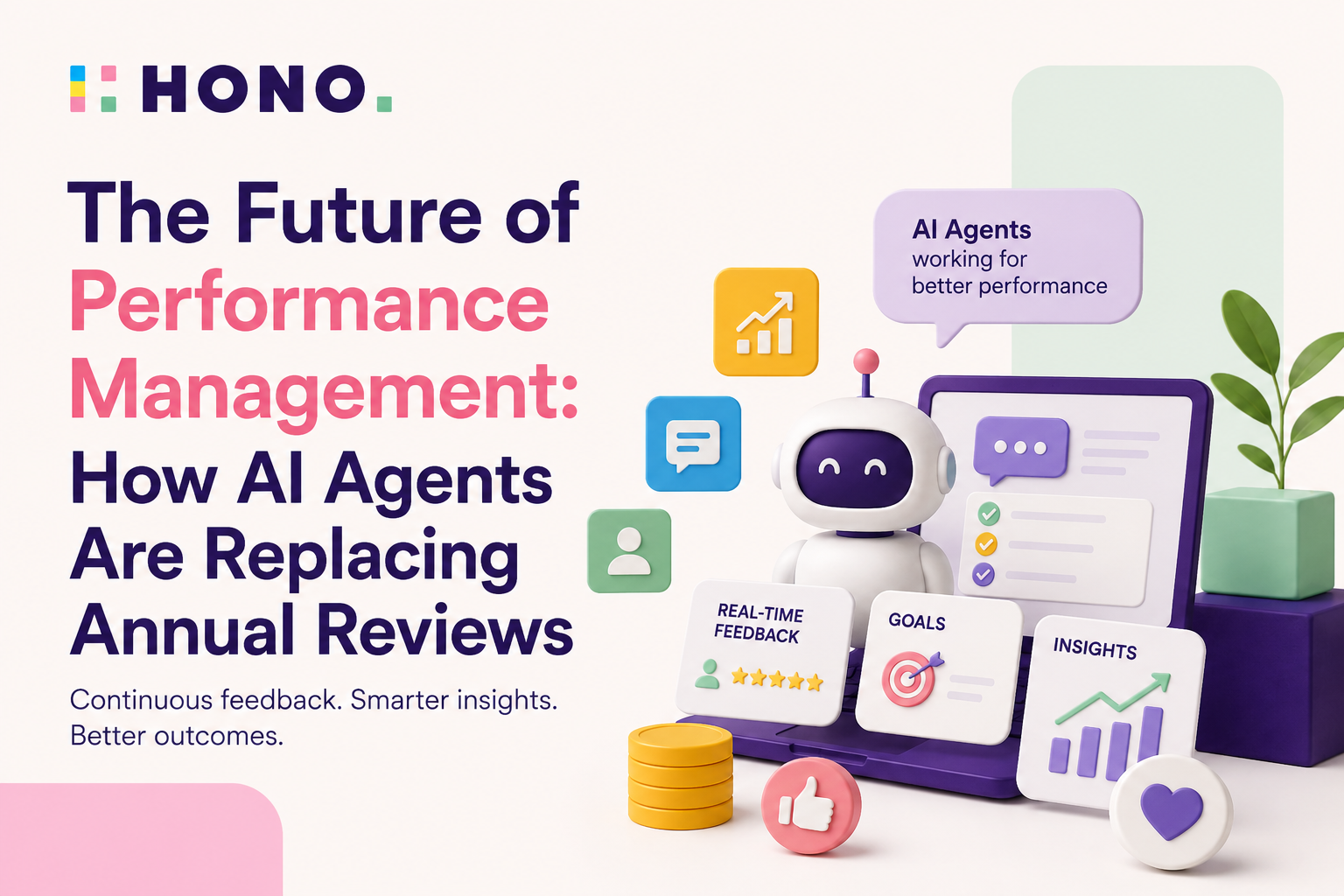
- AI is enabling continuous performance management through real-time feedback, coaching, and insights.
- Agentic AI is automating performance administration while keeping managers responsible for decisions.
- Zero UI experiences are bringing performance management into the tools employees already use.
- Explainable, governed AI will be critical to building trust and reducing bias in performance decisions.
Why Traditional Performance Management Is Failing
The biggest challenge with traditional performance management is timing.
Annual and even biannual reviews create a significant delay between performance and feedback. By the time conversations happen, many of the most important moments that shaped outcomes have already been forgotten. This naturally introduces recency bias, where recent events disproportionately influence ratings and development discussions.
The administrative burden creates a second problem. Managers spend considerable time gathering inputs, completing forms, tracking deadlines, and preparing evaluations. Instead of developing people, much of their energy is spent managing process.
Employees feel the impact as well. Reviews often become retrospective exercises rather than meaningful coaching conversations. Feedback arrives too late to influence behavior, development plans become disconnected from day-to-day work, and ratings can feel subjective rather than evidence-based.
The result is a system that struggles to drive engagement, improve performance, or support workforce planning. These are precisely the problems that AI-powered performance management aims to solve.
What Is AI in Performance Management?
AI in performance management refers to the use of machine learning, natural language processing (NLP), generative AI, and agentic AI to automate review workflows, surface real-time performance signals, and predict workforce outcomes such as attrition risk, skill gaps, and high-potential identification.
Machine learning identifies patterns across performance, engagement, and workforce data that would be difficult for managers to detect manually. Natural language processing analyzes feedback, surveys, and performance comments to uncover sentiment and developmental themes. Generative AI helps create summaries, coaching recommendations, and performance narratives. Agentic AI goes one step further by initiating actions such as scheduling reviews, cascading goals, sending reminders, and preparing performance insights without requiring constant human intervention.
Together, these technologies are transforming performance management from a periodic process into a continuous capability.
5 Shifts Defining the Future of Performance Management (2026 and Beyond)
From Annual Reviews to Continuous, Evidence-Based Conversations
Annual reviews force a binary judgment onto a reality that is constantly evolving.
Leading organizations are replacing infrequent evaluations with ongoing check-ins supported by real-time goals, continuous feedback, project outcomes, and developmental milestones. Performance discussions become more relevant because they are grounded in current context rather than historical memory.
What good looks like: Managers and employees engage in regular coaching conversations supported by evidence rather than recollection.
From Manager Admin to Agentic Workflows
Managers do not lack intent. They lack time.
Agentic AI is beginning to take ownership of performance administration by scheduling reviews, tracking completion status, collecting inputs, drafting review summaries, recommending goals, and identifying development opportunities.
At HONO, capabilities such as the Smart Goal Agent, Cascade Agent, PMS Review Agent, and Skill Gap Identifier Agent are designed to automate these administrative layers while ensuring managers remain accountable for final decisions.
What good looks like: Managers spend more time coaching and less time managing workflows.
From Dashboards to Zero UI: Performance Management in the Flow of Work
Most employees do not want another platform to log into.
The next generation of performance management will happen through conversational interfaces embedded into the tools employees already use. Rather than navigating menus and dashboards, managers will simply ask questions, request updates, or initiate actions through natural language interactions.
This is the foundation of Zero UI, where technology becomes increasingly invisible and performance management becomes part of everyday work.
What good looks like: A manager receives performance insights and initiates actions through a simple conversation instead of navigating multiple screens.
From Lagging Reviews to Predictive People Analytics
Traditional performance systems tell organizations what happened. Modern systems help predict what happens next.
By combining performance, engagement, learning, and workforce data, organizations can identify attrition risks, emerging skill gaps, succession readiness, and high-potential talent before these issues become visible through traditional review cycles.
IBM and other organizations have demonstrated the value of predictive workforce analytics in reducing unwanted attrition and improving talent outcomes. Platforms such as HONO Transform are bringing similar capabilities into everyday HR decision-making.
What good looks like: HR leaders identify talent risks before they become talent losses.
From Gut-Feel Ratings to Governed, Bias-Aware AI
Performance evaluations have always been vulnerable to bias.
AI can either amplify those biases or help reduce them, depending on how it is implemented. The future belongs to governed AI systems that provide transparency, explainability, and clear human accountability.
Rather than replacing managers, AI should provide additional evidence, context, and recommendations that support better decisions. Final accountability must remain human.
What good looks like: AI informs decisions while managers remain responsible for making them.
The Problem-to-Future Map
| Today's Problem | Future State | Enabling Capability |
|---|---|---|
| Recency-biased annual reviews | Continuous performance conversations | Continuous feedback workflows |
| Excessive manager administration | AI-assisted performance operations | Agentic workflow automation |
| Low HRMS adoption | Embedded performance experiences | Conversational HRMS layer |
| Delayed employee feedback | Always-on listening and coaching | Real-time feedback systems |
| Reactive talent management | Predictive workforce insights | Attrition and high-potential analytics |
| Subjective performance ratings | Evidence-based evaluations | Explainable AI and governance |
| Misaligned organizational goals | Goal alignment at scale | Goal cascading and strategy mapping |
What This Means for HR Leaders: 5 Moves to Make Now
1. Audit your review cadence
If meaningful performance conversations happen once or twice a year, technology alone will not solve the problem. Review the frequency and quality of manager-employee interactions first.
2. Prioritize agentic and conversational platforms
The next generation of performance management will be defined by how work gets done, not how dashboards look. Evaluate vendors on automation, conversational experiences, and AI capabilities.
3. Establish AI governance early
Create clear policies around explainability, human oversight, and accountability before introducing AI into performance decisions.
4. Shift metrics from activity to outcomes
Performance frameworks should focus on business outcomes, contribution, and impact rather than visibility or activity.
5. Pilot continuous listening
Use pulse surveys, continuous feedback mechanisms, and sentiment analytics to identify engagement and performance issues before they escalate.
How HONO Is Building This Future
At HONO, we believe performance management should happen where work happens—not inside a dashboard that employees visit a few times a year.
HONO's Performance Management platform enables organizations to build performance programs around Management by Objectives (MBO), Balanced Scorecards, competency frameworks, continuous feedback models, 360-degree reviews, bell curve normalization, and 9-box talent assessments. Review cycles can be configured as weekly, monthly, quarterly, half-yearly, or annual processes, allowing organizations to move beyond rigid appraisal structures.
The platform also introduces agentic AI into the performance lifecycle.
The Smart Goal Agent helps employees and managers create measurable goals aligned with organizational strategy. The Cascade Agent translates organizational priorities into team and individual objectives, strengthening alignment across the enterprise. The PMS Review Agent analyzes performance signals across HR processes and generates review summaries that managers can evaluate and refine before making decisions.
Beyond reviews, HONO connects performance management with competency frameworks, learning recommendations, succession planning, and workforce analytics. Organizations can identify skill gaps, recommend development pathways, map talent through 9-box grids, and gain visibility into readiness for future roles.
Through HONO Engage, organizations can capture continuous feedback and employee sentiment. Through HONO Transform, performance and workforce data are converted into predictive insights that help identify attrition risks, engagement trends, and emerging high-potential talent before they become visible through traditional reporting.
The result is a performance management model built around continuous alignment, ongoing feedback, predictive intelligence, and manager effectiveness rather than annual administrative exercises.
The Bottom Line
The future of performance management isn't a better dashboard. It's the disappearance of the dashboard, as AI moves performance conversations into the flow of work.
Organizations that embrace continuous feedback, agentic workflows, predictive analytics, and conversational experiences today will be far better positioned to build engaged, high-performing, and future-ready workforces tomorrow.
FAQ’s
What is the future of performance management?
The future of performance management is the end of the dashboard. AI and agentic systems are moving performance conversations into the daily flow of work through continuous feedback, predictive analytics, and natural-language interfaces that replace the once-a-year review cycle with always-on, evidence-based dialogue. The shift is already underway. Organizations that treat it as a future concern are already behind.
How is AI used in performance management?
AI in performance management operates across four layers. Machine learning detects performance patterns and attrition risk at a scale no manager can replicate manually. NLP reads feedback and survey text to extract sentiment and flag early disengagement signals. Generative AI drafts summaries and development recommendations for managers to review and edit. Agentic AI goes furthest: it schedules check-ins, sends nudges, and routes approvals autonomously within defined guardrails. Together, these layers shift performance management from a periodic administrative event to a continuous, data-informed process.
Will AI replace performance reviews?
No, but it will replace most of what makes performance reviews painful. The scheduling, the form-filling, the summary writing, the chasing of 360 inputs: all of that moves to the agent. What remains is the human conversation, which becomes shorter, better informed, and more frequent. The review does not disappear. It stops being an annual event and becomes an ongoing dialogue that AI helps managers conduct with more context and less friction.
What are the biggest performance management trends in 2026?
Five shifts are defining performance management in 2026. Annual reviews are giving way to continuous, evidence-based check-ins. Agentic AI is absorbing the administrative layer so managers can focus on actual development conversations. Zero UI is removing the dashboard entirely, embedding HR actions inside tools employees already use. Predictive people analytics are surfacing attrition risk and high-potential signals before managers have to ask. And governed, explainable AI is replacing gut-feel ratings with bias-aware recommendations that keep humans accountable for every consequential decision.
What are the risks of using AI in performance management?
The risks are real but manageable. Algorithmic bias is the most cited concern: if models are trained on historically skewed data, they encode and scale existing inequities. Lack of explainability compounds this, as employees and managers cannot meaningfully contest a recommendation they cannot understand. Over-reliance is a subtler risk, where the existence of an AI recommendation quietly displaces the human judgment it was meant to support. Data privacy is a fourth concern, particularly around continuous listening and sentiment monitoring. None of these are arguments against adoption. All of them are arguments for building governance in from the start rather than retrofitting it later.
What should companies look for in a modern performance management system?
Six things matter. Continuous feedback capability that supports check-ins between formal reviews. AI-assisted goal setting and alignment. Agentic workflow automation that reduces administrative effort. Predictive workforce analytics that surface risks and opportunities early. Explainable AI with strong governance controls. And seamless integration into the tools employees already use, ensuring performance management becomes part of everyday work rather than a separate destination.
See it live
Ready to see HONO in action?
Book a 20-minute demo tailored to your team's HR stack.
Request a demo
About the author
Mazna Majeed
Mazna is a strategic HR leader with over 10 years of experience driving talent success and organizational growth. As Head of Talent Acquisition and Operations at HONO, she leads HR initiatives across India and South-East Asia, including manpower planning, employee lifecycle management, talent development, engagement, and retention. Mazna is known for aligning people strategy with business goals, building inclusive high-performing teams, and strengthening culture to enable sustainable growth.