
Quick Summary
- This guide compares ten enterprise recruitment platforms for 2026: HONO, Talentpool, Zimyo, Jobvite, Beamery, Avature, SmartRecruiters, iCIMS Talent Cloud, SAP SuccessFactors Recruiting, and Workday Recruiting.
- It is written for CHROs, TA heads, and HR operations leads at organisations with 1,000 or more employees who are shortlisting or replacing an employee recruitment system.
- Enterprise human resource recruitment software differs from a standard ATS on four things: multi-country compliance, HRIS integration depth, audit-ready reporting, and security certifications such as ISO/IEC 27001 and SOC 2 Type 2.
- AI screening is now regulated. The EU AI Act and New York City Local Law 144 mean buyers must ask vendors to show how candidate scoring works before signing, not after.
- Pricing is quote-based across almost every enterprise vendor.
Enterprise hiring breaks at volume.
Once you cross 500 open roles a year, spreadsheets stop working. Candidates get lost in inboxes. Interview scheduling turns into an email thread. And a compliance audit becomes a week of manual searching.
Meanwhile, expectations have gone up. Candidates want a mobile application and a reply within days. Hiring managers want pipeline data on demand.
Recruitment software fixes this by removing the handoffs between steps.
Here is what it actually automates:
- Job posting: Publish to every job board and career site from one screen.
- Screening: Parse and rank resumes against role requirements automatically.
- Scheduling: Pull interviewer calendars, send invites, handle reminders and reschedules.
- Communication: Send stage based updates without a recruiter writing each email.
- Reporting: Track time to hire, source quality, offer acceptance, and pipeline health.
- Onboarding handoff: Move the accepted candidate into an employee record with no re-typing.
That is the short answer to why enterprises use recruitment software.
It replaces coordination work with automation. It gives leadership a defensible view of hiring performance. And it keeps candidate data in one auditable system instead of across inboxes and drives.
What changed in 2026?
AI is no longer a differentiator. Every serious platform has it.
The real shift is scrutiny. Regulators now treat automated candidate screening as a decision that must be explainable.
Buyers have also stopped adding tools and started consolidating them. That is why the strongest platforms here connect recruitment to core HR, payroll, and onboarding on a single record.
How We Selected These Tools?
The enterprise recruitment software listed below was shortlisted using the following criteria:
- Enterprise proof: Verified deployments at 1,000+ employee organisations, not just an enterprise pricing tier.
- Multi-channel sourcing and applicant tracking: Ability to post jobs, parse resumes, and manage candidates through structured pipelines.
- AI and automation: Support for automated screening, chatbots, interview scheduling, and workflow automation.
- Security and compliance: ISO/IEC 27001 and SOC 2 Type 2 certification, data residency options, role-based access, and audit trails.
- Collaboration and candidate experience: Shared feedback, communication tools, branded career pages, and candidate portals.
Top Recruitment Software for Enterprises in 2026 (Quick Comparison)
Enterprise hiring fails in different places for different companies. Some lose candidates to slow scheduling, others fail audits, others cannot get data out of three disconnected systems.
The table below maps each platform to the problem it actually solves. (As of August 2026)
| Sno. | Software | Type | Best For | Pricing |
| 1 | HONO | Full-suite AI HRMS with recruitment | Enterprises hiring at volume in retail, BFSI, hospitality, and manufacturing, especially deskless and shift-based workforces. | Custom quote |
| 2 | Talentpool | AI-first ATS | Mid-market companies and growing enterprises in India wanting a focused ATS without a full HRMS | Custom quote |
| 3 | Zimyo | Modular HRMS with ATS | Mid-market teams needing configurable requisition management at a lower price point | Custom quote |
| 4 | Jobvite | Enterprise ATS | US enterprises with OFCCP or affirmative action compliance obligations | Custom quote |
| 5 | Beamery | Talent CRM layer | Enterprises building long-term pipelines on top of an existing ATS | Custom quote |
| 6 | Avature | Configurable ATS and CRM | Global enterprises with non-standard hiring processes and in-house ownership | Custom quote |
| 7 | SmartRecruiters | Enterprise ATS with native CRM | Global enterprises wanting fast recruiter adoption and a large integration marketplace | Custom quote |
| 8 | iCIMS Talent Cloud | Enterprise talent acquisition suite | Process-heavy or regulated organisations needing deep configuration and audit trails | Custom quote |
| 9 | SAP SuccessFactors Recruiting | HRIS-native recruiting module | Enterprises already running SAP as their system of record | Custom quote |
| 10 | Workday Recruiting | HRIS-native recruiting module | Enterprises already running Workday HCM | Custom quote |
Top Recruitment Software for Enterprises in 2026
1. HONO
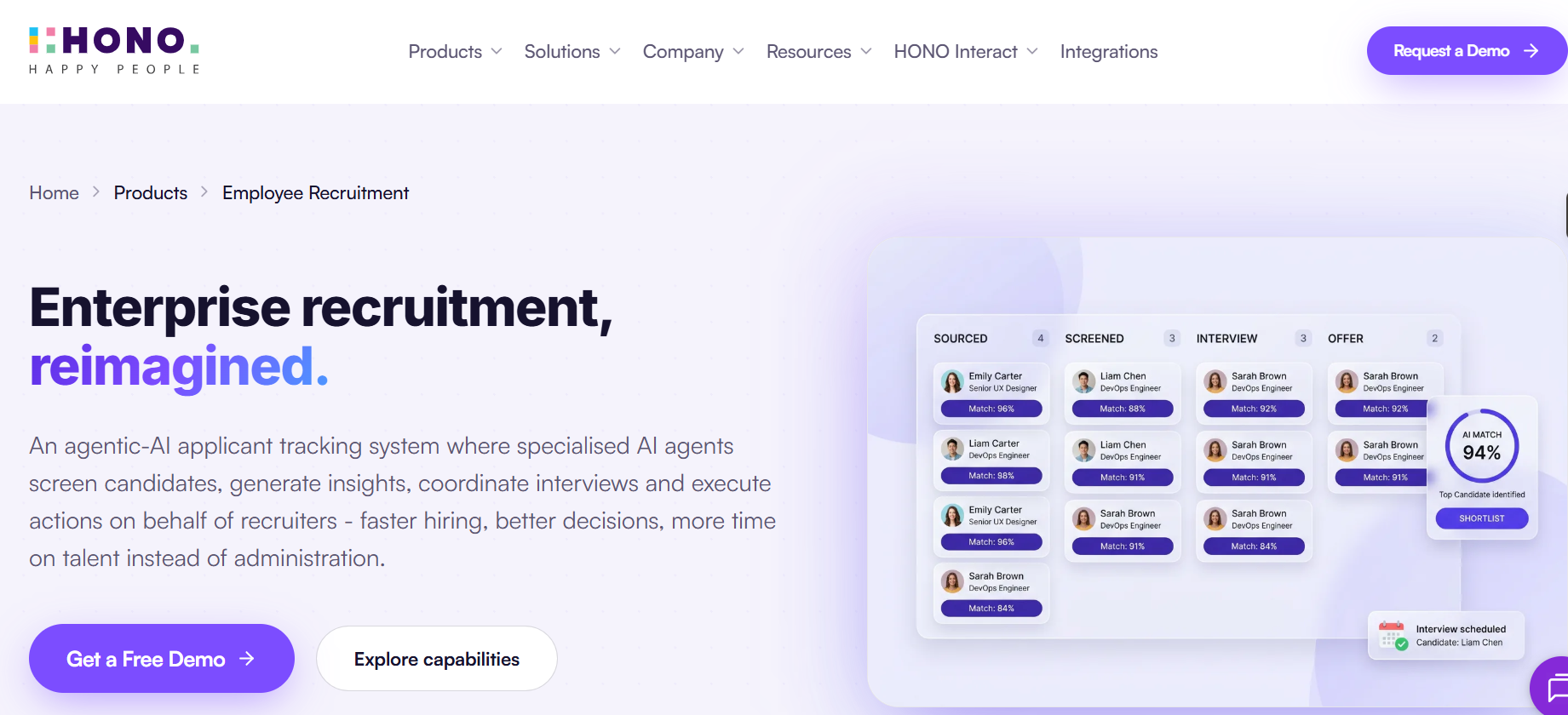
HONO is the only platform on this list where recruiters run hiring through conversation instead of screens. Its agentic AI layer, ERA, launched in May 2026 as the world's first headless Zero-UI HRMS, and it activates 12 specialised AI agents that screen, rank, schedule, and onboard from requisition to Day 1. Recruitment sits on the same record as core HR, payroll, and onboarding, so nothing gets re-typed. Founded in 2016, HONO now serves 300+ enterprises and 1.8 million users across 50+ countries.
What HONO fixes?
Manual work that slows recruiters down
- Resume parsing: The Resume Parser Agent converts unstructured resumes into structured candidate intelligence instantly, with extraction rules configurable to your org.
- Mass job distribution: Publish a requisition to job boards, social channels, and your career site from one screen.
- Automated scheduling: The Scheduler Agent coordinates availability across recruiters, hiring managers, and candidates without the email thread.
- AI-assisted requisitions: The JD Builder Agent writes role-specific job descriptions using your org structure, grade, competencies, department, and location.
Candidate drop-off
- Instant engagement: Personalised updates go out at every stage over WhatsApp, Telegram, MS Teams, Slack, Line, or Viber.
- Self-service application: Candidates upload documents and check status themselves, while the Checklist Validation Agent reads and verifies submissions automatically. In retail, this moves a candidate from applied to ready-to-work in hours.
- 24/7 candidate support: The Onboarding Guide Agent answers policy and process questions in 100+ languages, so nobody waits on an HR reply.
No clear data for leadership
- Centralised dashboard: One source of truth for time-to-fill, cost-per-hire, sourcing efficiency, and hiring velocity.
- Ask, do not build: ERA returns any metric or forecast on request, so a CHRO gets a board-ready number without a report queue.
- Complete audit trail: Every document, approval, checklist action, and portal access is recorded and traceable.
Data silos between hiring and HR
- Full lifecycle integration: A hire-to-retire suite with payroll across 25+ countries, so the hired candidate becomes an employee record with no re-keying.
- Enterprise security: ISO/IEC 27001 certified with SOC 2 and GDPR readiness, hosted on AWS.
The Verdict
The review data is the strongest signal here. HONO holds 4.6 out of 5 on G2, with 77.6% of those reviews coming from the enterprise segment. That segment mix matters more than the star rating, because it tells you the score was earned at enterprise scale.
Best for
Enterprises hiring at volume in retail, BFSI, hospitality, and manufacturing, particularly where deskless and shift-based workers are easier to reach on WhatsApp than a career portal. Strongest coverage across APAC, MENA, and Africa.
2. Talentpool
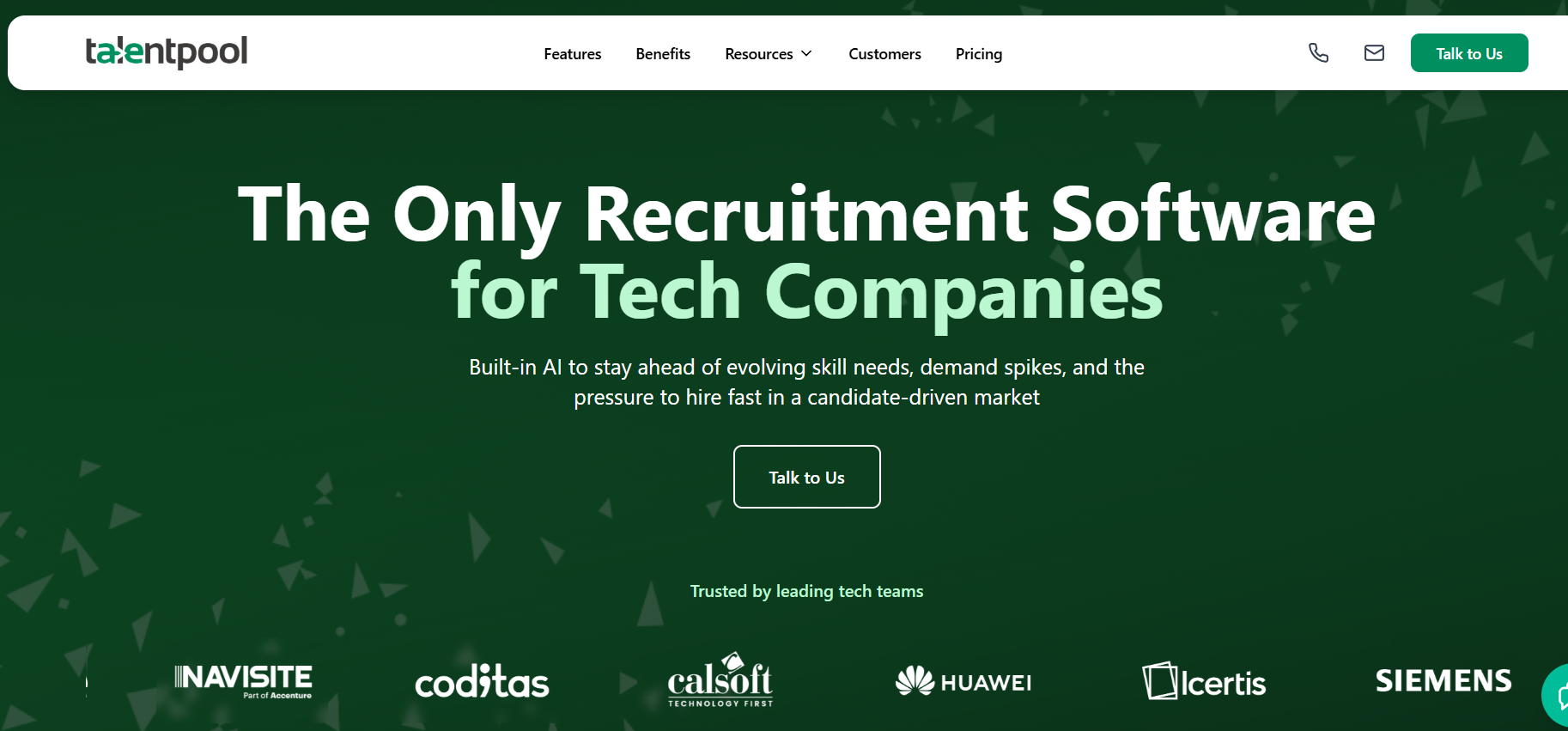
Talentpool is an AI-first applicant tracking system built purely for recruitment, with no wider HRMS attached. It has been working with corporate recruitment teams since 2006, which makes it one of the older names here despite the recent AI repositioning. The platform is configurable rather than opinionated, so you define your own approval flows, pipeline stages, and feedback templates. Pricing is not published, though one Indian reseller quotes around INR 5,084 per user per month as an indicative figure.
Key features
- AI resume parsing and ranking: Parses doc, docx, and PDF files, ranks candidates by fit, and flags duplicates automatically.
- Requisition management: Build your own raising and approval process using position templates with preset skill sets and feedback forms.
- Automated interview scheduling: Calendar invites go to candidates and interviewers on booking, with feedback reminders after.
- Multi-channel job posting: Publish to job boards, social channels, and your integrated career site in one action.
- Open API and SSO: Connects to HRIS, calendars, and third-party tools, with single sign-on through your identity provider.
The Verdict
A solid, workmanlike ATS that does the core job without overreach. Its enterprise credentials are largely vendor-stated, with limited independent review volume to verify them, and reviewers note that customisation has real limits once your workflow gets unusual. Worth a demo if you want recruitment handled properly and nothing else.
Best for
Mid-market companies and growing enterprises in India that want a focused, configurable ATS with real AI screening. Not fit if you need recruitment and payroll on one platform, since integration work is required to pass hires into your HR system.
3. Zimyo
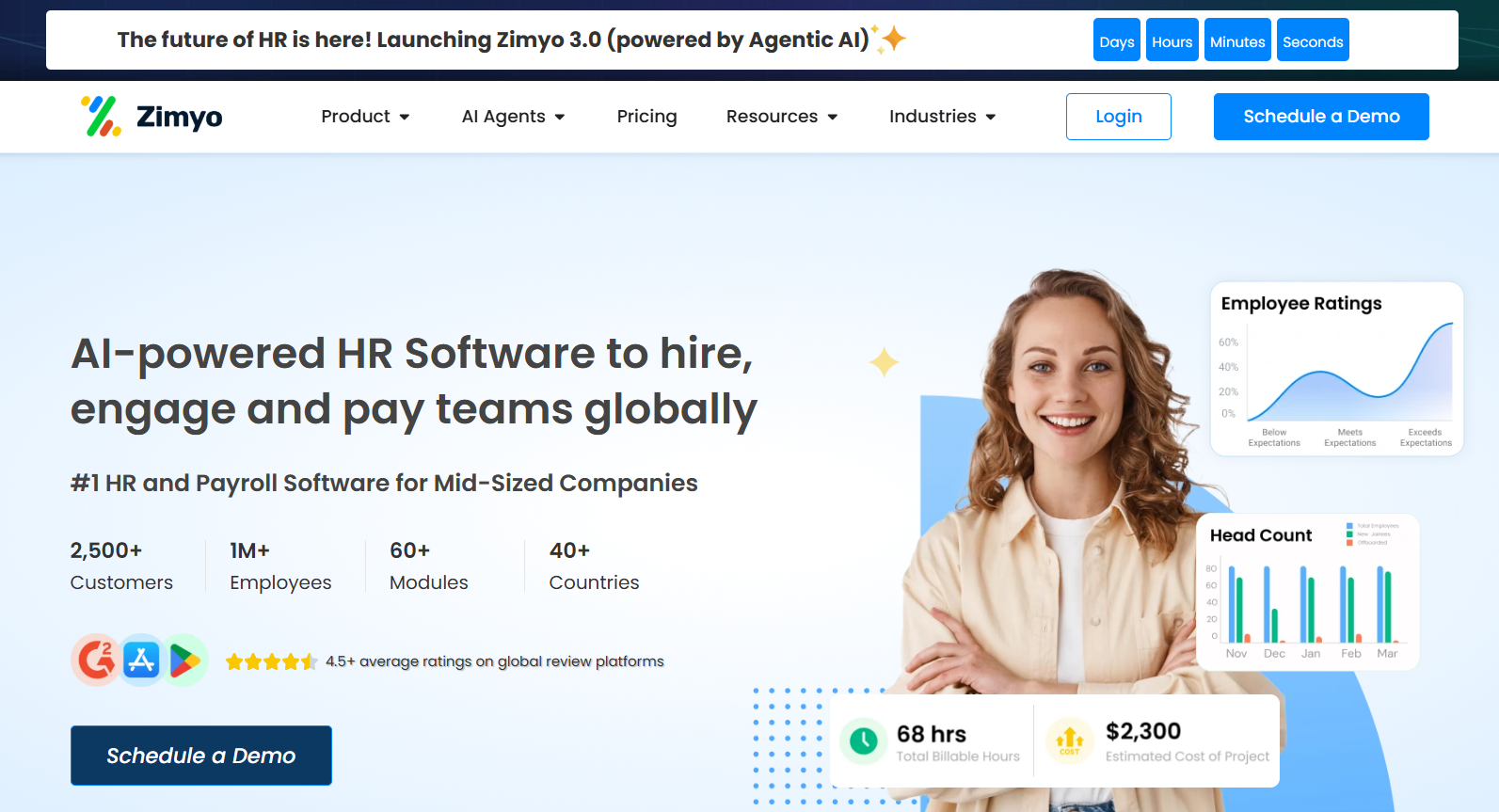
Zimyo is a modular HRMS with a built-in ATS, so recruitment sits alongside payroll, attendance, and performance in one system. It publishes to 50+ job boards from a single requisition and passes hire data straight into onboarding with no re-entry.
Key features
- Dynamic requisition workflows: Hiring managers define custom approval levels for each type of opening, so finance and HR stay aligned.
- AI resume parsing and matching: Screens inbound applications automatically and surfaces the strongest fits from your talent pool.
- Candidate self-scheduling: Applicants pick a slot from a shareable link, interviewers get calendar invites, and reminders go out automatically.
- Multi-board distribution: One-click posting to LinkedIn, Indeed, ZipRecruiter, Glassdoor, Monster, and 50+ others, with source attribution on every application.
- Structured scorecards and analytics: Interviewers rate on consistent criteria, and dashboards show stage-wise drop-off, source ROI, and time-to-fill.
The Verdict
Strong value with a clean interface, ISO/IEC 27001 certification. The review data places it firmly in mid-market territory, with 70% of Capterra reviewers from small businesses and only 12% from enterprises. Judge it as a mid-market platform and it holds up well.
Best for
Mid-market teams in India and APAC that want configurable requisition management plus payroll and core HR in one affordable system. Global enterprises needing multi-country compliance depth will find it light.
4. Jobvite
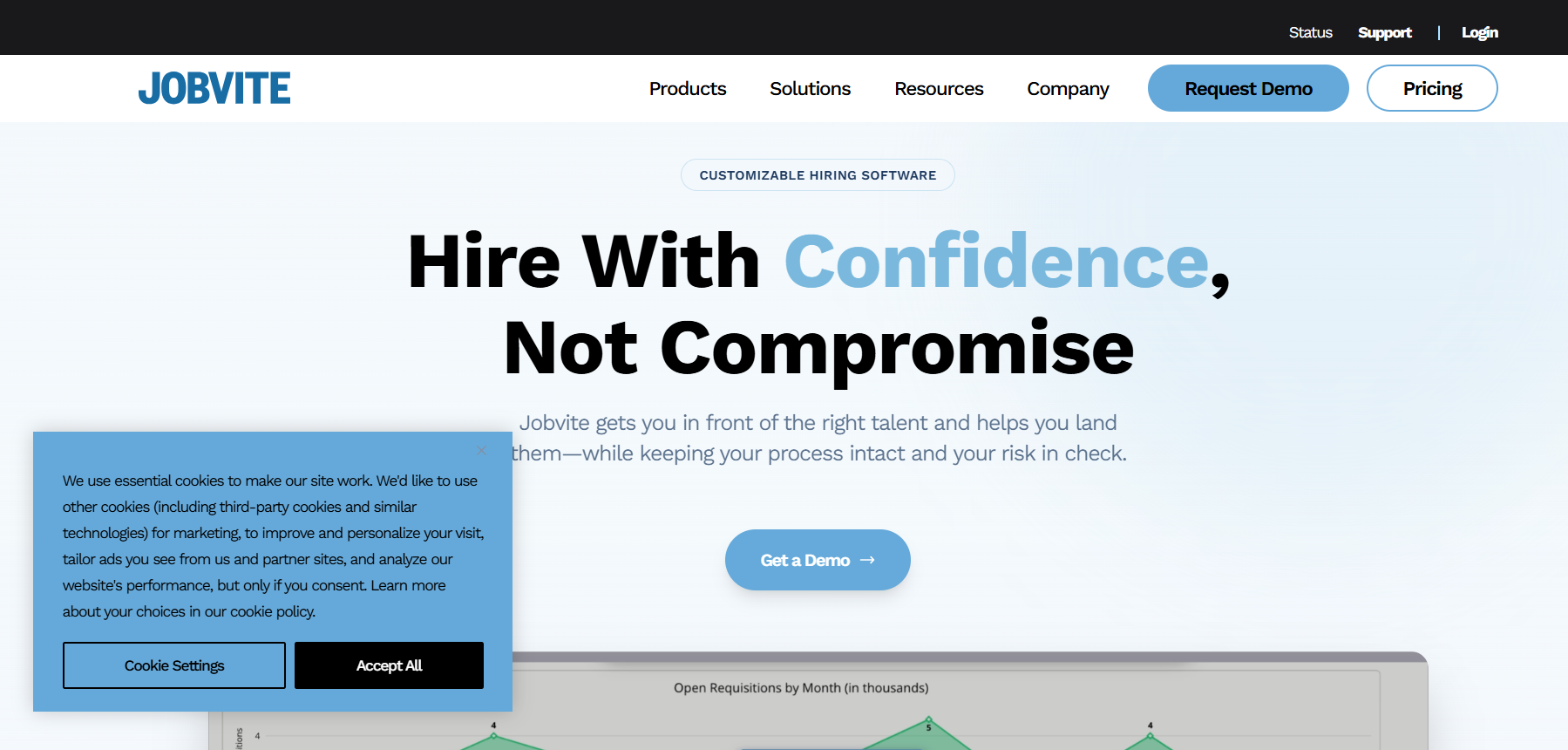
Jobvite is a cloud-based talent acquisition suite combining ATS, recruitment marketing, candidate CRM, and onboarding in one platform. It is built for organisations running multiple hiring teams and complex workflows, with particular strength in compliance-heavy sectors like healthcare and government contracting. Pricing is modular, so you start with the core ATS and add onboarding, AI Companion, or recruitment marketing as needed.
Key features
- Social and referral recruiting: Its original strength, letting employees share openings across social networks with referral status tracked end to end.
- Bias Blocker and Job Description Grader: Uses population-level AI rather than keyword flagging to catch language patterns that discourage diverse applicants.
- Recruitment marketing and career sites: Branded career pages, candidate messaging, and nurture campaigns for passive talent.
- Deep analytics: Drill into candidate journeys and source effectiveness, which reviewers consistently rate as its strongest area.
- Native HRIS and payroll integrations: Pre-built connectors move candidate data through to onboarding without manual re-entry.
The Verdict
Jobvite holds 4.0 out of 5 on G2 across 657 reviews, which is real evidence at scale, but 55.3% of those reviews come from mid-market rather than enterprise users. Its scores sit modestly below iCIMS on every comparable metric, including ease of setup at 7.6 and quality of support at 7.8. Users also report the platform slowing down during high-volume hiring periods, which is worth testing in a pilot if you hire seasonally.
Best for
Mid-market to large US organisations with OFCCP or affirmative action obligations, and companies where employee referrals and social sourcing drive a meaningful share of hires.
5. Beamery
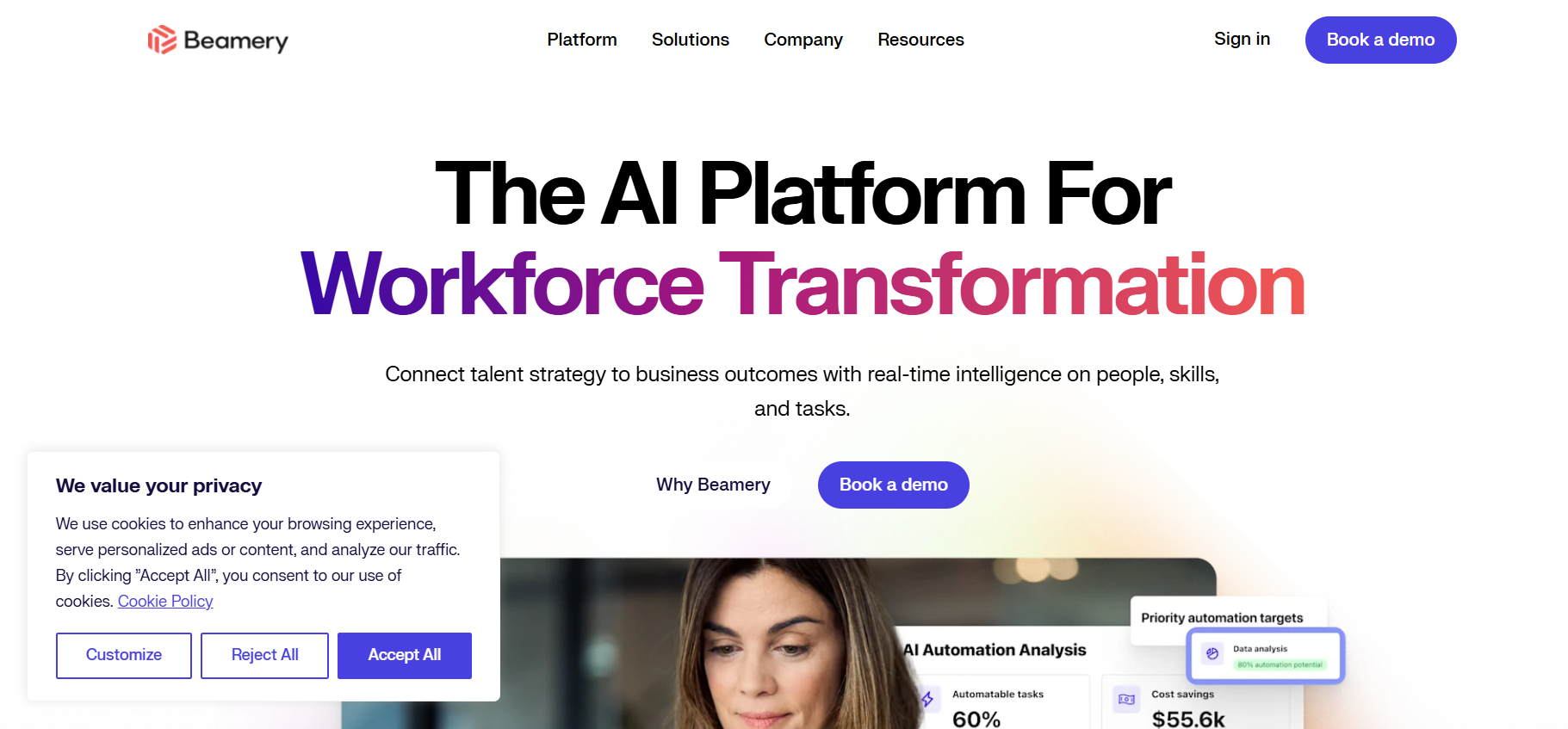
Beamery is a talent CRM and lifecycle platform that sits on top of your existing ATS rather than replacing it. It handles the front end of hiring: sourcing, nurturing passive candidates, skills mapping, and internal mobility. Enterprises including Microsoft, Google, Sanofi, and Novartis use it to build pipelines months before a requisition opens.
Key features
- Talent CRM: Centralises active and passive candidate pipelines with automated nurture journeys triggered by candidate behaviour signals.
- Talent Match AI: Explainable AI shortlists qualified candidates and surfaces internal employees with matching skills.
- Multi-channel campaigns: Branded email, SMS, and WhatsApp outreach segmented by skills, seniority, or engagement history.
- Skills taxonomy and internal mobility: Maps workforce capability so you can fill roles internally before going to market.
- Campaign attribution: Traces hires back to specific sourcing activity, which makes recruitment ROI defensible to leadership.
The Verdict
Users consistently report that connecting Beamery to existing HR systems is harder than expected, with an inconsistent API and setup that needs vendor support to get right. Reporting also cannot be customised as deeply as large teams want, and deployment realistically runs three to six months.
Best for
Large enterprises with an established ATS that want to build long-term talent pipelines and move people internally instead of always hiring externally. Overkill if your hiring is mostly reactive backfill.
6. Avature
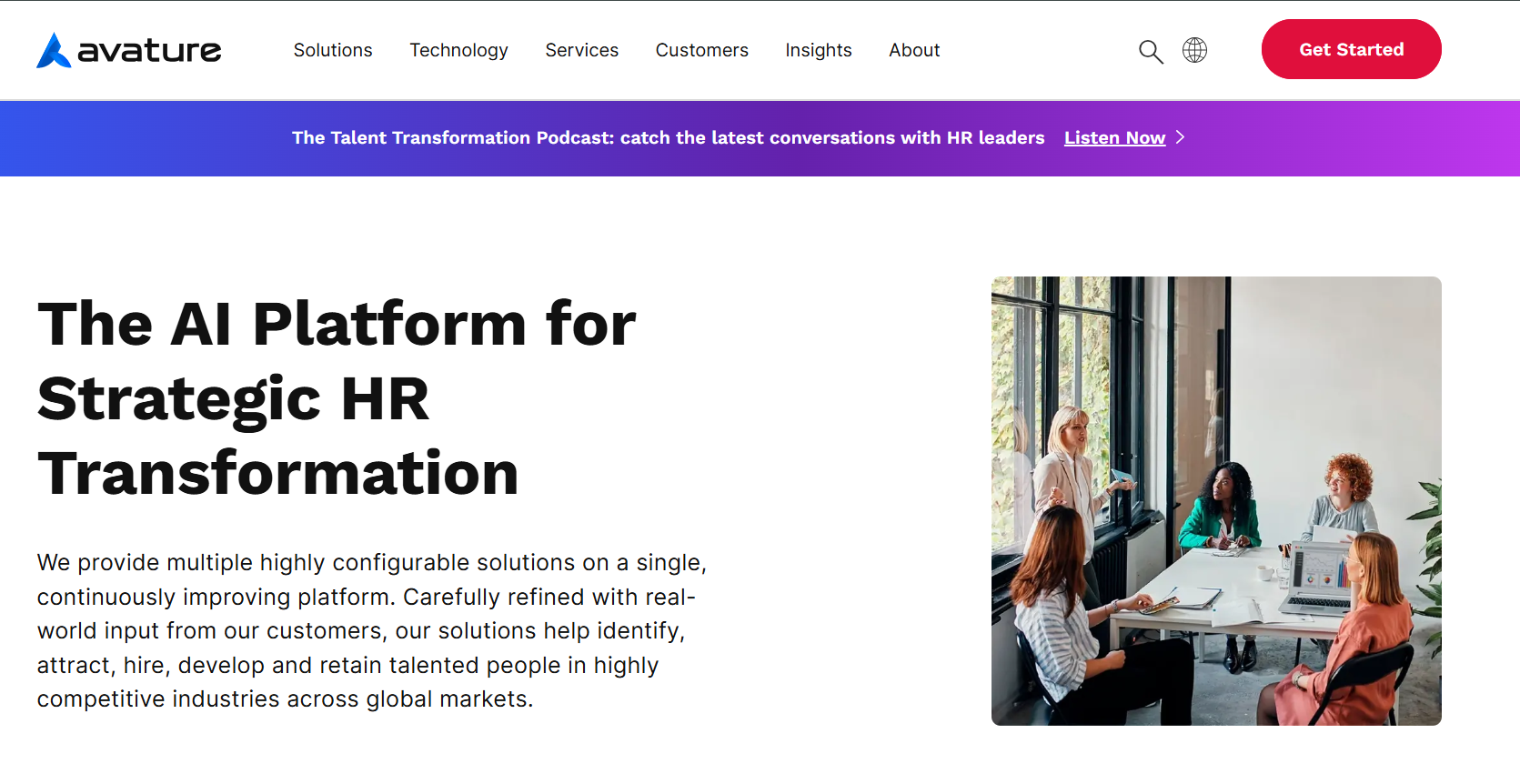
Avature is a configurable enterprise platform combining ATS, candidate CRM, video interviewing, onboarding, and internal mobility. Its selling point is that you build your own workflows rather than adapting to someone else's.
Key features
- Extreme configurability: Tailor workflows, forms, and processes to your exact hiring model without heavy coding, and build entirely new solutions on the platform.
- AI semantic search and matching: Finds candidates by meaning rather than keywords, across both external pipelines and your internal database.
- Candidate CRM with multi-channel engagement: Nurture passive talent through campaigns, campus and events recruiting, and referral management.
- Internal talent marketplace: Skills-based matching that surfaces existing employees for open roles before you go to market.
- 200+ integrations: Connects to major HRIS, assessment, and background check providers.
The Verdict
Reviewers say the more you customise away from out-of-the-box, the harder it becomes to pull clean, organised data back out for reporting. Setup is steep enough that teams describe real vendor dependency, and support is often called friendly but slow.
Best for
Global enterprises with hiring processes too unusual for a standard ATS, and the internal IT and admin resource to own configuration long term. Not a fit if you want quick deployment or minimal vendor reliance.
7. SmartRecruiters
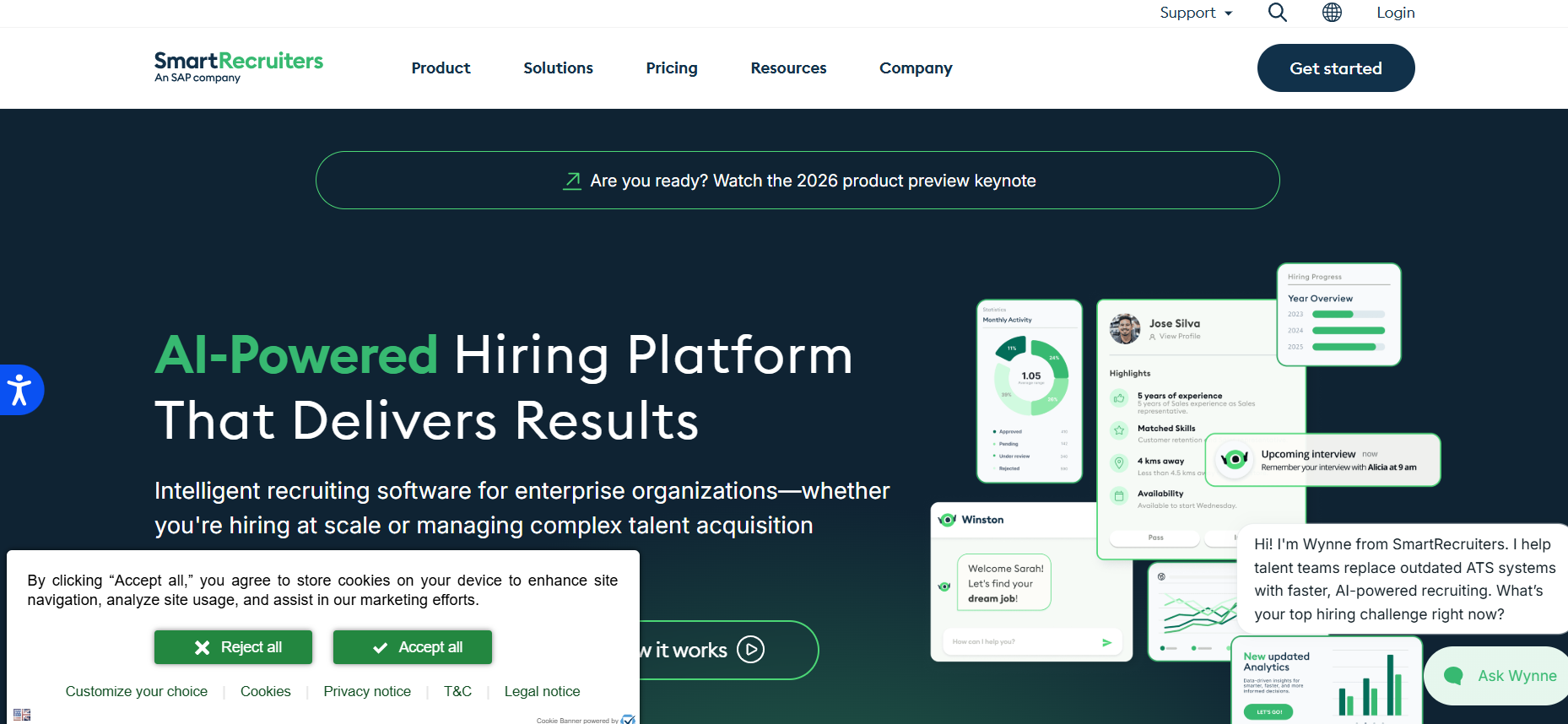
SmartRecruiters is a talent acquisition suite that pairs a modern ATS with native recruitment marketing, candidate CRM, and AI matching. Its interface is deliberately consumer-like, which is why hiring managers tend to actually use it instead of pushing work back to recruiters.
Key features
- Hiring manager collaboration: Shared reviews, tagged notes, and simple scorecards keep managers engaged without recruiter chasing.
- One-click job distribution: Post to multiple free and paid boards at once, with predictive sourcing that recommends channels based on past performance.
- Automated interview scheduling: Syncs with team and candidate calendars, with reminders that cut coordination errors.
- AI matching and rediscovery: Surfaces already-registered talent and passive applicants sitting in your database.
- GDPR-ready compliance tooling: Consent tracking and configurable retention settings for multi-country hiring, backed by SOC 2 and a public Trust Center.
The Verdict
Users are consistently positive about the interface but flag the same three gaps: reporting customisation is limited compared to rivals, customer support can be slow to respond, and bulk resume parsing occasionally drops candidate data. Enterprise teams also report that integration with SAP does not run as smoothly as expected, so test your HRIS connection before committing.
Best for
Global mid-market and enterprise teams that want strong recruiter and hiring manager adoption without a year-long rollout. Less suited to organisations whose reporting requirements are heavily bespoke.
8. iCIMS Talent Cloud
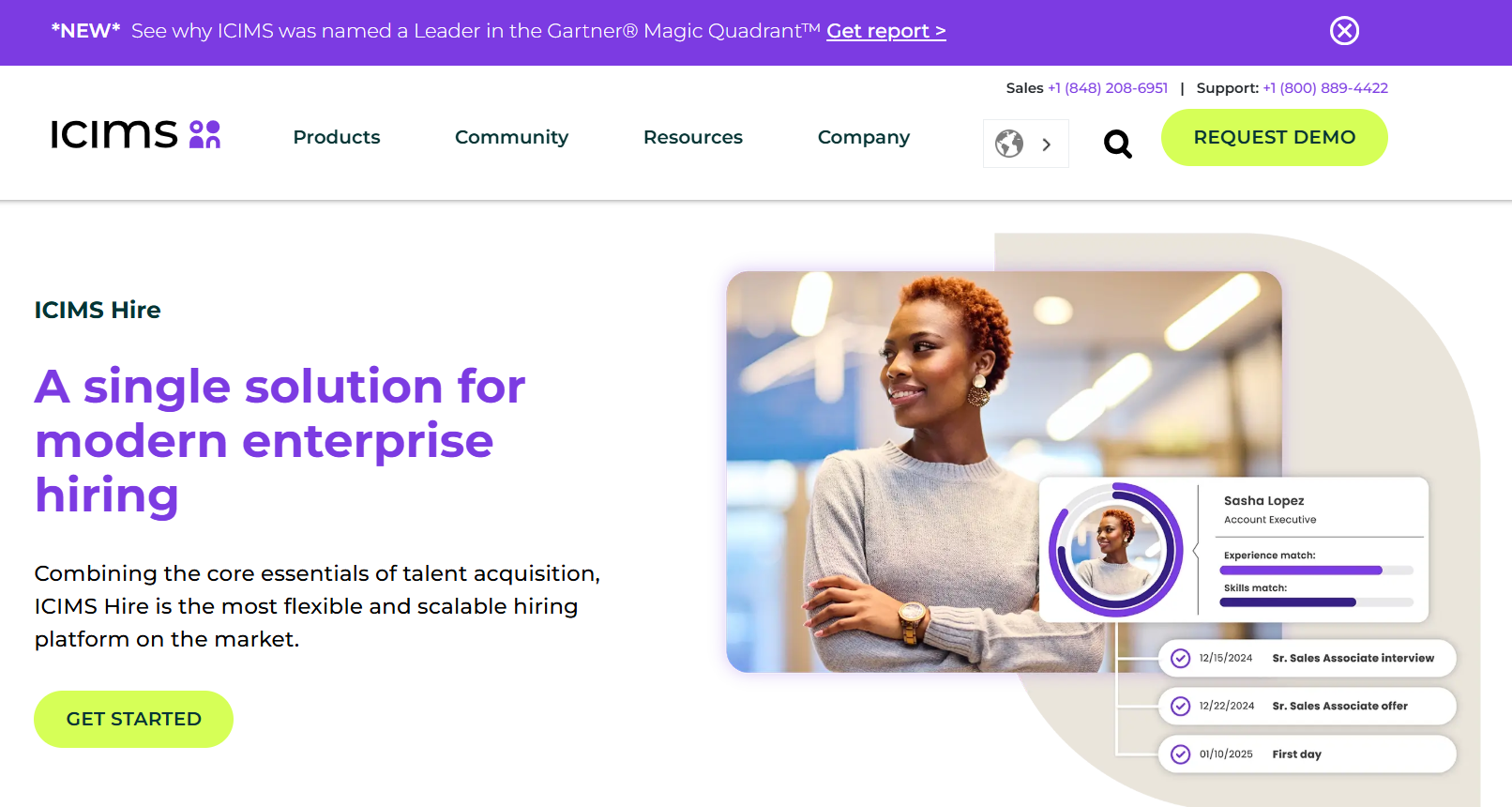
iCIMS is one of the longest-standing enterprise talent acquisition suites, built for organisations running high-volume, compliance-heavy hiring. It is strongest in retail, hospitality, call centres, transportation, and financial services, where thousands of requisitions run in parallel. The platform is deeply configurable, which is both its main draw and its main demand on your team.
Key features
- Talent pipeline management: Keeps large numbers of open roles and candidate pools organised, with tagging by location, skill, or preference.
- Configurable workflows: Build hiring processes around your compliance requirements rather than the vendor's defaults.
- Candidate CRM: Build and nurture talent pools for roles you know are coming.
- Broad HRIS integrations: Native connections to ADP, UKG Pro, Workday, Infor, LinkedIn, and background screening providers, plus an open API.
- Global compliance support: Multi-language, multi-country, with GDPR and CCPA handling, encryption, and regular audits.
The Verdict
Users describe a long implementation cycle, a steep interface learning curve, and report building that needs real data skills to be useful. Support draws the most consistent criticism since the move to an offshore ticket model, with issues taking weeks rather than a phone call to resolve.
Best for
Large, process-heavy or regulated organisations hiring at high volume, with the internal resource to map their recruiting process properly before configuration begins. Not a fit for teams wanting something usable out of the box.
9. SAP SuccessFactors Recruiting
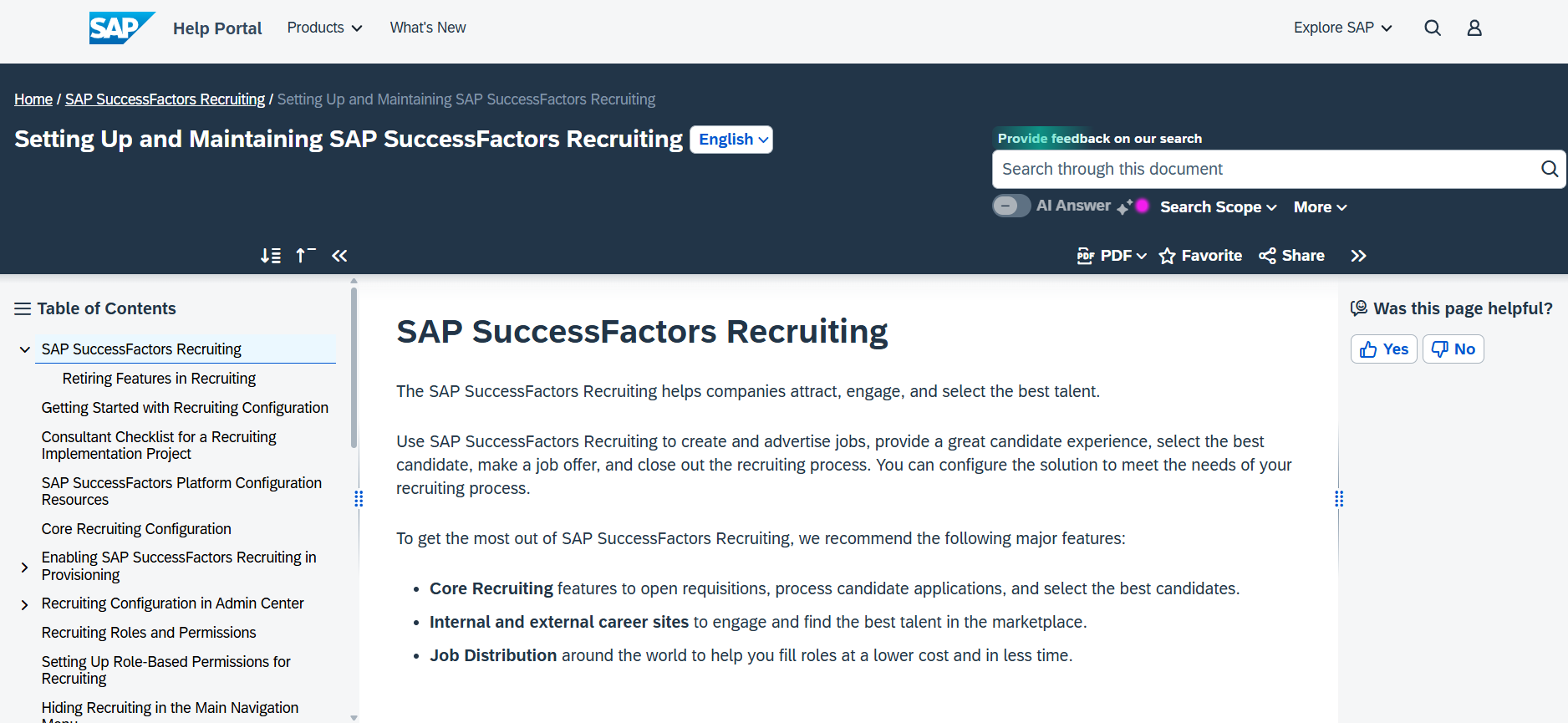
SAP SuccessFactors Recruiting is the hiring module inside SAP's HCM suite, sitting natively alongside Employee Central. Its case is simple: if SAP is already your system of record, recruiting on the same platform removes the integration layer entirely and moves candidates into employee records without manual entry. It handles multi-country hiring with multilingual, multicurrency, and localised compliance tooling.
Key features
- Native Employee Central integration: Candidate becomes an employee record inside the same suite, with no third-party connector to maintain.
- Global compliance and localisation: Multi-language and multi-currency support with region-specific HR regulation handling.
- Configurable requisition and approval workflows: Built for complex, multi-level approval chains across business units.
- Candidate relationship management: Career sites, talent pools, and campaign tools for sourcing ahead of demand.
- Enterprise security: GDPR alignment, ISO certifications, encryption, and configurable access controls.
The Verdict
Reviewers consistently call it stable and dependable at scale, and the tight SAP integration genuinely does eliminate data silos between hiring and core HR. The trade-offs are usability and reporting: administrators face a steep learning curve, and meaningful analytics often need specialist help to set up.
Best for
Enterprises already running SAP as their system of record, particularly those with complex multi-country workforces and the budget for training and specialist support. Rarely the right choice if you are not already in the SAP ecosystem.
10. Workday Recruiting
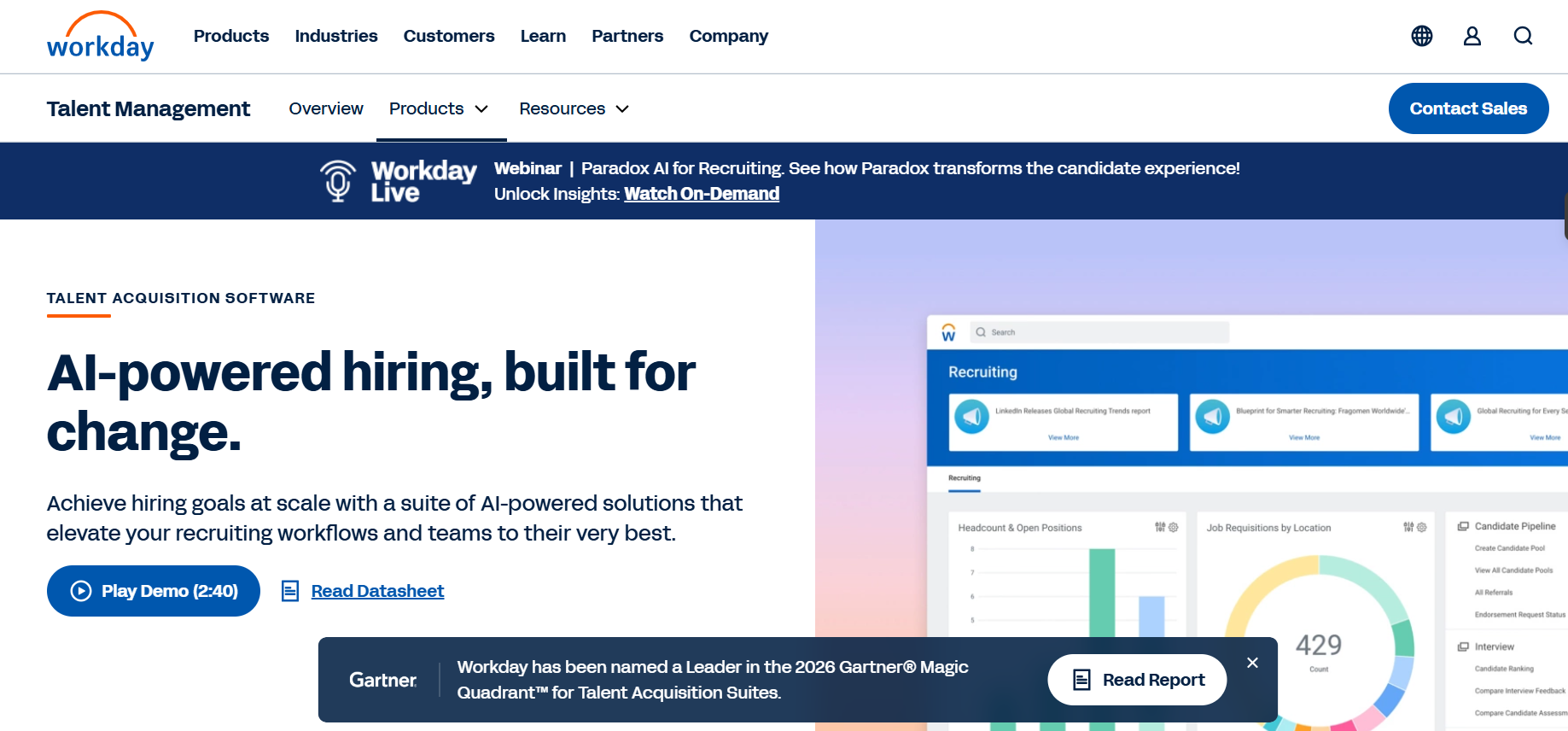
Workday Recruiting is the hiring module inside Workday HCM, running on the same data model as payroll, benefits, and workforce planning. For enterprises already on Workday, this removes the integration layer entirely and gives recruiters, finance, and HR one version of the truth. It supports 190+ countries with multi-currency handling and region-specific compliance.
Key features
- Single data model with Workday HCM: Requisition, candidate, offer, and employee record all live in one system with no connector to maintain.
- HiredScore AI and Workday Illuminate: Candidate scoring and predictive workforce analytics built directly into the hiring flow.
- Skills Cloud and internal talent marketplace: Matches existing employees to open roles before you go external.
- Configurable end-to-end workflows: Requisition approvals, candidate tracking, interview feedback, and offer generation in one structured chain.
- Embedded analytics: Time-to-fill and sourcing effectiveness reported against wider workforce data, not in isolation.
The Verdict
Users value the end-to-end structure and configurability, and the fact that recruiting data connects straight into workforce planning. The caveats are that it is an HRIS-first ATS, so sourcing and candidate engagement are thinner than a dedicated platform, and the external application experience draws frequent criticism from candidates.
Best for
Enterprises already running Workday HCM, where a single data model matters more than best-in-class recruiter tooling. Worth pairing with a CRM layer if passive sourcing drives a large share of your hires.
How to Choose the Best Recruitment Management Software in 2026?
- Your system of record: Decide first whether you want recruitment sitting apart from HR at all. An all-in-one platform like HONO removes the question entirely, since recruitment, core HR, and payroll run on one record with no connector to maintain.
- Your hiring type: Match the tool to the hiring you do most, since deskless volume hiring and specialist hiring need very different platforms.
- AI auditability: Ask the vendor to show how a candidate score is produced, because EU AI Act and NYC Local Law 144 now require it to be explainable.
- Integration depth: Check whether HRIS connectors are natively built and maintained by the vendor, or whether "API available" means you fund the build.
- Security and compliance: Confirm ISO/IEC 27001 or SOC 2 Type 2, data residency options, role-based access, encryption, and audit trails.
See how HONO works in a guided demo!
Disclaimer
- Details reflect vendor documentation and independent review platforms as of August 2026, and change often.
- Enterprise contracts are negotiated individually, so confirm every price and certification directly with the vendor.
- Editorial content only, with no paid placement or affiliate arrangement. Not legal or procurement advice.
Frequently asked
FAQs
See it live
Ready to see HONO in action?
Book a 20-minute demo tailored to your team's HR stack.
Request a demo
About the author
Neha Sinha
Neha Sinha is a Talent Acquisition Lead at HONO with around 9 years of experience in HR and recruitment. She specializes in data-driven hiring, HR analytics, and strategic talent management, and has worked with organisations like CarDekho (Girnar Group) and American Cyber Systems. She is passionate about building high-performing teams, aligning people strategy with business goals, and mentoring aspiring HR professionals.