
Key Takeaways
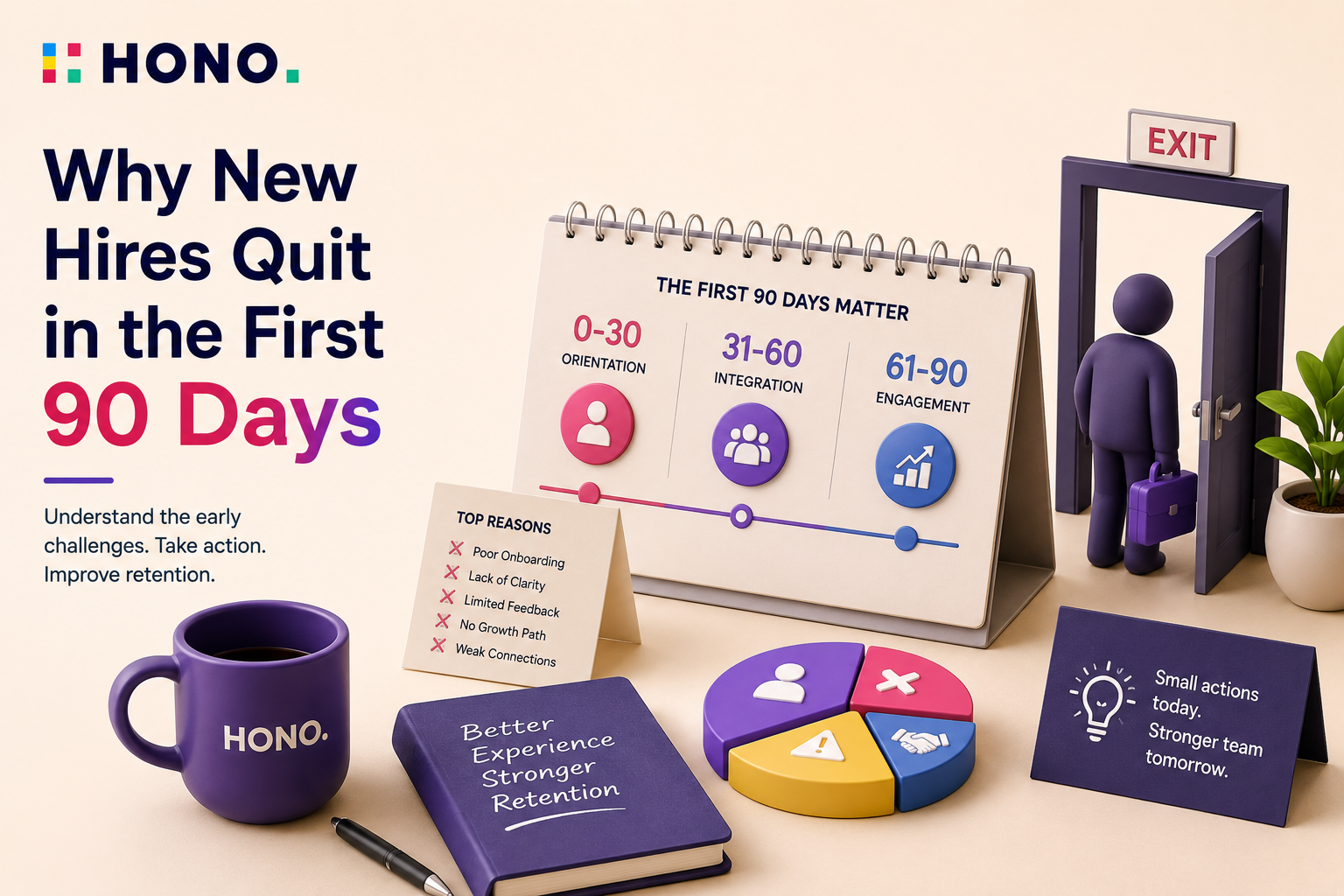
- 20% of new hire turnover happens in the first 45 days, and the decision to leave often begins in week one.
- Only 12% of employees strongly agree that their employer does a great job of onboarding.
- Organizations with structured onboarding see 50% greater new-hire retention and 62% higher productivity.
- The #1 reason new hires leave early is a mismatch between the role they were pitched and the job they actually showed up to.
- Employees who feel their manager is invested in their success are 3.4x more likely to be engaged.
Why Do New Hires Quit in the First 90 Days? The 7 Real Reasons
The research is consistent: early exits are rarely about compensation alone. They are almost always about broken expectations, broken relationships, or a broken sense of belonging. Here is what is actually driving early departures.
1. Role Reality Did Not Match the Pitch
LinkedIn's 2025 Talent Trends report identifies role misrepresentation as the leading driver of early attrition. When the day-to-day reality of a job does not match what was described in interviews, new hires feel deceived, even when the gap was unintentional. Maybe the team is short-staffed. Maybe the scope changed. Maybe the hiring manager sold a vision and the operation delivered something smaller.
Whatever the cause, candidates who built genuine excitement around a role and then experienced something entirely different will start mentally disengaging by week two. The fix is not just honest job descriptions. It is structured pre-boarding conversations that set real expectations about the first 30 days.
2. Onboarding Was Paperwork, Not Integration
Gallup's 2023 research found that only 12% of employees strongly agree their organization does a great job of onboarding. The majority describe their first week as a parade of forms, logins, and compliance videos with almost no meaningful human connection or role-specific orientation.
When onboarding is purely administrative, two things happen: new hires feel like a number, and the first impression of the company's culture is that it is bureaucratic and impersonal. Neither is a strong retention signal.
The HONO Solution: This is where deploying a modern framework makes the difference. By utilizing an automated tool like HONO's Checklist Requests & Verification, companies can handle background checks, compliance, and credential uploads seamlessly behind the scenes before Day 1, ensuring the first week is focused on cultural integration rather than tedious forms.
3. No Manager Relationship or Forgotten Check-ins
Gallup's State of the Global Workplace 2024 found that employees who feel their manager invests in their success are 3.4x more likely to be engaged. Yet many new hires go their first two to three weeks without a single structured conversation with their direct manager beyond the welcome handshake.
Managers are often stretched thin. Check-ins slip. The new hire interprets silence as indifference. By week four or five, disengagement has quietly taken root. This is one of the most controllable failure points in the 90-day window and one of the most frequently ignored ones.
4. No Sense of Belonging or Team Connection
The shift to hybrid and remote work has made the belonging problem significantly worse. New hires who join distributed teams often describe the experience as showing up to a party where everyone already knows each other and nobody bothered to make an introduction. They are included in Slack channels but never really pulled into the culture.
5. Role and Goal Ambiguity: What Does Good Look Like?
A new hire who cannot answer the question "what does success look like for me in 90 days?" is already in trouble. Without clear goals, they default to busywork or to mirroring colleagues, neither of which builds confidence or commitment.
The absence of a structured 30/60/90-day plan is not just an inconvenience. It is a retention risk. When people cannot see a defined path forward or measure their own progress, they start looking elsewhere for environments where their contribution will be legible.
6. No Early Win and No Visible Growth Path
Early wins are disproportionately powerful in shaping whether a new hire stays or goes. When someone achieves something meaningful in their first 30 days, even something small, it generates momentum, positive feedback loops, and emotional investment in the role.
Organizations that design onboarding around observable milestones, rather than just orientation tasks, see materially better retention outcomes. Brandon Hall Group's research found that structured onboarding improves new-hire productivity by 62%. The mechanism is straightforward: clarity and early wins create confidence, and confidence creates commitment.
7. Genuine Mismatch or a Counteroffer
Sometimes the exit is simpler: the person accepted your offer, a competing recruiter did not stop calling, and their current or previous employer came back with a stronger package. The offer acceptance is not the finish line. The period between signing and starting is one of the highest-risk windows in the entire talent lifecycle.
Candidates who feel connected to their future employer during this pre-joining phase are significantly less likely to accept counteroffers. The problem is that most companies go quiet the moment the contract is signed.
The HONO Solution: To combat this, smart organizations use tools like HONO's Pre-Joining Process and Candidate Actions portal. This keeps future hires locked in and engaged with personalized screens and early milestone tracking, blocking out competing recruiters and counteroffers.
Don't let your next great hire check out before they check in. Discover how HONO automates engagement during the critical pre-boarding phase. Book a Demo
When Do New Hires Actually Decide to Leave? A Phase-by-Phase Map
The decision rarely happens on the day they resign. Most new hires who leave within 90 days made their choice weeks earlier. The resignation is just the paperwork. Understanding which failure mode tends to surface during each phase of the first three months is the only way to intervene before it is too late.
Table 1: Causes by Tenure Phase
| Phase | Dominant Cause | Warning Signal | The Fix |
|---|---|---|---|
| Day 0-30: Fit & First-Week Experience | Role reality gap, paperwork-heavy onboarding, zero belonging | Quiet withdrawal; minimal questions; skipping optional sessions | Pre-boarding engagement, structured welcome week, peer buddy assignment, Day 1 role clarity conversation |
| Day 30-60: Manager & Training Quality | No manager relationship; training feels irrelevant; no early win | Missed 1:1s; no questions in team meetings; low task completion | Mandatory weekly manager check-ins; milestone-based goals; visible 60-day success criteria |
| Day 60-90: Culture, Peers & Career Clarity | Isolation; no growth path; counteroffer or recruiter outreach | Reduced responsiveness; LinkedIn activity spike; general disengagement | Culture immersion events; 90-day review with growth conversation; pulse check surveys |
How Do You Stop New Hires from Quitting in the First 90 Days?
Fix the controllable causes. Onboarding design, manager cadence, and role clarity account for the majority of early exits, and all three are within your direct control. The question is not whether you can fix early attrition. It is whether your organization is structured to do it intentionally rather than by accident.
| Cause | Controllable? | Weak Response (What Not to Do) | Strong Response (What Works) |
|---|---|---|---|
| Role reality mismatch | Yes | Assume the hire will "figure it out" | Pre-boarding expectation-setting; structured Day 1 role clarity talk |
| Paperwork-heavy onboarding | Yes | Dump all forms into week one | Move compliance to pre-boarding with automated tools; free week one for culture |
| No manager relationship | Yes | Leave 1:1 cadence to manager discretion | Mandatory weekly check-ins for 90 days; built-in nudges via HRMS |
| No sense of belonging | Partially | One-off team lunch in week one | Buddy program; cross-functional intro meetings; team rituals explained early |
| Goal ambiguity | Yes | Generic job description as the only success measure | Written 30/60/90-day plan delivered before or on Day 1 |
| No early win | Yes | No defined milestones; new hire waits to be assigned work | Design a structured first project with a visible deliverable in week two or three |
| Counteroffer / recruiter poaching | Partially | No contact between offer and start date | Automated pre-boarding touchpoints; personal manager outreach; milestone celebration before Day 1 |
Here are the four levers that move the needle most:
1. Start Before Day One (Pre-boarding)
The period between offer acceptance and first day is where competing offers eat your pipeline. Fill it intentionally. Send a personalized welcome video from the hiring manager. Automate compliance tasks so they are completed before the first week begins. Share team culture content. Make the new hire feel like they have already joined before they walk in the door.
2. Make the First 90 Days a Designed Journey, Not a Checklist
The difference between a checklist and a journey is intent. A checklist tells you what to do. A designed journey tells you why it matters and what comes next. Every new hire should have a written 30/60/90-day plan that defines what success looks like at each milestone, who they will meet, what they will learn, and what they will own.
3. Hold Managers Accountable with Built-in Check-ins
Do not leave manager cadence to good intentions. Build structured check-ins into the onboarding process itself. Weekly 1:1s in the first 30 days should not be optional. Use your HRMS to trigger reminders, log conversation summaries, and flag when check-ins are missed. The data will tell you exactly which managers are creating flight risks.
4. Catch Disengagement Early with Signals, Not Exit Interviews
Exit interviews are a postmortem. By the time a new hire is sitting in one, the organization has already lost. Pulse surveys, engagement check-ins at the 30- and 60-day marks, and behavioral signals inside your HRMS, like login frequency or task completion rates, can surface flight risk weeks before someone submits their resignation.
How AI-Native Onboarding Is Changing the 90-Day Equation in 2026?
AI-native onboarding is no longer a talking point on vendor slides. In 2026, organizations using agentic HR platforms are operationalizing it in ways that materially compress early attrition rates.
What agentic onboarding actually does: it generates personalized 30/60/90-day plans based on role, team, and individual context. It surfaces manager nudges automatically when check-ins are missed or when pulse data signals disengagement. It answers new-hire questions conversationally, removing the friction of searching intranet pages or emailing HR. It orchestrates workflows across systems, so a task completion in one platform triggers the next step in another. And it produces flight-risk signals in real time, giving managers and HR business partners a window to intervene before the decision to leave becomes irreversible.
A note of intellectual honesty: AI does not replace the manager's 1:1. The human relationship between a new hire and their direct manager is the single most important retention variable in the first 90 days. No platform changes that. Additionally, AI systems in onboarding must not infer demographic attributes, such as gender, age, or background, to tailor content or prioritize engagement. That path leads to bias amplification, not better outcomes. The value of AI in onboarding is in process orchestration and signal detection, not in making inferences about people.
HONO's Take: Onboarding as the Controllable Retention Lever
HONO is built on a simple premise: the most expensive talent decisions are the ones made for you, by employees who quietly disengage and then leave. Onboarding is where organizations have the most leverage and where most still operate on spreadsheets, email chains, and good intentions.
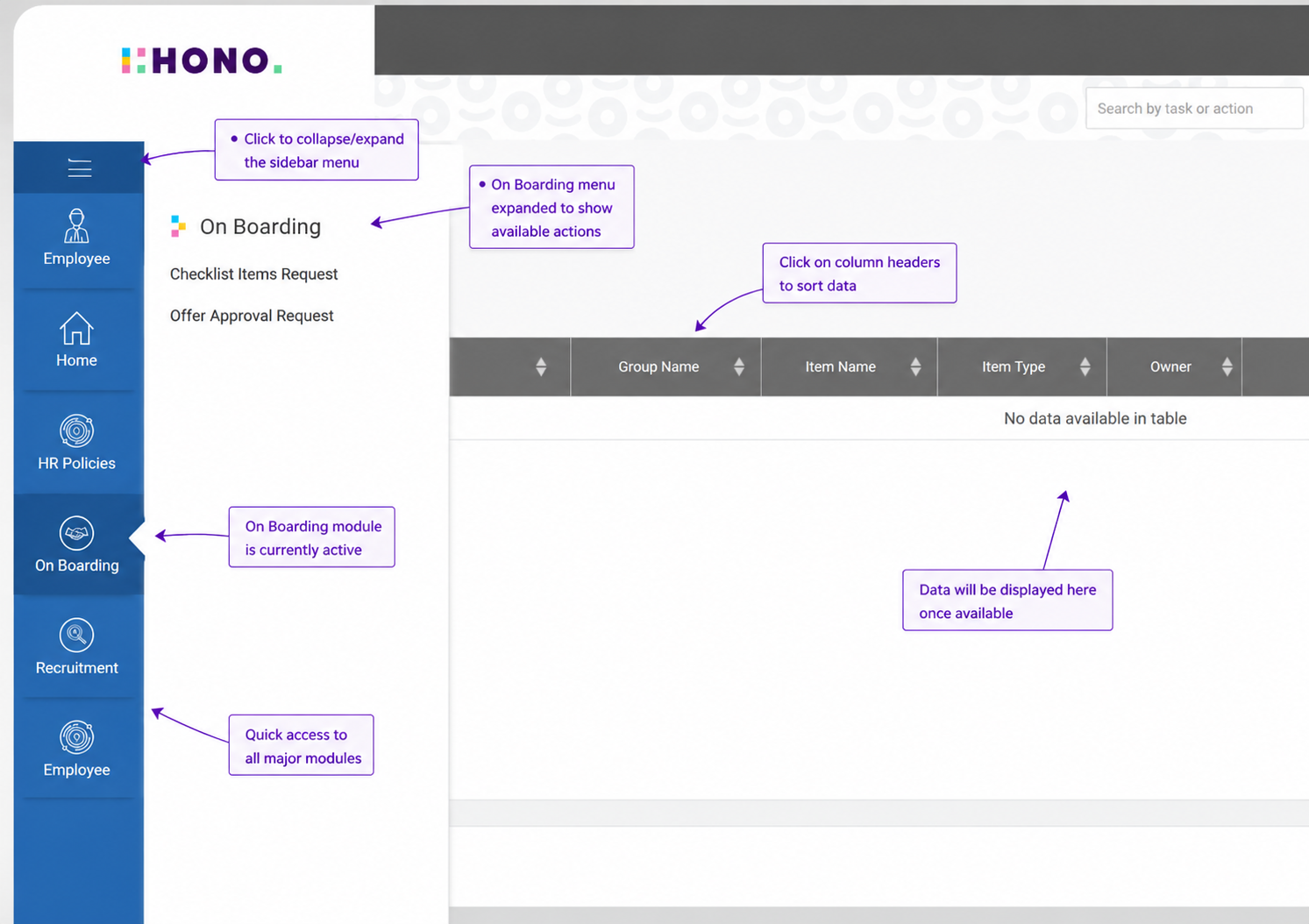
HONO replaces manual paperwork and radio silence with an engaging, structured onboarding framework that starts the moment the offer is accepted. Here is how each piece of the platform addresses a specific retention risk:
Chat-First Conversational HRMS: New hires get answers to their questions instantly, through a conversational interface, without having to track down an HR contact or dig through a portal. The first-day friction drops significantly.
AI Onboarding and 30/60/90 Planning: Role-specific onboarding journeys are generated automatically, with milestones, manager touchpoints, and content tailored to each hire's context. No two journeys look identical.
HONO Pulse: Pulse surveys deployed at the 30- and 60-day marks surface early disengagement signals before they become resignation letters. Managers are alerted with context, not just data.
Agentic Workflows: Background checks, credential verification, compliance tasks, and IT provisioning are orchestrated automatically in the pre-boarding phase. By Day 1, the paperwork is done and the first week can focus on people.
People Analytics: Retention risk is tracked at the cohort and individual level. HR leaders get a clear view of which teams, managers, and roles are producing early exits and where intervention will have the most impact.
See HONO's Pre-Boarding and Onboarding Modules in Action. Request a Demo
Frequently asked
FAQs
See it live
Ready to see HONO in action?
Book a 20-minute demo tailored to your team's HR stack.
Request a demo
About the author
Mazna Majeed
Mazna is a strategic HR leader with over 10 years of experience driving talent success and organizational growth. As Head of Talent Acquisition and Operations at HONO, she leads HR initiatives across India and South-East Asia, including manpower planning, employee lifecycle management, talent development, engagement, and retention. Mazna is known for aligning people strategy with business goals, building inclusive high-performing teams, and strengthening culture to enable sustainable growth.