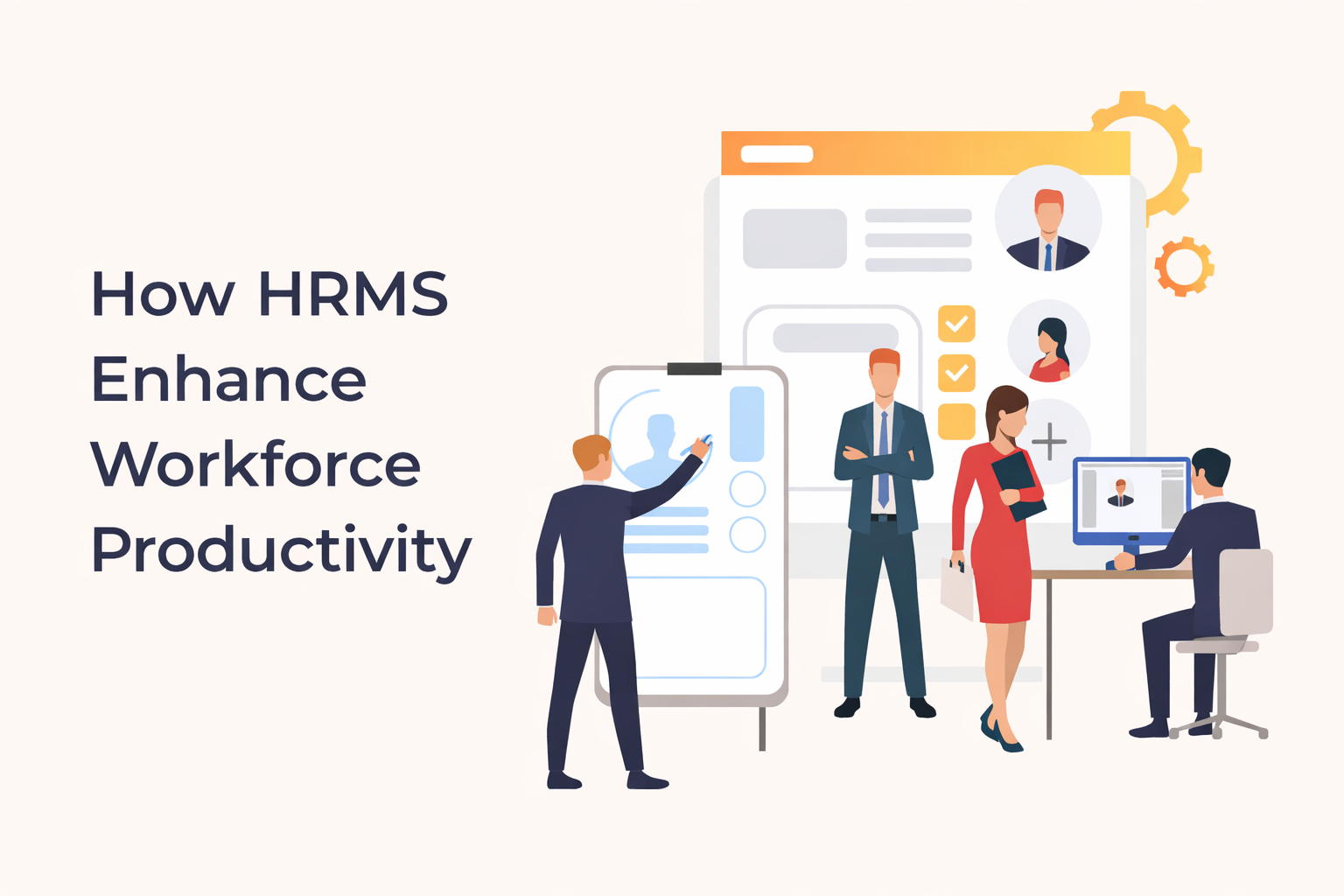
HRMS software acts as a centralized digital backbone for all HR functions, enabling organizations to automate processes, improve data accuracy, and make smarter workforce decisions. From recruitment to payroll and performance management, modern HRMS platforms empower HR teams to move beyond administrative tasks and focus on strategic initiatives that drive business growth.
Let’s explore how HRMS software significantly improves workforce efficiency across various HR functions.
Improve Workforce Efficiency with Enterprise HRMS Software
1. Centralized Workforce Data Management
One of the most significant advantages of enterprise HRMS software is centralized employee data management. Instead of maintaining multiple spreadsheets and records, organizations can store all employee information in a single digital system.
A centralized HRMS platform allows HR teams to easily access:
- Employee profiles
- Job roles and organizational hierarchy
- Employment history
- Salary and compensation data
- Performance records
This improves efficiency by reducing time spent searching for information and ensuring data accuracy across the organization.
2. Automation of HR Processes
Administrative HR tasks can consume a large portion of HR teams’ time. Activities such as payroll calculations, leave approvals, compliance reporting, and attendance tracking often require manual effort when managed through traditional methods.
HRMS software automates these processes, enabling HR departments to operate more efficiently.
Automation benefits include:
- Faster HR workflows
- Reduced manual errors
- Accurate payroll processing
- Improved compliance management
By automating repetitive tasks, HR professionals can focus more on strategic workforce initiatives such as talent development and employee engagement.
3. Streamlined Recruitment and Onboarding
Recruitment is a critical component of workforce efficiency. Hiring the right talent quickly ensures that organizations maintain productivity and fill skill gaps effectively.
Modern HRMS platforms include recruitment management features such as:
- Applicant tracking systems (ATS)
- Resume screening tools
- Interview scheduling automation
- Digital onboarding workflows
These features allow HR teams to streamline the hiring process and improve candidate experience while reducing recruitment time.
Efficient onboarding also helps new employees become productive faster, which directly contributes to workforce efficiency.
4. Efficient Payroll and Compensation Management
Payroll processing is one of the most time-sensitive and complex HR functions. Errors in payroll calculations can lead to compliance risks and employee dissatisfaction.
Enterprise HRMS software automates payroll processes by handling:
- Salary calculations
- Tax deductions
- Benefits management
- Payslip generation
- Compliance reporting
This automation significantly reduces payroll processing time and ensures accuracy in employee compensation.
Employees can also access payslips and salary information through the HRMS platform’s employee self-service portal, improving transparency and trust.
5. Improved Attendance and Leave Management
Tracking employee attendance manually can lead to inefficiencies and inaccurate records. Modern HRMS platforms automate attendance tracking using integrated time management systems.
These systems enable organizations to:
- Monitor employee attendance in real time
- Manage leave requests digitally
- Track overtime and shift schedules
- Generate automated attendance reports
With better visibility into workforce availability, organizations can plan resources more effectively and maintain operational productivity.
6. Data-Driven Performance Management
High-performing organizations rely on clear performance goals and continuous feedback. Many HRMS platforms include performance management tools that allow organizations to track employee productivity and development.
Key performance management capabilities include:
- Goal setting and tracking
- Continuous feedback systems
- Performance appraisal workflows
- Employee development planning
These tools help organizations identify high-performing employees, support career growth, and maintain alignment between employee goals and business objectives.
7. Workforce Analytics and Strategic Insights
One of the most powerful features of modern HRMS software is workforce analytics. HR analytics dashboards provide organizations with valuable insights into employee performance, engagement levels, and workforce trends.
HR leaders can use these insights to make better decisions related to:
- Workforce planning
- Talent retention strategies
- Training and development programs
- Organizational restructuring
By leveraging data-driven insights, organizations can optimize their workforce strategies and improve overall operational efficiency.
8. Employee Self-Service and Better Employee Experience
Employee experience is a major factor influencing workforce productivity. Modern HRMS platforms empower employees with self-service tools that allow them to manage HR-related tasks independently.
Common employee self-service features include:
- Leave applications
- Payslip downloads
- Personal information updates
- Performance goal tracking
- Access to training programs
By reducing dependency on HR teams for routine tasks, employee self-service portals improve operational efficiency and enhance employee satisfaction.
Strategic Benefits of HRMS Platforms
Organizations that implement HRMS software gain several strategic advantages that go beyond operational efficiency.
Key benefits include:
- Improved workforce productivity
- Reduced HR administrative workload
- Better employee engagement
- Faster HR decision-making
- Scalable workforce management infrastructure
These benefits enable organizations to focus more on innovation, business growth, and talent development.
The Future of HRMS Platforms
The evolution of HRMS software is closely linked to advancements in artificial intelligence, automation, and predictive analytics. Modern HRMS platforms are becoming intelligent workforce management systems capable of anticipating organizational needs.
Future HRMS platforms will increasingly include:
- AI-driven talent analytics
- Predictive workforce planning
- Intelligent recruitment automation
- Skills-based workforce management
- Personalized employee experiences
Organizations that adopt advanced HRMS platforms will be better equipped to manage complex workforces and maintain long-term productivity.
Frequently asked
FAQs
See it live
Ready to see HONO in action?
Book a 20-minute demo tailored to your team's HR stack.
Request a demoAbout the author
Neha Sinha
Neha Sinha is a Talent Acquisition Lead at HONO with around 9 years of experience in HR and recruitment. She specializes in data-driven hiring, HR analytics, and strategic talent management, and has worked with organisations like CarDekho (Girnar Group) and American Cyber Systems. She is passionate about building high-performing teams, aligning people strategy with business goals, and mentoring aspiring HR professionals.