.png)
Generative AI is not just a buzzword; it's the future of HR. HONO’s exclusive panel discussions will explore how this technology is revolutionizing HR practices. This panel discussion on 'Gen AI at Work in 2024' brings together HR thought leaders to discuss the growing role of Generative AI in HR. Discover insights into its applications in talent, performance, and workforce management, shaping the future of HR.
Our panel series is divided into three key discussions: exploring the innovative potential of Generative AI in HR, strategizing its effective implementation, and practical approaches for future-proofing HR. Each panel is designed to provide in-depth understanding and real-world applications of Generative AI in various HR functions, including performance, talent, and workforce management.
Panel 1: Generative AI in HR: A New Chapter in HR Innovation
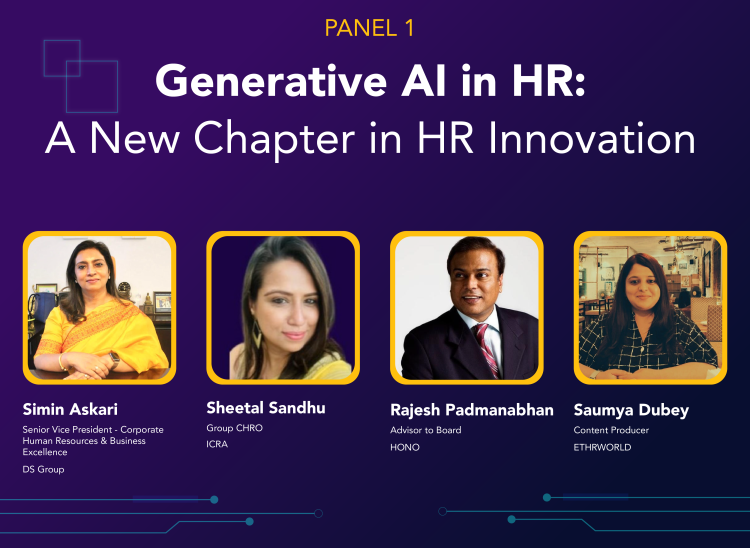
This panel will provide a thorough exploration of the emerging trends and opportunities in HR innovation brought about by Generative AI. Discussions will center on how Generative AI is reshaping decision-making processes, adding a layer of advanced analytics while ensuring a human-centric approach in managing people. The panel will also highlight the evolving skill sets required by HR professionals in an AI-enhanced environment and discuss how Generative AI can be leveraged to significantly improve employee experience, engagement, and overall job satisfaction. Watch the full panel discussion!
Panel 1: Key Insights & Takeaways
The panel discussion on Generative AI in HR brought together leading voices in the field, including Simin Askari, Rajesh Padmanabhan, and Sheetal Sandhu. They explored the transformative effects of generative AI across the HR spectrum, from recruitment to retirement. Key trends identified include the personalization of job descriptions, enhancement of onboarding experiences, and the evolution of performance management through generative AI.
Panel 2: Optimizing HR Through Generative AI: Strategies for Effective Implementation
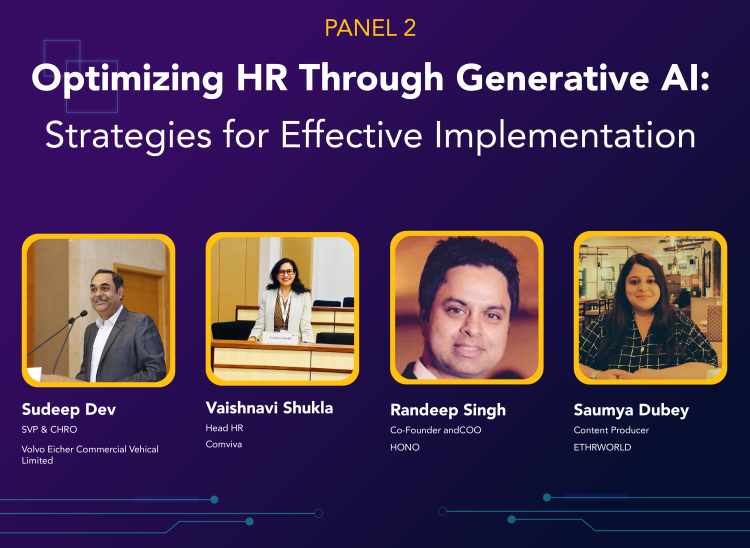
Experts in this panel focused on practical strategies for integrating Generative AI into existing HR frameworks. They discussed the KPIs and metrics essential for measuring the success and impact of Generative AI implementations. The panel also addressed the challenges and best practices in adapting these technologies to align with diverse HR practices and regulations across different global regions.
Panel 2: Key Insights & Takeaways
The conversation on seamlessly integrating generative AI into existing HR systems spotlighted insights from Sudeep Dev, Vaishnavi Shukla, and Randeep Singh. They emphasized addressing the needs of a modern, tech-savvy workforce, aligning HR objectives with business scorecards, and identifying key areas where generative AI can solve practical challenges.
For success metrics, the panel highlighted the importance of ROI, efficiency gains, experience enrichment, and productivity enhancements as key indicators.
Panel 3: Future-Proofing HR with Generative AI: A Practical Approach
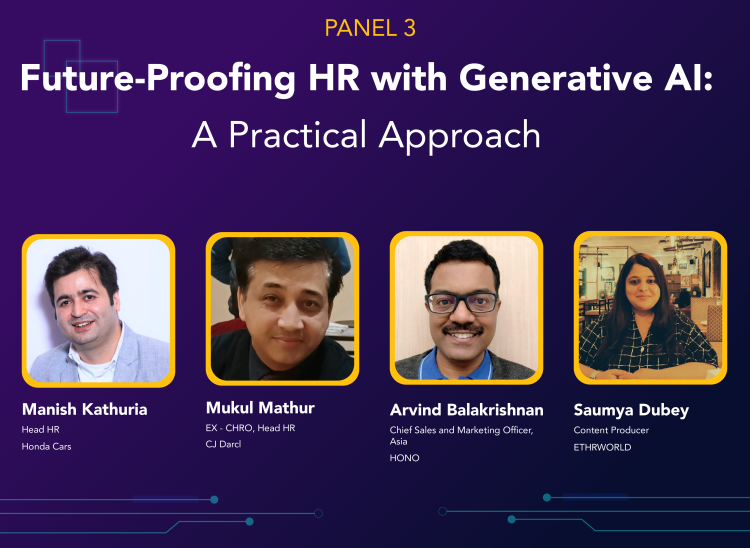
The final panel concentrated on preparing organizations for the future landscape of HR transformed by Generative AI. Discussions included workforce restructuring strategies, regulatory compliance, role augmentation, and expanding digital literacy across the workforce.
The insights shared by industry experts outlined a future where Generative AI enhances efficiency, productivity, and individualized career development while also requiring careful consideration of risks, compliance, role augmentation, and skill expansion.
Efficiency and Productivity Enhancement Generative AI is identified as a key driver for increasing efficiency and productivity across various sectors. By facilitating tailored Individual Development Plans (IDPs) and implementing universal frameworks such as Lean, organizations can focus on individual growth and department-specific needs more effectively.
Workforce Adaptation and Skill Reskilling The rapid evolution of Generative AI technologies indicates a significant shift toward workforce reskilling. Professionals will need to acquire new skills to stay relevant in their roles, emphasizing AI as an augmentation rather than a replacement.
Risk Management and Compliance Addressing potential risks and ensuring regulatory compliance are critical when deploying Generative AI tools. Organizations must balance technological advancement with human connection, data protection, and ethical considerations.
Tailored Adoption for Role Augmentation A one-size-fits-all approach to Generative AI adoption is ineffective. Organizations must tailor AI tools to specific roles and departmental needs to maximize engagement and reduce attrition.
Expanding Digital Skills and Literacy The widespread adoption of Generative AI requires organizations to expand digital literacy and AI-related skills. Leadership plays a crucial role in promoting acceptance, removing fear, and enabling structured training opportunities.
In summary, future-proofing HR through Generative AI requires enhancing efficiency and productivity, workforce adaptation, compliance management, tailored AI adoption, and expanded digital literacy.
.png)